Hope for tomorrow: navigating the complexities of clinical trials
Content sponsored by trialport
A father’s determination to change the course of Duchenne muscular dystrophy for his son has taken the family on a journey they could never have imagined. Jamie Tierney shares the hidden realities of trial participation and how human connection, advocacy and support are essential in helping families navigate the clinical trial space
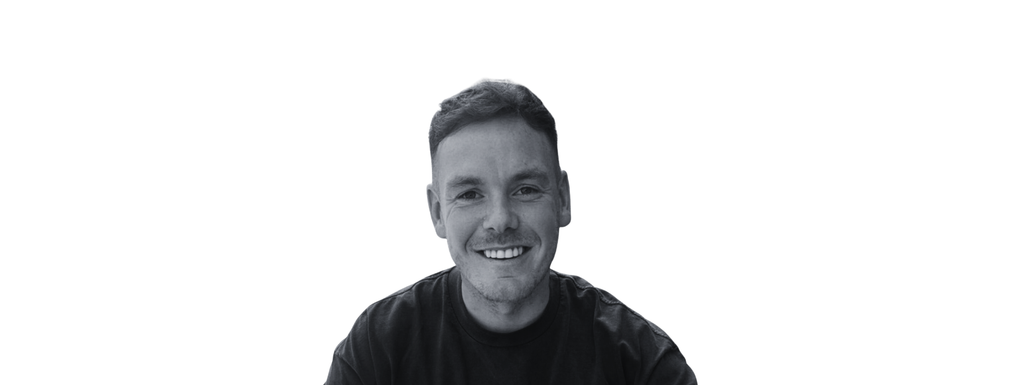
Written by Emma Bishop
Interview with Jamie Tierney
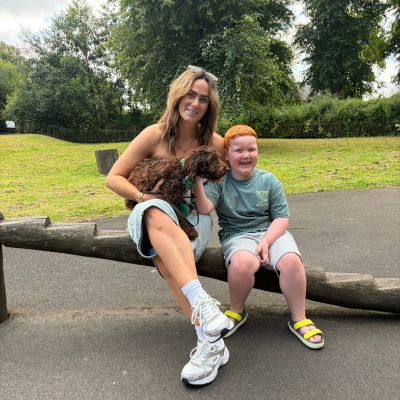
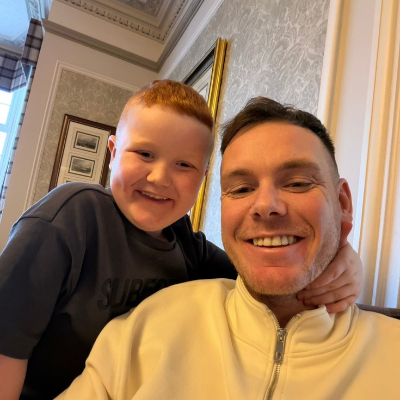
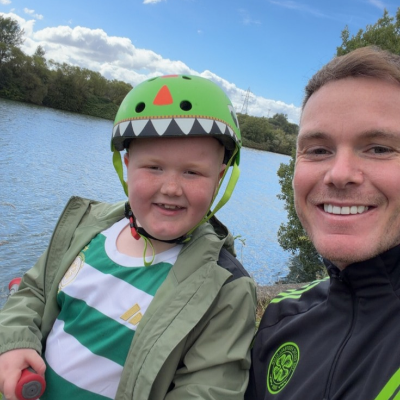
Jamie Tierney’s son, Jamie, was diagnosed with Duchenne muscular dystrophy (DMD) when he was three years old. Now seven, he is fondly described by his proud dad as a happy child: “He has got the sweetest heart and he’s honestly my best friend. He’s into his gaming at the moment, but he also likes football. He just gets on with things and doesn’t let his diagnosis get to him. He’s just a really happy chappie and I hope I can keep him like that forever.”
A search for hope
Jamie explains that when his son was diagnosed no one spoke to the family about the possibility of clinical trials. They received the diagnosis and were essentially given a leaflet about DMD and told to go home and enjoy their son. As Jamie explains,
“That immediate conversation was probably one of the hardest conversations to have—somebody telling you that they can’t do anything for you.”
Once home, an internet search showed research and trials were happening in DMD, giving Jamie and his wife some optimism. “It gave a sense of hope that things are moving,” Jamie says. The couple initially found a trial in the US but, with no guidance, found it difficult to navigate the next steps. As Jamie explains, “I didn’t have anyone to speak to about this. I just had to email the sponsor direct because I had no idea what to do. I found out the trial was nothing related to what Jamie could have had, but there was no one to have these discussions with.”
Jamie registered on every clinical trial hub he could find in the UK, Europe and US, in the hope of changing the course for his son. During the search he received just one email about a potential exon skipping clinical trial in the US that looked to suit Jamie’s condition. Jamie outlines the raft of practical and legal questions that went through his head when considering the trial: “We had to have a conversation to say, is this something that we would be willing to do? It’s a big deal moving from Scotland to the US. Also, can we legally do it? Do we fit all the criteria? How are we going to survive, work, live while actually maintaining the time on this trial?”
After the family made the decision to pursue the trial, Jamie describes receiving the overwhelming, dense trial information that he, as a “desperate parent”, found hard to digest. The lack of guidance and direction left Jamie directly emailing 10 clinical trial sites in the US in the hope of an answer, receiving responses from just half. He recalls sending emails, pleading with sites to respond.
Things began to progress, so much so that the family put their house up for sale in preparation for the move. Having sent over Jamie’s medical records, they learnt late into the process that Jamie had not been on steroids long enough and was no longer eligible for the trial. Jamie recounts feeling incredibly lost: “I really did lose a lot of hope. I was quite distraught from being on clinical trial hubs and only receiving one email over a couple of years. I decided I really needed to push forward and advocate for Jamie and our family if we wanted to get some answers.”
Jamie founded DMD Pathways, a navigation platform for families living with DMD, and began networking on LinkedIn. Speaking to sponsors and professionals in patient engagement and clinical research, Jamie began building all important human connections and increasing his understanding of the space. Through this networking Jamie learnt of a trial in the UK, which his son has now been on for just over a year.
Jamie questions whether he would have learnt about the trial without the relentless self-advocacy and networking and describes the mental load of constantly searching for answers and the fear of missing something.
“I had all these questions: if I hadn’t gone down this path, would we have heard about this trial? Would we have missed it? You find yourself online all the time, and then at other times you’re not on it for two weeks, and then you’re kicking yourself in case you miss some information.”
The hidden toll
Once on the trial, the family were required to travel a distance of just under 400 miles, every six weeks during the dosing period, with three visits in between. This meant the family were away from home for around 44 days in a six-month period. While Jamie says they were prepared to commit to this travel, it obviously impacts Jamie’s work life, having been self-employed for the past 10 years and already affected by the demands of rare disease.
“You’re trying to balance work and the pressure of people that have demands of you. We all have demands, we have bosses, we have people we work for or contracts that if you’re not fulfilling them, then someone else will.”
The time spent away from home has also affected Jamie’s son’s education. While there are the obvious absences due to travel, Jamie explains that they are cautious a week before an appointment that Jamie doesn’t pick up a bug at school, meaning he is often kept home. The result means Jamie was in school just 33% of the time last year which has prompted the family to home school him.

Aside from the practical burdens of a trial, Jamie speaks about the hidden burdens, in the space between appointments. The planning that goes into being away from home so much—the routine medication Jamie needs, the emergency medication he may need, his dietary requirements and school considerations.
Alongside this is the mental load: the ongoing uncertainty of a trial, with questions over whether the treatment is working, is it making a difference or is it a placebo drug, and with little communication or reassurance. Ultimately Jamie just wants to enjoy time with his son but is pulled in so many different directions by the demands of a trial.
“There’s a real heavy load of trying to figure life out, whereas for me, I just want to be a dad. I just want to have that time with Jamie. We’re spending so much time fighting for a better future, but we’re not spending any time in the present moment. You’re spread too thin.”
A need for person-centred guidance
For Jamie, a significant design flaw in the clinical trial recruitment process is the consent and screening processes. He describes being sent a 30-page consent form to initially navigate alone. When the family did go through it with the clinical trial team, they felt an overwhelming pressure to sign for fear of missing out on the trial. As Jamie explains, “You’re really nervous, and we didn’t understand the clinical trial process, we were just desperate to get on this trial. I didn’t understand that trials actually struggle to recruit, and we’re just panicking, signing consent forms before even understanding them.”
He feels more person-centred guidance and explanation is needed at the start to support families already in “survival mode” who are overwhelmed with complex information and are being asked to make high-stakes decisions. The process, for Jamie, felt rushed at the very point when he needed clear, compassionate step-by-step support.
Jamie is clear that despite the burdens and challenges, the clinical trial process has been the right decision for them. As he expands, “I don’t want to share our story as negative because this has actually been a really positive journey for us, we’ve set out to do what we wanted, even if maybe we’re not there yet. It installed a lot of hope for us. Even if we’re slowing Jamie’s progression down from that leaflet in any sort of way that’s what feels good for us as a family.”
trialport – giving families the space to reflect
Jamie first met Keith Berelowitz, founder and CEO of trialport, through his LinkedIn networking. Jamie says he really connected with Keith because of the work he is doing at trialport to support families considering clinical trials. Having spent more than 25 years watching the disconnect between trials in principle and trials in practice, Keith wanted to bridge that gap in understanding. Tools, such as trialport’s self-reflection tool readifitTM, help families consider the bigger picture of how a trial might affect them, looking at travel, time, family life, work and support. It gives them time to pause and reflect during what can feel like a high-pressure situation.
As Jamie shares, “What Keith is saying is, it is normal to have these conversations. As a parent and as someone going through the journey, you actually feel like a burden to ask these questions and you feel like maybe you’re asking silly questions. But at the end of the day, this is your child, or this is you as a person—no question is silly. What Keith is doing at trialport instils a lot of confidence in people going through that clinical trial process.”
trialport’s guided, human-centred support is something that could have helped Jamie and his family when they first embarked on their clinical trial journey. From those early days searching online for hours on end and not knowing where to turn or what the next steps were, using trialport may have reduced the sense of isolation and desperation, helping interpret complex, dense protocols and provide a much-needed safe space to ask questions.
During a critical period when it looked like Jamie may miss out on the trial, it was Keith that Jamie reached out to.
“I really thought that we might never get on a trial again, I’d lost all hope. I’ve never felt anxiety like it every time my phone vibrated.”
Keith explained the trial process to Jamie, giving him vital context, and ensuring he felt less in the dark about what was happening.

Jamie also sees value in trialport’s mission to connect people across diagnoses and geographies, highlighting the strength and resilience of rare disease families. “People in rare, we’re all the same to an extent. We’re all living a complicated life. But understanding that these families are like superheroes, they’re surviving day to day, however that may be, is a real honour, and I feel like Keith understands that and he has given me a lot of confidence in pushing forward with my own goals.”
Clinical trials have given Jamie’s family something every rare disease parent is searching for: a measure of hope. But as Jamie makes clear, guided, human-centred support is needed from the outset to ensure families are fully informed and supported. That’s where platforms like trialport can prove to be invaluable, alongside families, like Jamie’s, candidly sharing their stories, helping to shape a future where no family has to navigate this journey alone.
If you would like to learn more about clinical trials, you can access the platform and self-reflection tools at; app.trialport.com