Making it easier for patients living with rare diseases to find the right specialist
Fixing one of the biggest delays in rare disease care

By Alicia Cowley, MD, MBA
For people living with rare diseases, the longest and most difficult delays often happen before treatment ever begins.
Rare disease journeys are rarely linear. Patients and caregivers may spend years navigating uncertainty, misdiagnosis and fragmented care before they ever reach the right clinician. Research suggests that, on average, it can take five or more years1 to receive an accurate rare disease diagnosis, during which time they may see six physicians2 or more. Along the way, misdiagnosis and fragmented care are well documented, often contributing to worse outcomes and eroding trust in the healthcare system.
While diagnostic delays are widely recognised, another critical barrier receives far less attention: finding the right specialist once a diagnosis is suspected or confirmed. Even when patients know what they are looking for, identifying a clinician with the right experience, expertise and availability can be surprisingly difficult. Shortening this search-to-specialist gap represents one of the most tangible opportunities to reduce time to care and improve outcomes in rare diseases. This piece explores how one digital tool, MediFind’s Doctor Finder, makes it easier for patients with rare diseases to find the right care.
The hidden burden of specialist discovery in rare disease care
Rare diseases are defined individually by their low prevalence, each affecting fewer than 200,000 people3. But collectively, more than 10,000 rare diseases impact over 30 million people in the United States4. Many require highly specialised care from clinicians who may practice at only a handful of centres or treat relatively few patients each year.
Traditional referral pathways often struggle under this complexity. Primary care providers may have limited exposure to rare conditions or limited visibility into which specialists focus on them. Geographic distance, long wait times and insurance constraints further narrow access. Even when patients identify a potential specialist, they may discover that the clinician is not accepting new patients, forcing them to restart the process.
As a result, patients and caregivers are frequently left to coordinate care largely on their own. They manage referrals, gather medical records, navigate insurance approvals and make repeated calls across disconnected care teams. For caregivers of children with rare diseases, patients with progressive conditions or those still searching for answers, this burden can be incredibly overwhelming. The cost is not just time, but emotional strain, cognitive overload and a gradual loss of confidence in the system meant to support them.
Patients with rare diseases are not passive browsers
Patients living with rare diseases—and the caregivers supporting them—are among the most motivated and informed healthcare consumers. Their online research reflects urgency and intent, not casual curiosity. They are searching to make decisions, not simply to learn, but they do not always have appropriate tools to facilitate the process.
Common goals include identifying clinicians who actively treat their condition, understanding access and availability, and determining how to secure an appointment as quickly as possible. These are high-stakes searches driven by symptoms, disease progression or the fear of losing valuable time.
Yet despite this high intent, many digital journeys stall. Patients may find educational content, specialist lists or hospital directories, only to encounter dead ends. Without clear next steps or transparent access pathways, they are pushed back into offline loops of referrals, voicemails and administrative delays, extending an already long path to care.
Where the search-to-specialist journey breaks down
The journey from online research to real-world care is fragmented. Patients bounce between search engines, disease education sites, advocacy resources and hospital directories, each offering only partial or outdated information.
Along the way, they encounter generic specialist lists with little relevance ranking, minimal insight into condition-specific expertise and multiple obstacles to securing an appointment, even if they identify a provider. Patients and caregivers are left to connect the dots themselves, restarting their search whenever they hit a barrier.
For rare disease stakeholders, including pharmaceutical brands and advocacy organisations, these gaps limit visibility into whether awareness efforts actually translate into access. Education may succeed, but connection to appropriate care remains uncertain, in part due to a lack of convenient digital tools to seek care.
Moving from online research to real appointments
More effective approaches to finding a specialist share a common goal: reducing friction between learning about a rare condition and accessing appropriate care. Too often, digital journeys end at education, leaving patients to navigate next steps on their own despite high urgency and intent. Rather than stopping at education alone, these more cohesive approaches aim to support patients as they move from learning about their condition toward identifying appropriate specialists and next steps.
One example of this approach is MediFind’s Doctor Finder. Designed around specific conditions rather than broad provider directories, it surfaces clinicians based on indicators of relevant experience, including research activity, clinical focus, patient volume and peer collaboration.
Doctor Finder can be embedded directly into branded or unbranded disease education websites, allowing patients to move from learning about their condition toward identifying potential specialists without restarting their search elsewhere. When implemented thoughtfully, tools like these may help reduce fragmentation by supporting a clear transition from information seeking to care navigation. Additionally, they build trust by prioritising patient needs over promotion.
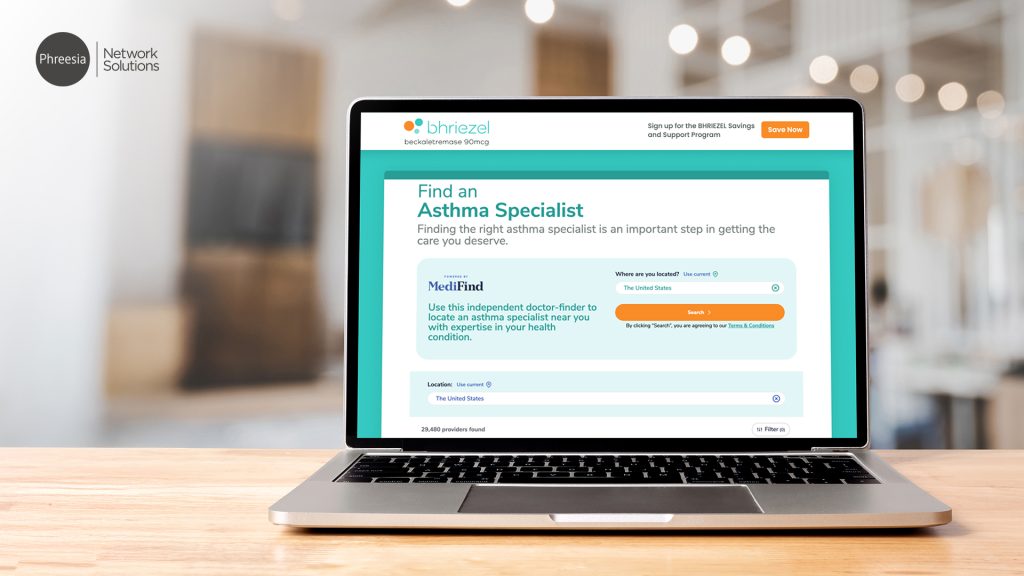
Today, MediFind covers more than 3,500 conditions and includes over two million US healthcare professionals. To avoid overwhelming patients, specialists are presented with experienced-based groupings: Elite, Distinguished, Advanced and Experienced, which provide context without relying on simplistic rankings.
Importantly, the platform also supports a more streamlined transition to appointment scheduling when patients are ready to take next steps, recognising that delays at this stage can meaningfully extend time to care. Observational data from MediFind shows that one in five patients who view a doctor profile take immediate action to schedule an appointment—a clear signal of how powerful an access-focused design can be.
What data reveals about rare disease care-seeking behaviour
Real-world data underscores the impact of connecting education with access. When Doctor Finder was integrated into a disease education website for people with Cushing’s syndrome, patient behaviour shifted in measurable ways.
Cushing’s syndrome is a rare condition caused by excess cortisol and often presents with complex, overlapping symptoms. Up to 90% of diagnosed patients develop high blood sugar or diabetes, making timely access to experienced endocrinologists and surgeons especially important.
In 2025, 62% of visitors to a brand’s website about Cushing’s syndrome engaged with MediFind’s Doctor Finder tool, where potential patients could see provider locations, contact information and schedule appointments. Of these visitors, 23% clicked into individual doctor profiles, which demonstrates a high level of interest in learning more about the provider’s expertise. These findings suggest that aligning high-intent patient engagement with clearer access pathways may help reduce delays in connecting them to appropriate care.
Why specialist discovery matters for rare disease brands
Improving specialist discovery is more than a patient service. It is a strategic opportunity for rare disease brands and other stakeholders across the rare disease ecosystem to support faster access, earlier intervention and better outcomes.
Unlike awareness alone, access-focused tools generate measurable engagement and provide visibility into downstream access. They position brands as partners in care, not just sources of information—an important distinction for patient communities that have often experienced long delays and unmet needs.
Key takeaway: Finding the right specialist sooner matters
For many people living with rare diseases, the greatest delays occur before treatment ever begins. Addressing the search-to-specialist gap can meaningfully reduce time to care, ease patient burden and improve outcomes.
Tools like MediFind’s Doctor Finder demonstrate what is possible when high-intent patient behaviour is met with clear, actionable access pathways. By helping motivated patients connect with the right specialists at the right time, rare disease stakeholders can shorten the most difficult part of the journey and ensure fewer patients are left waiting in the dark.
Learn how access-first tools like MediFind’s Doctor Finder can connect high-intent rare disease patients with experienced specialists at the moment they’re ready to act.
Author bio
Alicia Cowley, MD, MBA, is a physician executive with more than 13 years of clinical and healthcare technology leadership experience. A former attending physician and clinical assistant professor at NYU Langone Medical Center, she is now a Medical Director at Phreesia, where she focuses on building digital solutions that make care easier, improve outcomes and empower patients to take an active role in their health.
About the company
MediFind, a Phreesia company, helps patients take a crucial step in their care journey by simplifying the complex tasks of finding the right doctor for their condition or locating a treatment centre. Our customisable Doctor Finder tool integrates directly into branded or unbranded websites to activate high-intent patients with the right information that’s specific to their condition.
References
[1] https://pmc.ncbi.nlm.nih.gov/articles/PMC11323401/
[2] https://pmc.ncbi.nlm.nih.gov/articles/PMC6427854/
[3] https://blogs.cdc.gov/genomics/2016/02/17/rare-diseases/
[4] https://www.jmcp.org/doi/10.18553/jmcp.2025.31.5.491