New report released highlights the neglect of hereditary brain aneurysms and calls for urgent action to transform care
Listen to this article:

Hereditary Brain Aneurysm Support calls for national action on screening and treatment inequality
After two years research, HBA Support has launched their new report revealing significant gaps in screening and care that people with the familial disease receive, putting people and families at significant risk of preventable tragedies, and highlighting the urgent need for action to ensure consistent, equitable care.
Brain aneurysms affect an estimated 1 in 30 people, that’s over 2 million people in the UK, and more than 5,000 ruptures occur annually, causing around 1,700 deaths. For those with a hereditary link, the risks are even higher: aneurysms rupture earlier, often appear in multiple locations, and carry lower survival rates.
Andy Motch, a brain aneurysm rupture survivor, who’s family was told he was not at risk despite losing his father from a brain bleed caused by a ruptured aneurysm when Andy was four, and his grandfather suffering symptoms throughout his life, shared his story at the event: “The NHS saved my life,” Andy says, “but the care system for patients like me is broken. I’m terrified of what happens next.”
The report reveals that Andy’s experience is shared by families across the UK, showing widespread gaps in screening, inconsistent follow‑up care, and hundreds of preventable ruptures every year. Brain aneurysms can, mostly, be successfully treated if caught before rupture, and with the hereditary history as a clue to guide screening, patients can be screened and treated before tragedy strikes.
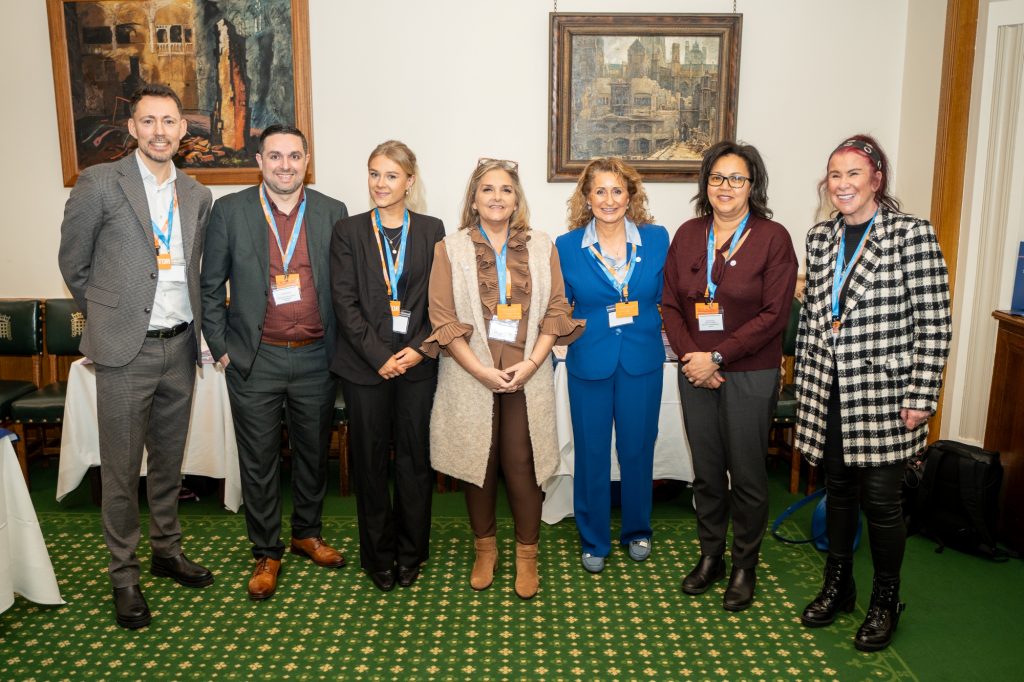
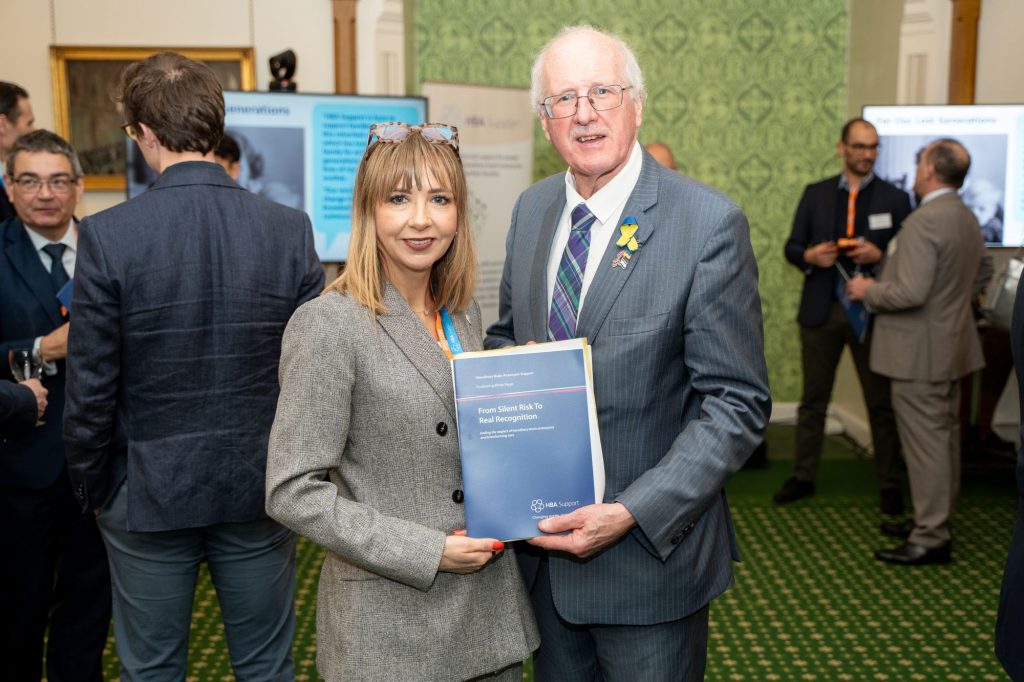
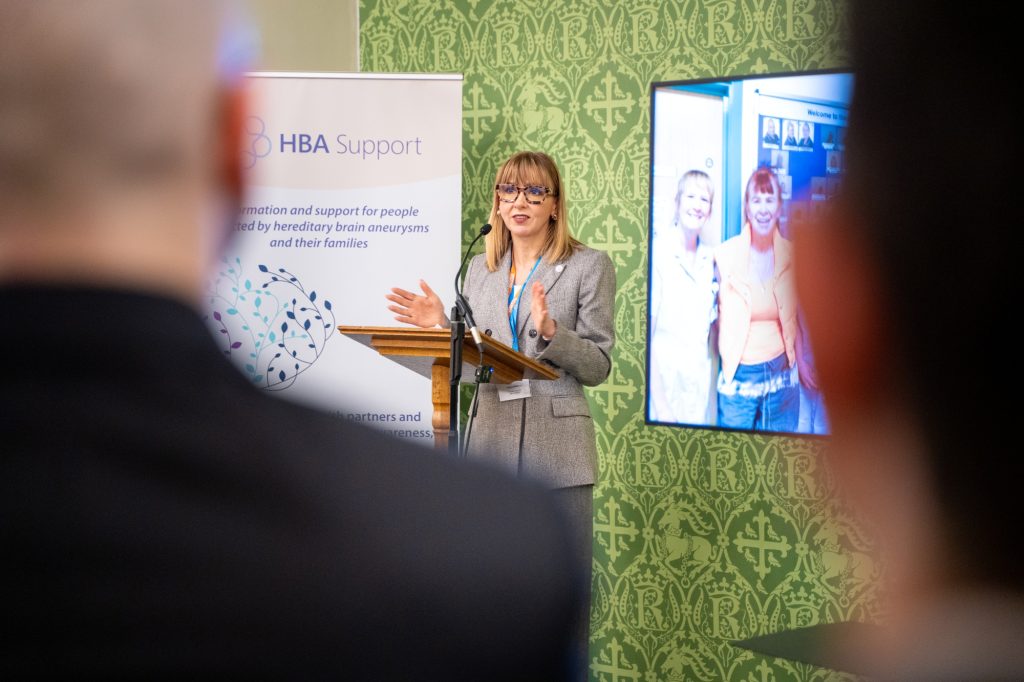
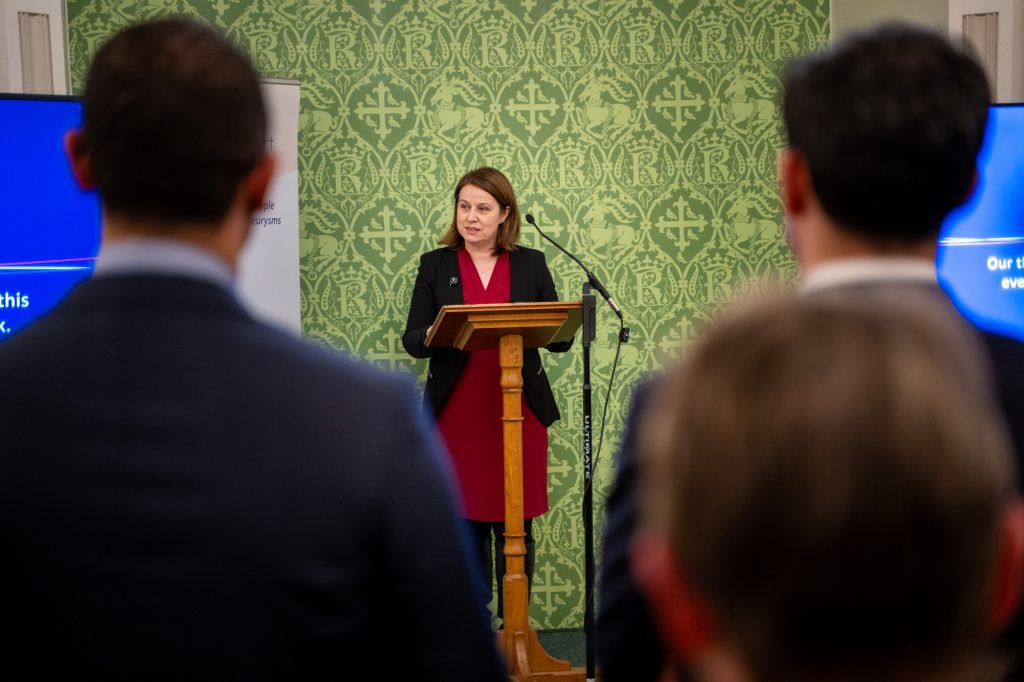
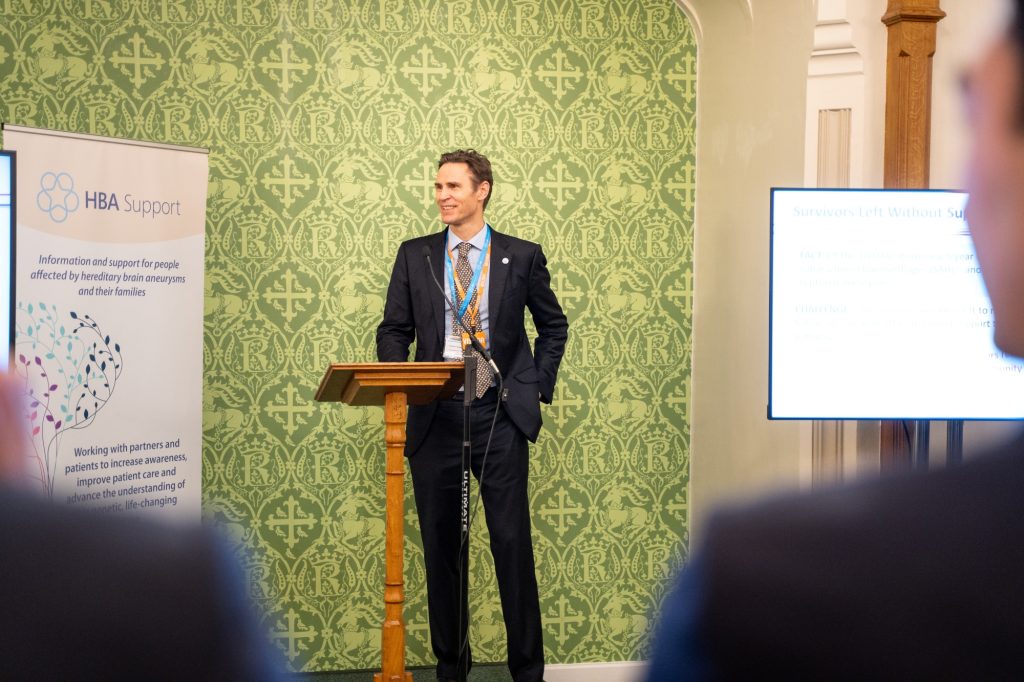
At the report launch, held at The Houses of Parliament on the 10th February and sponsored by MP Amanda Hack, Rebecca Middleton, Founder and Chair of HBA Support, and brain aneurysm patient herself, says:
“Families with a history of aneurysms are being left to fight for screening that could save their lives. Patients who suffer ruptures are too often left to piece together their own rehabilitation journey after a subarachnoid haemorrhage (SAH). Despite care for SAH patients featuring in three sets of NICE guidelines, they often have to piece together their own rehabilitation pathway. Our report shows a system full of gaps – and thousands of patients and families are paying the price.”
Speaking of the launch event, Rebecca said
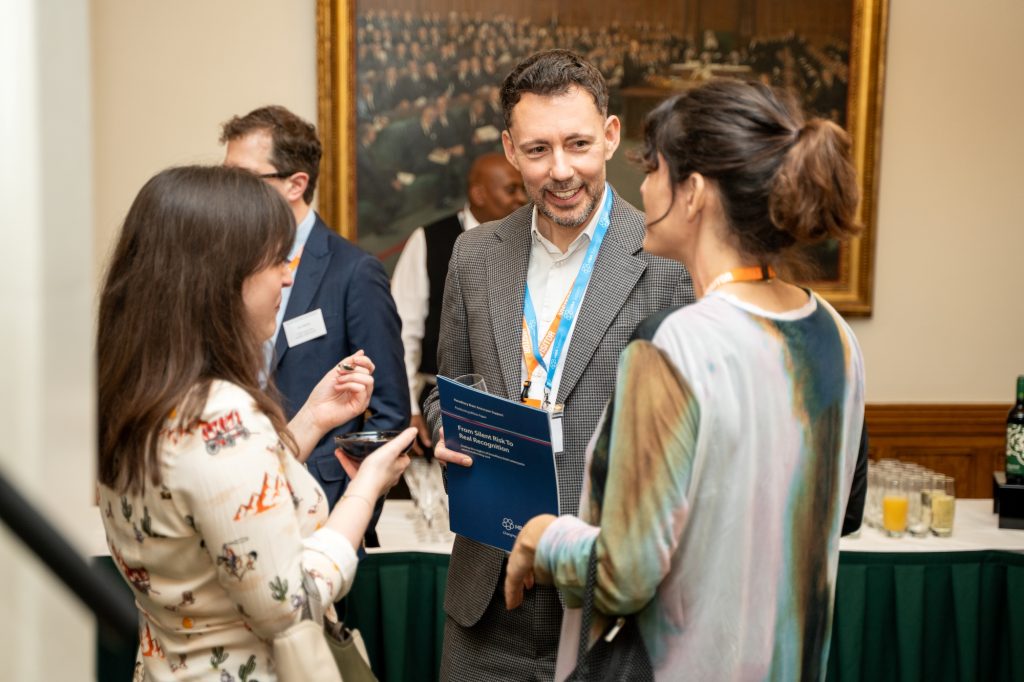
“This week something powerful happened. More than 70 people – neurosurgeons, INR specialists, neuro nurses, researchers, policy makers, genetic counsellors, patients, and partners – came together with a shared purpose: to change the future for families affected by brain aneurysms. The conversations were honest, hopeful, and full of momentum. Our report landed with real impact, and the appetite for partnership was unmistakable. Many thanks to Amanda Hack MP and Medtronic for their support to make this happen. This is what hope in action looks like. And we’re only just getting started.”
The charity has nine clear recommendations for change and is calling for action from government and NHS leaders. They include:
- National cascade screening guidelines and formal recognition of hereditary brain aneurysms as a genetic condition
- Better infrastructure: data collection, GP education, genetic counselling, and psychosocial support
- Consistent rehabilitation for survivors, in line with stroke pathways
Professor Diederik Bulters, Consultant Neurosurgeon and Chief Investigator of the world‑leading ROAR Study, adds: “Early detection and regular monitoring saves lives. This report shows why we need clear, personalised guidelines for patients at hereditary risk.”
The Risk of Aneurysm Rupture (ROAR) Study is the world’s largest research programme investigating why some brain aneurysms rupture while others remain stable. The world leading, ground-breaking study is analysing genetic, biological and clinical factors across thousands of patients to build the first robust, evidence‑based tools for predicting rupture risk – work that could transform screening and treatment for families with hereditary aneurysms in the future.
HBA Support is urging policymakers, clinicians and NHS England to work with them to build national standards that finally give families like Andy’s the protection they deserve.
They have written an open letter to the Secretary of State for Health and Social Care, Wes Streeting, asking the department to read the report and take urgent action. You can sign the report at hbasupport.org/brain-aneurysm-care-open-letter
* Annual deaths from brain aneurysms – Data from nomis (https://www.nomisweb.co.uk/) for mortality from subarachnoid haemorrhage were downloaded as an Excel spreadsheet on 21st November 2024. The average for the 10 years from 2014 to 2023 was calculated. This was 1705 (i.e. over 1700). Familial deaths from brain aneurysms – 13% of these are familial (Van Hoe, 2021, World Neurosurgery, 151-235-248, Figure 2 of Van Hoe shows that 13% have more than 2 FDR i.e. familial).
About HBA Support
HBA Support is the UK’s leading charity for people affected by brain aneurysms. Through advocacy, peer support, and close collaboration with the NHS and research partners, the organisation works to raise awareness, improve care pathways, and champion advances in diagnosis, treatment, and prevention.
Sign up for our newsletter to stay up to date on all of our support, news and events. Please support us further by following us on Facebook, Instagram or LinkedIn
About the ROAR study
The Risk of Aneurysm Rupture (ROAR) study is the largest research project of its kind in the world and aims to transform how we assess the risk of brain aneurysms rupturing. Unruptured brain aneurysms (bulges or swellings of the blood vessels in the brain) are surprisingly common, affecting around 3% of the population. To prevent this, doctors can treat aneurysms before they rupture. However, these treatments carry significant risks, with complication rates between 5% and 8%. Hence it is crucial to be able to identify which aneurysms are high risk of rupturing, so treatment is given only when it’s likely to do more good than harm.
https://roarstudy.co.uk/roar-study