SMA: why adult support must keep up with medical progress
Lassi Murto was diagnosed with spinal muscular atrophy as a child and is now navigating adult life with SMA. He shares his experience of what it is like when the systems around a condition don’t match the medical progress and improved prognosis this brings
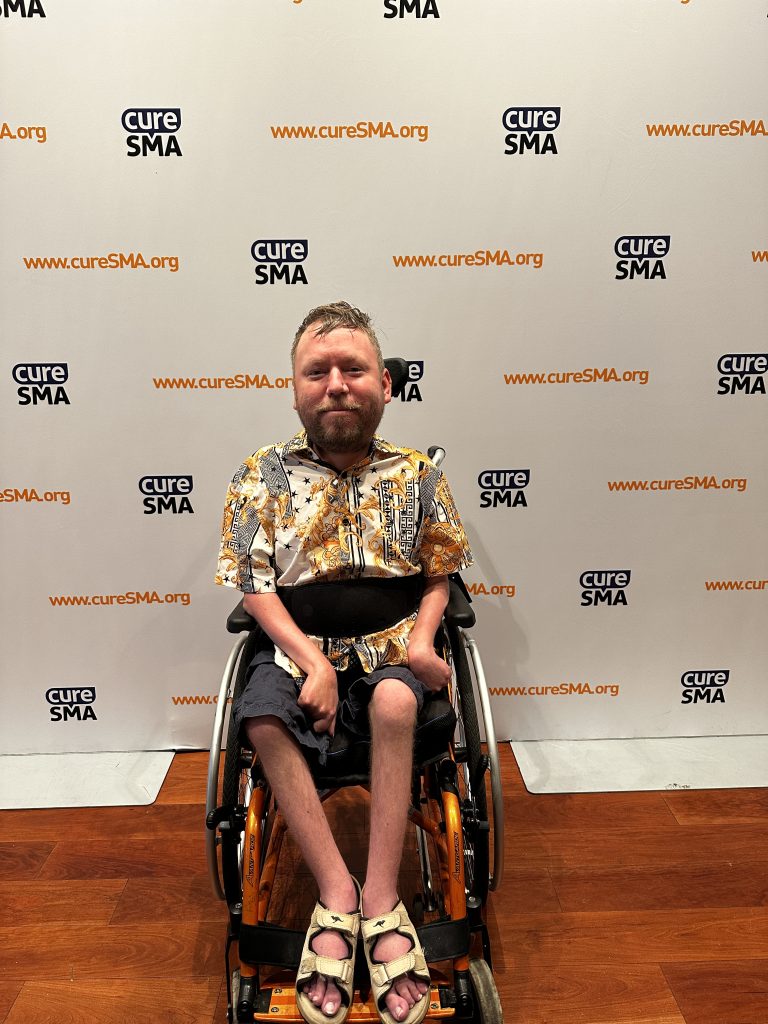
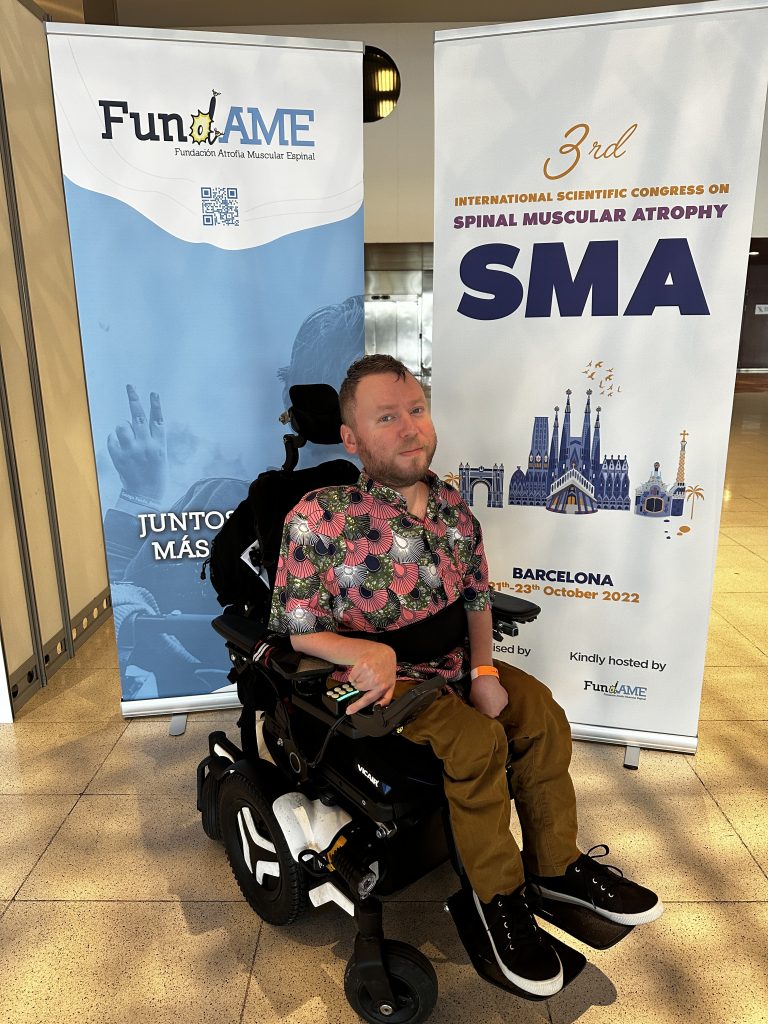
Written by Lassi Murto, chair of SMA Finland

Adult SMA is the rare disease test Europe did not plan for.
When I was a child with spinal muscular atrophy, adulthood was not the future people planned for me.
I am now an adult. I work, chair SMA Finland, take part in European SMA advocacy, use personal assistance every day and live a life that the old prognosis did not expect.
This is not only a survival story. It is a systems story.
SMA has changed. Newborn screening can identify the disease before symptoms appear. Treatments can change what is possible. Families today may receive information, choices and hope that many adults with SMA never had as children.
That progress matters deeply. I would never want to reduce it. Early diagnosis and timely treatment can change the course of a child’s life. Every European country should take seriously the possibility of finding SMA early and acting quickly.
But, progress also creates a new question.What happens to those who survive beyond the life that systems were built to imagine?
Adult SMA is the rare disease test Europe did not plan for.
The SMA landscape is changing
For decades SMA was often understood through childhood. The most severe infant-onset presentations shaped public awareness. Paediatric neurology carried much of the clinical attention. Families were told to prepare for futures that were uncertain, limited or short. In that world, adulthood could feel almost like an exception.
Now the landscape is different. Children are being diagnosed earlier. Treatments are changing expectations. Patient organisations are stronger. Standards of care are improving. Adults with SMA are working, studying, travelling, forming relationships, building families, contributing to advocacy and taking part in society in ways that older medical narratives did not always imagine.
This is progress. But it is not yet continuity.
A rare disease system can celebrate new possibilities while still failing to follow people across the whole life course. It can become better at diagnosing children while remaining uncertain about adults. It can approve treatments while leaving access uneven. It can recognise patient voices while still treating adult care, rehabilitation, respiratory monitoring, assistive technology and personal assistance as separate problems.
That is why we need an adult rare disease continuity test.
The test asks a simple question: when a childhood rare disease becomes an adult life, does the system continue?
Does specialist follow-up continue? Does rehabilitation continue? Does respiratory care continue? Does the transition from paediatric to adult services work? Are pain, fatigue, scoliosis, nutrition, sleep, breathing, mental health and daily support taken seriously? Are adults with SMA known to neuromuscular centres, or are some connected to health systems only when a crisis occurs? Do treatment discussions include adults whose bodies, histories and risks may not fit the easiest clinical categories?
These questions are not marginal. They are the next stage of rare disease policy.
Creating liveable pathways
I have lived with a childhood-onset, moderate-to-severe form of SMA. My daily life depends on systems that many health policies mention only indirectly: personal assistance, accessible transport, assistive devices, rehabilitation, electricity, housing, social services, medical follow-up and people who understand how fragile independence can be when it depends on support.
That word, independence, is often misunderstood.
For many people with SMA, independence does not mean doing everything alone. It means having the support, technology, rights and services that make choice possible. It means being able to work because assistance exists. It means being able to travel because transport works. It means being able to live at home because housing and personal care are organised. It means being able to make decisions because others do not mistake support needs for lack of agency.
Adult SMA forces rare disease systems to understand this.
Medical innovation can change prognosis, but it does not automatically create a liveable adult pathway. TA treatment can slow disease progression, but it does not replace rehabilitation. A specialist recommendation can be important, but it does not arrange transport. A reimbursement decision can open a door, but it does not guarantee every adult patient will be found, assessed, followed and supported.
For rare diseases, access is not a single moment. It is a chain.
Diagnosis is part of the chain. Treatment assessment is part of the chain. Reimbursement is part of the chain. Neuromuscular follow-up is part of the chain. Respiratory monitoring is part of the chain. Rehabilitation is part of the chain. Assistive technology, personal assistance, mental health support, accessible housing, employment support and social participation are also part of the chain.
If one part breaks, the person may still be included on paper while being left to coordinate survival in practice.
This is where time matters. In progressive rare diseases, a right, treatment or service that arrives late does not simply arrive after a delay. It may arrive after function has been lost, opportunities have narrowed, family energy has been spent, work has become harder, trust has been damaged, or the person has learned to expect less from the system.
Rare must not mean late.
The need for a stronger voice
This is one of the clearest lessons of the Finnish SMA story. People living with SMA and their families needed a stronger diagnosis-specific national voice: one able to speak about treatment access, newborn screening, peer support, adult visibility, lifelong care pathways and European cooperation.
Small patient organisations do more than offer peer support, although peer support is essential. They also carry institutional memory. They remember what was promised, what was delayed, what was misunderstood and what people had to carry while waiting.
That memory matters because rare disease systems can forget slowly. They may forget adults who grew up before current treatments. They may forget people who were never placed on specialist lists. They may forget burdens that do not fit standard forms. They may forget that implementation is not complete when a decision is announced.
Science becomes justice only when it arrives.
Treatment policy is therefore also a disability policy. It does not only distribute medicine. It shapes agency, participation and future possibility. A small preserved function may mean communication, self-direction, work, advocacy, parenting, relationships or the ability to plan one’s future. A person does not need to become non-disabled for treatment, rehabilitation or support to matter. The value may lie in what remains possible.
That is why adult SMA cannot be understood only through survival or motor scores.
Rare disease policy is changing
In the treatment era, adults may appear stable in one clinical frame while carrying burdens that are harder to see: fatigue, bad body days, sleep and respiratory strain, digestive or metabolic concerns, pain, temperature regulation, toileting dignity, participation barriers and fragmented adult care. Motor stability does not always mean whole-body stability. And whole-body stability does not automatically mean system stability.
What is not studied, not measured or not asked about may remain invisible.
This matters because adult SMA is not only a medical condition. It is a life organised through biology, technology, assistance, services, relationships, institutions and time. If clinical conversations ask only what can be scored, adult burden may remain under-recognised. If health systems ask only whether a person has access in theory, they may miss whether care is reachable in practice. If rare disease policy focuses only on children newly diagnosed today, it may build a future while leaving adults in the margins of the story.
This is especially important in Europe now. Rare disease policy is moving. Newborn screening is expanding in some countries. European Reference Networks connect expertise across borders. The debate on an EU rare disease action plan is growing. These developments are welcome. But they must not build a future that sees rare disease only at the moment of diagnosis, treatment approval or childhood intervention.
The future must include adults.
Adults with rare diseases are often the living memory of older systems. Many grew up before newborn screening, before today’s therapies, before current standards of care and before patient organisations had the same policy influence. Some have lived for decades with bodies that systems did not expect to support for so long. Some have learned to manage gaps that should never have become personal responsibilities. Some are not regularly followed by specialist services. Some still have to explain, again and again, what their condition means in adult life.
That experience is not only personal history. It is policy evidence.
Patient organisations should therefore be treated not only as storytellers, but as system testers. They know where transition fails. They know where adults disappear from care. They know where rehabilitation is too narrow, where respiratory follow-up is inconsistent, where assistive devices take too long, where personal assistance determines whether a person can participate, and where official access exists only on paper.
Europe needs that knowledge.
Strengthening transitions in care
A serious rare disease strategy should ask more adult questions: how many adults with SMA are known to specialist centres? How many have regular respiratory assessments? How many receive rehabilitation that reflects their real needs? How many have access to assistive technology and personal assistance? How many adults are technically eligible for care but practically unreachable? How many are excluded because they do not fit old assumptions about age, severity, ventilation, mobility or expected benefit? And how many burdens remain invisible because nobody has built the tools, appointments or pathways to ask about them?
These questions are difficult. But avoiding them is not neutral.
Of course, not every treatment is right for every person. Evidence matters. Safety matters. Medical judgement matters. Public budgets matter. But adult rare disease policy cannot be built on silence, delay or invisibility. If adults are not assessed, followed and heard, the system cannot claim to know what fairness requires.
Adult SMA should not be seen as an afterthought to paediatric progress. It should be seen as a new responsibility created by progress.
The practical steps are clear: build adult rare disease pathways. Strengthen transition from paediatric to adult care. Ensure regular neuromuscular, respiratory and rehabilitation follow-up. Include assistive technology, personal assistance and social participation in rare disease planning. Measure the distance between approval and actual access. Ask adult patients what current tools miss. Involve patient organisations in monitoring where systems fail. Treat adult patients as people with futures, not only histories.
When I was a child, adulthood was not the future people planned for me.
Now that I am here, the question is not whether my life is inspiring. The question is whether the systems around me, and around thousands of adults with rare diseases in Europe, are ready to recognise the lives that medical progress has made possible.
Adult SMA is not the end of a childhood disease story.
It is the beginning of a new European rare disease responsibility.
Author profile:
Lassi Murto is a Finnish patient advocate, disability-rights leader and international development professional. He chairs SMA Finland, represents Finland in SMA Europe and is a member of SMA Europe’s Adult Committee. He also serves as a member of the Council of Heta – Union of the Employers of Personal Assistants in Finland. Having lived with SMA since childhood and using personal assistance in daily life, he brings lived systems expertise to questions of adult SMA, rare disease equity, access to care, independent living and lifelong participation. As Programme and Thematic Advisor at the Abilis Foundation, he works at the intersection of disability inclusion, civil society and crisis resilience. His work brings together lived experience, patient leadership, policy analysis and practical programme expertise. He writes in a personal capacity.