The diagnostic odyssey: how misdiagnosis and indication broadening can undermine rare disease clinical trials
SPONSORED CONTENT
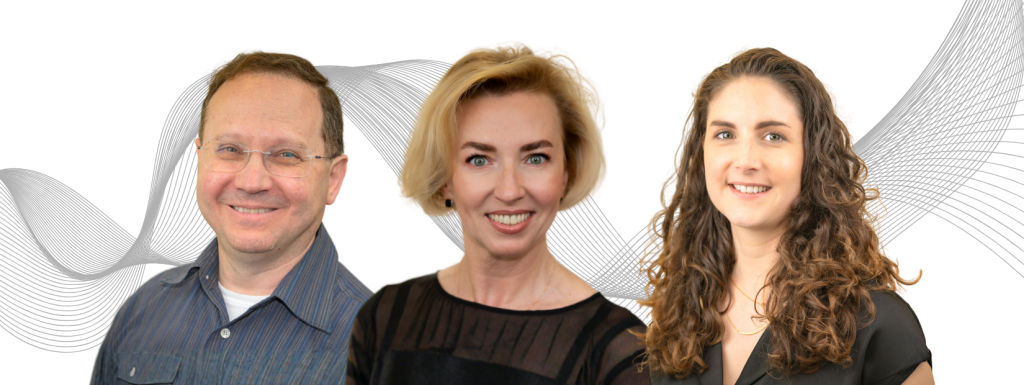
Written by
Marcelo Vaz, vice president of medical services,
Dr Victoria Datsenko, vice president of clinical services,
Lucy Fulford-Smith, head of pharmacovigilance and medical services,
TMC Pharma
Patients with rare diseases often face a lengthy journey from first presentation to diagnosis.
Early symptoms can be intermittent, appear unrelated, non-specific or overlap with those seen in many common diseases. Consequently, patients may spend years moving between clinicians and institutions, undergoing repeat investigations and collecting provisional (incorrect) diagnoses before they reach the right specialist.
That journey is frequently described as the ‘diagnostic odyssey’, which can have significant consequences.
For patients, their quality of life may be reduced due to poor symptom management and progression; they may experience potentially preventable but irreversible organ system damage and, ultimately, suffer early clinical decline.
For sponsors and clinical study teams, this diagnostic journey is a critical, often underestimated determinant of clinical trial readiness. Diagnostic challenges mean it is harder to identify patients, fewer are eligible for trials once found and their clinical baselines and endpoint measures are harder to interpret. These complexities make safety oversight and efficacy assessments difficult to interpret and monitor throughout clinical development.
In this context, patient organisations often become the bridge between uncertainty and direction.
They help individuals understand likely pathways and advocate for patients within the healthcare system, helping to push for appropriate referrals, confirmatory testing, treatment access facilitation and recognition of condition-specific needs.
Why does misdiagnosis happen in rare diseases?
Misdiagnosis is often a multi-factorial problem, with ambiguous symptoms being amplified by clinicians’ unfamiliarity with the disease, inconsistent referral pathways and limited access to confirmatory testing. It can also be exacerbated by broader symptom-led labelling, where conditions are framed around a clinical cluster rather than a specific underlying cause.
For example, ambiguity often appears in inherited conditions such as alpha-1 antitrypsin deficiency (AATD)1, where early signs may emerge through respiratory, hepatic or general paediatric presentations rather than being recognised as part of one underlying disorder.
Structural factors matter as much as clinical ones here.
In the UK, the public structure of the National Health System (NHS) means the particularity of the individual is often blurred by the need to care for many.
Individuals must consult their general practitioner (GP) as a first point of contact, before specialist referral can be made. Physicians have limited time to evaluate the patient and many GPs may encounter a rare disease presentation only once, if at all, in their careers—potentially delaying appropriate testing or referral to specialist centres.
In other settings, private pathways can offer a faster route to diagnosis. For example, in Brazil, supplementary private plans sit alongside the unified health system and may be used to move more quickly through parts of the system. However, in the United States, private insurance is the main gateway to care for most people and varies markedly by state and insurer, strongly influencing access.
How do diagnostic delay, misdiagnosis and indication broadening impact clinical trial readiness?
In rare disease programmes where sample sizes are already small, losing even a few participants due to late diagnosis, misclassification or avoidable screening failures can lengthen clinical trial timelines and introduce uncertainty around the benefit–risk evaluation.
Many rare diseases progress while the patient is still undiagnosed or is being managed for an alternative, incorrect diagnosis. By the time the correct diagnosis is confirmed, the disease may have evolved to a point where the individual no longer meets the clinical trial inclusion criteria or cannot safely tolerate the required study procedures and follow-up.
Even when disease progression does not prohibit enrolment entirely, it can still negatively affect patient retention and complicate the interpretation of clinical data. Patients who enter a trial with more advanced disease may experience complications and adverse events caused by their underlying condition, rather than the investigational product, but this is often hard to determine. With small datasets, lack of information on disease natural history and increased background ‘noise’ can obscure the treatment effect and complicate safety assessments.
These pressures are amplified when the target population is not clearly defined or consistently identified.
Variation in diagnosis across sites and geographies can skew who gets screened and when, making it harder to characterise cohorts, establish a clean baseline and select endpoints. Differences in national diagnostic protocols and access to confirmatory testing mean some sites cannot diagnose to the same standard of care, meaning eligibility relies heavily on trial-specific confirmatory tests—resulting in a smaller, less consistent pool of trial-ready patients.
Equally, indication broadening can force design compromises that reduce interpretability. When a regulator or sponsor pushes for a broader indication, it can introduce misalignment with patient organisations, physicians and clinical reality because broad framing can dilute specificity in a community where precise diagnosis, treatment, trust and feasibility are tightly linked.
In one orphan drug designation application for a novel treatment for cyclin-dependent kinase-like 5 deficiency disorder (CDKL5)2—a rare genetic condition where early symptoms can overlap with other neurodevelopmental disorders—the European Medicines Agency (EMA) insisted that the proposed indication be broadened beyond CDKL5 to encompass other conditions. The patient advocacy group strongly opposed combining CDKL5 with other disorders, arguing that CDKL5 is distinctly different from other neurological conditions and that broadening would dilute the specific needs of the CDKL5 community.
With no mutually agreeable solution, the sponsor ultimately withdrew the application for the CDKL5 treatment. Unfortunately, these challenges are not uncommon when developing new treatments for rare diseases.
Improving trial readiness by designing with the diagnostic odyssey in mind
Rare diseases often result in a varied range of comorbidities for patients and create a long diagnostic odyssey. Trial design needs to reflect that reality without weakening scientific rigour.
As such, trial readiness requires integrated, cross-functional input that is built long before the first site opens. Clinical development and operations, medical oversight and pharmacovigilance need a shared view of what is plausible for the disease stage being studied, how diagnostic certainty will be confirmed and how the standard of care will be applied consistently across countries, sites and over time.
That begins with designing the study around real-world diagnostic and treatment pathways, rather than retrofitting the protocol once recruitment slows.
Four actions consistently help:
- Define the right population, then clarify the diagnosis. Inclusion and exclusion criteria should reflect real-world presentation rather than an idealised archetype. Overly narrow definitions can fail operationally in underdiagnosed conditions; overly broad inclusion criteria can introduce avoidable heterogeneity.
- Align early with regulators on rigour, safety and feasibility. Agree on diagnostic evidence requirements across countries, acceptable standard of care variation and mitigations to protect interpretability.
- Engage patient organisations as partners, not just recruitment tools. When engaged with respect and transparency, these groups can meaningfully shape feasibility, protocol acceptability and communication plans, and help ensure research is aligned with patient priorities.
- Build routes to the right patients, not just the nearest sites. Sponsors need targeted awareness strategies that help clinicians and patient communities recognise when a trial may be relevant, including intentional referral pathways into specialist centres, clear pre-screening routes that support timely diagnostic confirmation and partnerships with registries where appropriate.
Ultimately, trial readiness depends on reducing ambiguity early—in diagnosis, in population definition and in how the indication is framed. The earlier sponsors align on who the trial is truly for, the less avoidable variability, screening failure rate and downstream risk they carry into execution.
About the authors
Marcelo Vaz, vice president of medical services at TMC
Medically qualified in 1992 and with an early career specialising in pulmonary academia and clinical practice, Marcelo moved to the pharmaceutical industry in 1999, becoming medical director at a large CRO in 2007.
Marcelo developed clinical research expertise across the range of respiratory diseases, including COPD, asthma, lung cancer, cystic fibrosis, respiratory infections, sepsis, mechanical ventilation, ARDS and SIRS. His rare diseases expertise includes supporting strategic creation of drug development plans, protocol concepts and moving from classic to adaptive study designs.
Dr Victoria Datsenko, vice president of clinical services at TMC
Victoria has over 20 years of clinical development experience within global clinical research, including both project management and line management.
A medically qualified doctor, her extensive experience covers all clinical trial phases across a broad range of indications and therapies, with particular expertise in oncology and cell therapy.
Lucy Fulford-Smith, head of pharmacovigilance and medical services at TMC
Lucy is an experienced clinician, having qualified as a doctor in the UK in 2013. She worked in both medical and surgical specialities, with an interest in paediatric surgery. Alongside her hospital practice in the NHS, she was regularly engaged in clinical and academic research, focusing on public health, patient engagement and advocacy, and the training of allied healthcare professionals.
Lucy has worked in early clinical development, pharmacovigilance and medical information. She has experience working at multiple stages of the development of gene and cell therapies and has a particular interest in treatments for rare diseases, oncology and paediatric indications.
References
[1] https://ecronicon.net/assets/ecprm/pdf/ECPRM-14-01118.pdf
[2] https://tmcpharma.com/wp-content/uploads/2025/03/CDKL5-Case-Study.pdf