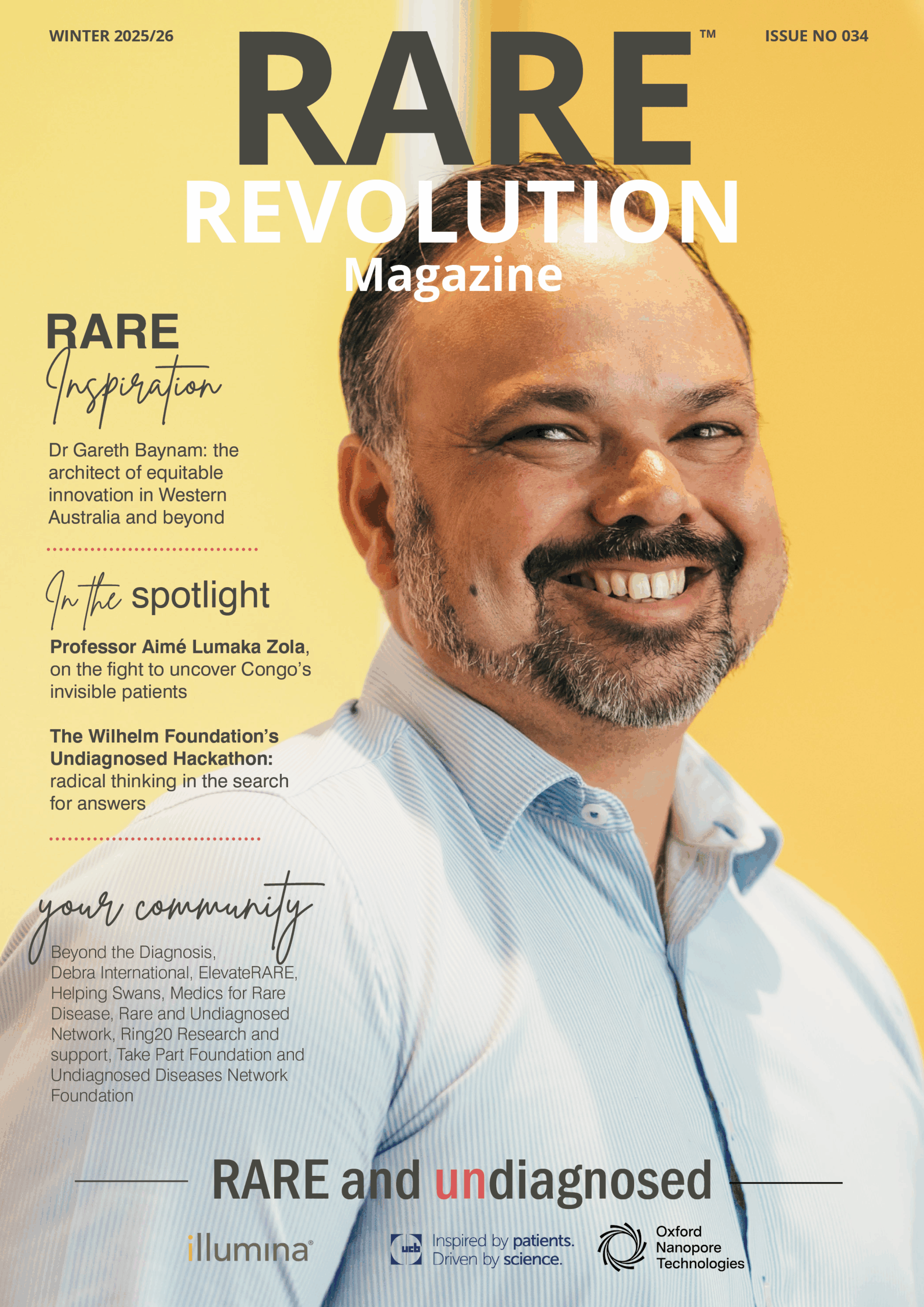
The inflection point for rare diseases – driving a new era of co-created innovation
SPONSORED CONTENT – THIS ARTICLE HAS BEEN FUNDED AND WRITTEN BY BIOGEN
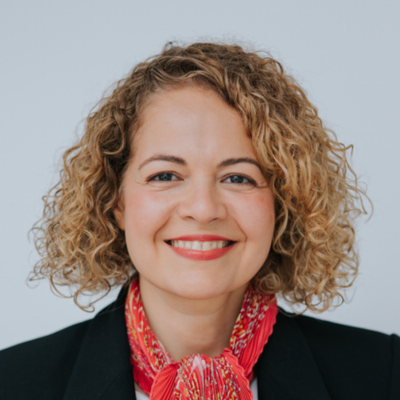
Michèle Melhem, head of rare disease, International Center of Excellence at Biogen discusses the need for urgent and authentic multi-stakeholder collaboration to co-create solutions that could accelerate rare disease innovation, underscoring Biogen’s commitment to true patient-centricity
Written by Michèle Melhem, head of rare disease, International Center of Excellence, Biogen
Every day, families living with rare diseases face a reality few can imagine; years of uncertainty, unanswered questions and decisions made without clear guidance. For many, the journey begins with a long wait, with research showing that an accurate diagnosis takes an average of 4-8 years.1 Parents watch key childhood milestones slip by while searching for answers that feel just out of reach. Even when a diagnosis comes, hope is often tempered by the fact that most rare conditions still have no approved treatment.
Today, more than 300 million people worldwide live with one of more than 7,000 rare diseases, and behind every statistic is a person and their loved ones, navigating a system that was never designed for their needs.1
Science offers possibilities, but progress depends on more than innovation—it depends on the systems that diagnose, treat and support these families.
Rare diseases stand at an inflection point, and the choices we make now will define what care looks like for generations to come.
Why urgency remains and the need for action
That inflection point is defined by urgency. The barriers holding families back today are no longer just about whether treatments exist—they are rooted in the systems that shape every step of care. These systemic gaps mean that even when science delivers new possibilities, patients can still face years of uncertainty.
For many, the first challenge is diagnosis. Rare neuromuscular and neurological disorders present with early symptoms that are often non-specific and mimic other serious illnesses, leading to delayed symptom recognition.2 In spinal muscular atrophy (SMA), every day without diagnosis can mean irreversible loss of function, while amyotrophic lateral sclerosis (ALS) patients experience significant delays that worsen outcomes.3,4,5
Even when treatments exist, access is far from guaranteed. In many countries, rigid reimbursement frameworks mean health systems are slow to adopt innovative treatments, leaving patients waiting months or even years—with profound and lasting consequences.
These challenges are compounded by fragmentation across health systems. Access varies widely between countries, and often even within them, because coordinated standards are missing and real-world data is not consistently available to guide decisions. Too often, geography—not clinical need—determines whether a patient receives timely care. For families already navigating an overwhelming journey, this inequity adds stress and delays that can have lasting consequences.
To catalyse change, systems must evolve across the entire patient pathway. Reducing diagnostic delays, ensuring timely access to approved therapies and addressing fragmentation cannot be treated as separate tasks; they are interconnected steps that demand a unified approach. This means working alongside patients, listening to the insights of healthcare professionals who care for them and their families and combining lived experience with clinical expertise to guide the best science. Together, we can co-develop strategies and solutions, leverage real-world evidence and build reimbursement frameworks designed for rare diseases. If achieved, no one would be left behind because of systems that have not yet adapted to the realities of rare diseases or where patients live.
The value of deep collaboration and strategic partnerships
If we are to turn urgency into action, collaboration must become the foundation of change. Rare diseases are too complex, and patient populations are too small, for any single stakeholder to solve these challenges alone. True change happens when patients, clinicians, researchers and industry partners co-create solutions that reflect real-world needs—making breakthroughs happen.
In more common conditions, larger patient populations, greater funding and interconnected stakeholders make collaborations easier. Cancer research offers a powerful example, with pharmaceutical companies having the opportunity to make changes in the pathway, such as redesigning clinical trials based on patient feedback about the burden of chemotherapy.6 Integrating patient perspectives effectively results in flexible regimens and improves enrollment in clinical trials, leading to faster and more comprehensive data collection.
Regulatory momentum is reinforcing this approach. From 2026, EU Health Technology Assessments (HTA) will require patient input in joint clinical assessments, starting with oncology.7 By 2028, orphan medicines will also fall under this framework, signalling a systemic shift toward embedding patient voices in decision-making.8 This evolution signals a promising and positive change; patient input will become a standard part of the process, not an exception.
Collaboration must also extend beyond regulatory frameworks to address inequities in diagnosis and access. Harmonising standards, building global real-world evidence networks and aligning policies are essential. Initiatives like OdySMA, launched by SMA Europe, map barriers to care and turn insights into advocacy and policy solutions.9 In Asia-Pacific, APARDO drives cross-country collaboration to improve diagnostic consistency and access equity, ensuring care is determined by patient need, not geography.10
Patient advocacy organisations are strengthening their role in shaping policy, influencing research and advocating for better care. For example, the Friedreich’s Ataxia Research Alliance (FARA) has successfully led initiatives such as its annual United Against Ataxia Hill Day—bringing patients, families, clinicians and legislators together since 2019 to drive legislative change—and securing recognition of a US National Ataxia Awareness Day, which has helped accelerate research and access to treatments.11
Yet, rare disease communities often face significant barriers. Despite systemic challenges, individuals and caregivers continue to drive progress, proving the power of collaboration and persistence.
These challenges mirror those faced across rare diseases, underscoring that progress cannot stop at innovation alone. Systems must evolve to deliver early, sustained and equitable care for every patient, everywhere.
Biogen’s approach to integrating patient perspective across the lifecycle
At Biogen, we believe advancement in rare diseases starts with listening. When patient voices are heard and insights from healthcare professionals are used to guide decisions, solutions better reflect real-world needs, strengthen HTA and reimbursement relevance and deliver lasting impact beyond approval. Systemic change requires patient-informed solutions, and we are committed to making that happen.
In clinical development, Biogen works with patient communities to shape study designs and ensure endpoints reflect real-life priorities. This patient centric approach includes practical measures; using inclusive, plain language in trial documents to improve understanding, reducing administrative burden during enrolment and actively listening to feedback from patients and caregivers throughout development. Regular advisory boards help ensure patient and caregiver perspectives inform decisions at each stage of the medicine lifecycle. These actions, coupled with early collaboration, lay the foundation for evidence that resonates with patients and decision makers when access discussions begin.
When therapies move toward approval, access decisions can determine whether innovation reaches those who need it. By bringing patient perspectives into HTA submissions, Biogen helps to ensure that evaluations consider what matters most to those living with rare diseases. For example, patient organisations in rare neuromuscular and neurodegenerative conditions have initiated independent surveys to capture real-world experiences and quality-of-life impacts for patients receiving early access to innovative therapies. These insights were shared proactively and directly by the patient organisations with health authorities and were recognised as valuable contributions during reimbursement reassessment discussions.
Turning urgency into action
The rare disease community has shown what’s possible when we work together, but there is still more to do. To truly make a difference, I believe we must go beyond improving systems and work together to redesign them, creating a unified approach for rare diseases.
Meaningful change requires partnership, persistence and shared accountability. At Biogen, our commitment to rare diseases is unwavering. By joining forces, we can accelerate access, sustain impact and ensure that what matters most to patients remains at the centre of every decision.
Together, we can turn urgency into action.
References
[1] Wang, X., et al. (2024). The landscape for rare diseases in 2024. The Lancet Global Health, 12(3), e341. https://doi.org/10.1016/S2214-109X(24)00056-1
[2] Phillips, C., Parkinson, A., Namsrai, T., et al. (2024). Time to diagnosis for a rare disease: managing medical uncertainty. Orphanet Journal of Rare Diseases, 19(297). https://doi.org/10.1186/s13023-024-03319-2
[3] SMA Europe. (n.d.). Newborn screening in SMA: Early detection. Retrieved December 18, 2025, from https://www.sma-europe.eu/newborn-screening-in-sma
[4] Frontiers in Neurology. (2025). Early diagnosis and management strategies in ALS. Retrieved from https://www.frontiersin.org/journals/neurology/articles/10.3389/fneur.2025.1542396/full
[5] Babu, S., et al. (2024). Specialists diagnose ALS twice as fast as general neurologists: Diagnostic delay significantly impacts patient outcomes. Amyotrophic Lateral Sclerosis and Frontotemporal Degeneration. Available at: https://www.als.org/stories-news/new-als-association-led-research-finds-specialists-diagnose-als-twice-fast-general
[6] Getz, K. A., Stergiopoulos, S., Short, M., & Hay, M. (2022). Measuring and mitigating patient burden in clinical trials: Insights from Bristol Myers Squibb, ZS Associates, and Tufts CSDD collaboration. Therapeutic Innovation & Regulatory Science, 56(2), 234–245. https://doi.org/10.1007/s43441-021-00373-4
[7] European Commission. (2021). Regulation (EU) 2021/2282 of the European Parliament and of the Council of 15 December 2021 on health technology assessment and amending Directive 2011/24/EU. EUR-Lex. Retrieved December 18, 2025, from https://eur-lex.europa.eu/legal-content/EN/TXT/?uri=CELEX%3A32021R2282
[8] Van Bael & Bellis. (2024, October 22). HTA Regulation – Publication of implementing regulation containing rules for cooperation involving European Commission and European Medicines Agency. Van Bael & Bellis Insights & News. Retrieved December 18, 2025, from https://www.vbb.com/insights/hta-regulation-publication-of-implementing-regulation-containing-rules-for-cooperation-involving-e
[9] SMA Europe. (n.d.). OdySMA: A quest to access. Retrieved December 18, 2025, from https://odysma.sma-europe.eu/
[10] Asia Pacific Alliance of Rare Disease Organisations. (n.d.). About. Retrieved December 18, 2025, from https://www.apardo.org/about
[11] Friedreich’s Ataxia Research Alliance. (n.d.). United Against Ataxia Hill Day. Retrieved from https://www.curefa.org/get-involved/advocate/current-initiatives/united-against-ataxia-hill-day/
Biogen-280264 January 2026

Disclaimer: Any medical information included in this article is not intended to form medical advice. It must not be used as a tool to help understand or assess potential options around diagnosis and treatment. Patients must consult a doctor to receive medical advice, diagnosis and treatment that is appropriate to their specific and unique circumstances. Biogen has both written and provided sponsorship to support the production and distribution of this article. RARE Revolution Magazine and Biogen are not responsible for the content of any external sites linked to or referred to within this article.