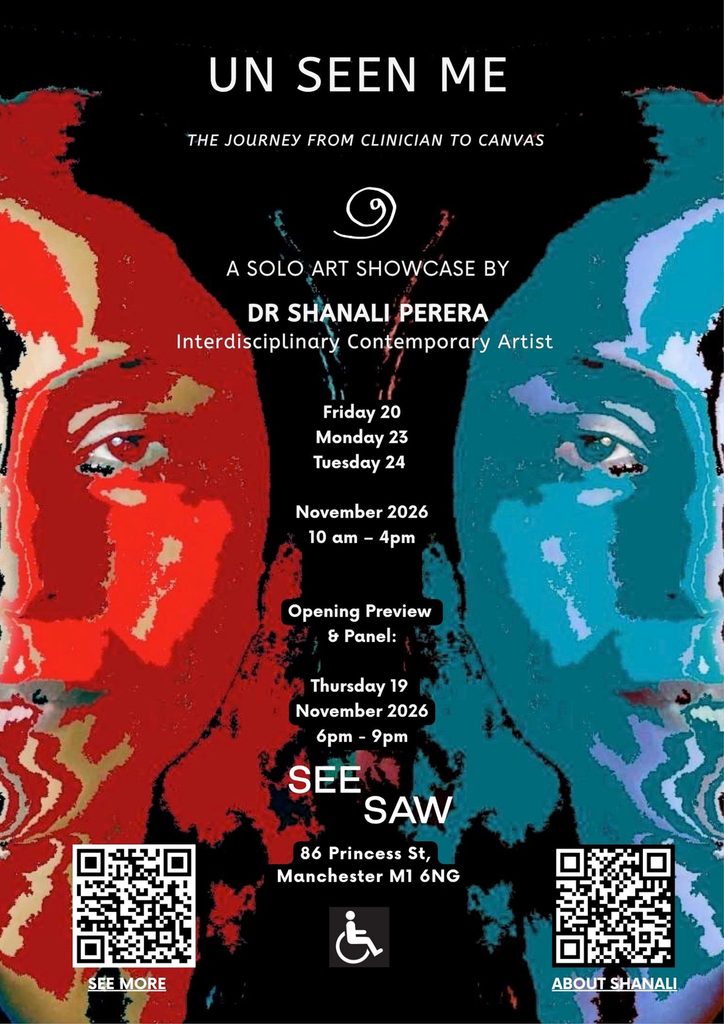
UN SEEN ME: when the doctor becomes the patient
Ahead of her solo exhibition UN SEEN ME, Dr Shanali Perera reflects on her journey from rheumatologist to patient and artist, exploring how creative expression helped rebuild her identity beyond clinical diagnosis
Written by Dr Shanali Perera
It felt like the high-speed train I was travelling on with my medical career, moving forward as a rheumatologist, suddenly derailed! My whole life paused. All at once, I wasn’t a person anymore. I became a patient. A condition. It dehumanised me. And that’s how my present journey with art and illness began…
One moment, I was seeing the everyday struggles patients go through and the next, I was living it. There is a particular kind of disorientation in becoming the person you once treated.
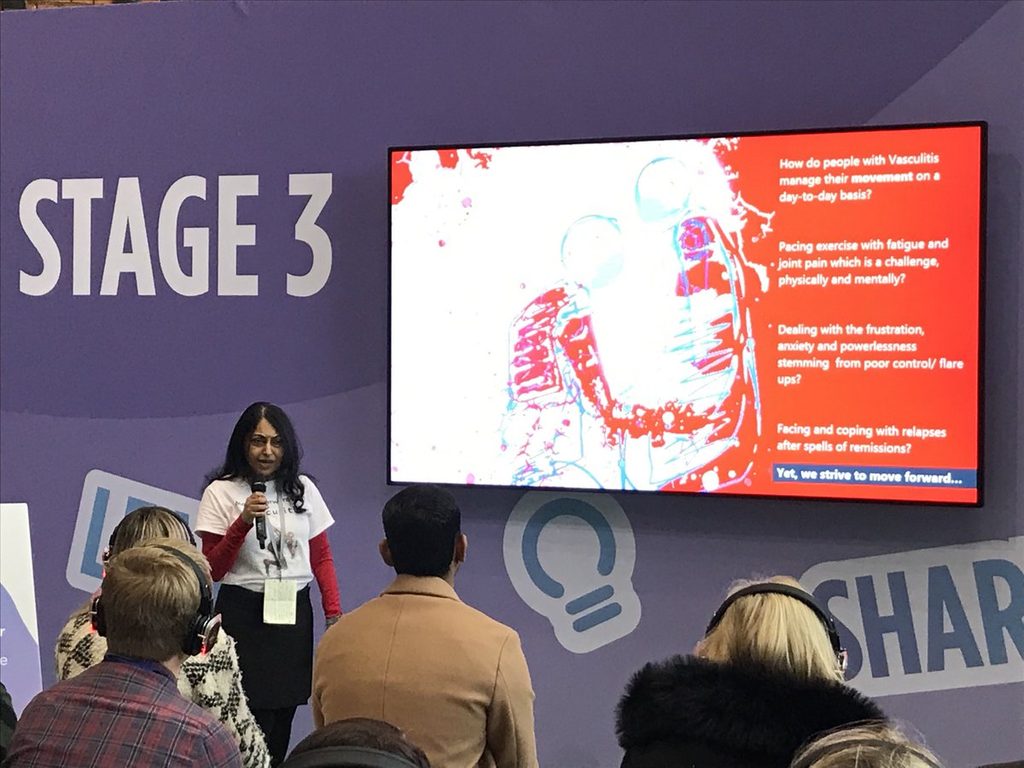
I trained and worked as a doctor, specialising in rheumatology. Medicine gave me a language for disease: symptoms, investigations, diagnoses, treatment plans. Then I developed vasculitis, a rare autoimmune illness, and suddenly that language was no longer enough. I knew how to describe what was happening clinically. I did not yet know how to describe what was happening to me.
Illness changed far more than my body. It disrupted the identity I had spent years building.
The role of doctor had shaped how I understood myself and how others understood me. Becoming a patient shifted that perspective completely.
I found myself living inside the gap between what could be measured and what could be felt: pain, uncertainty, altered capability, loss, adaptation and the strange experience of being recognisable to yourself and yet profoundly changed.
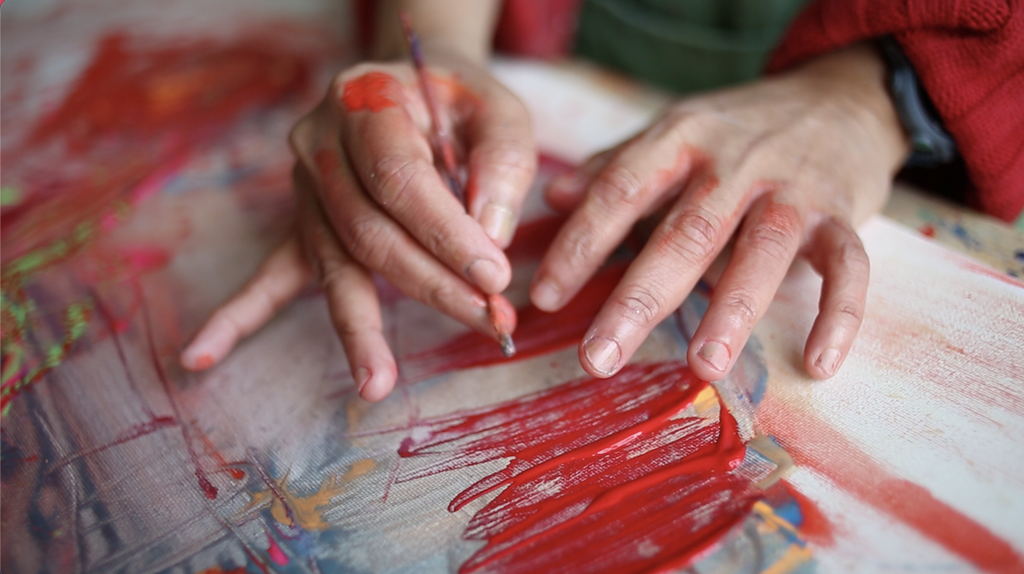
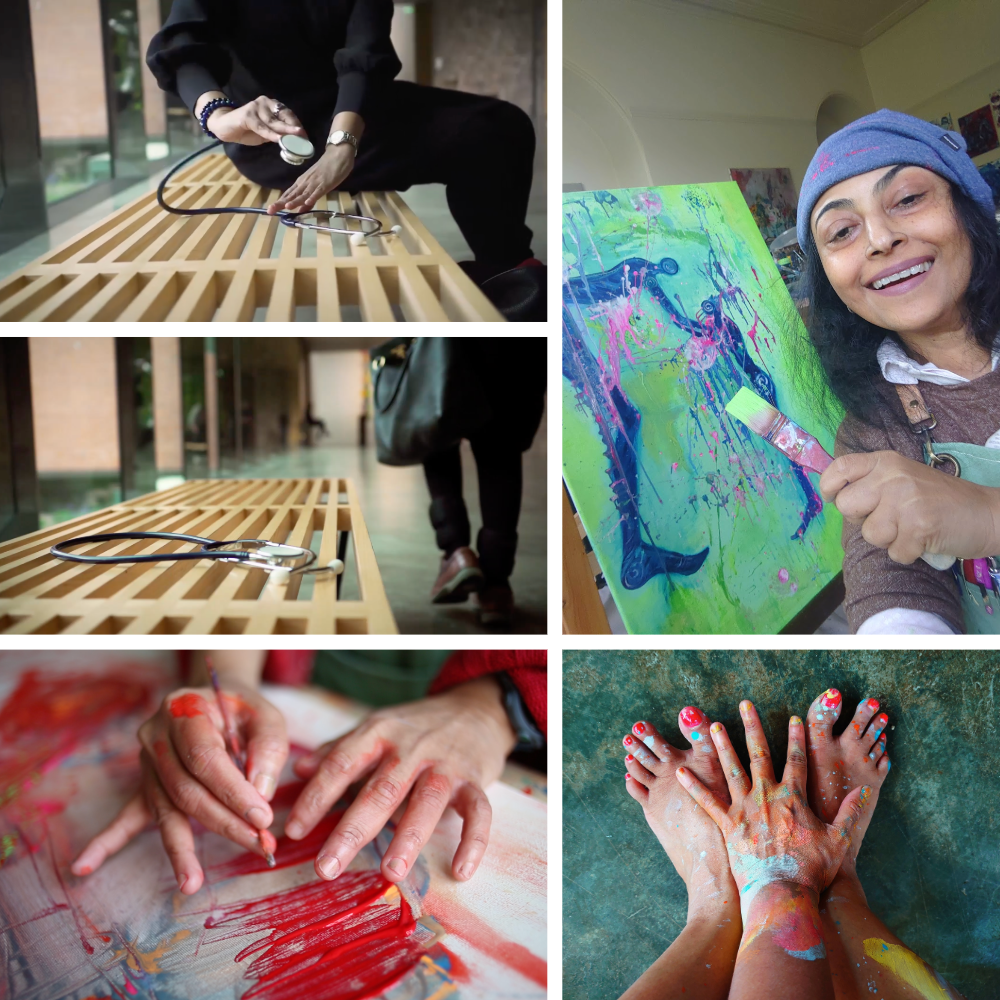
My hands were affected by pain and numbness, and the practical limitations of illness eventually made continuing in medicine impossible. Leaving my clinical career was not a neat transition from one profession to another. For a long time, it felt more like the disappearance of a self I knew. ‘I control what I create’ was the turning point for me. I couldn’t control my day, how illness evolves but I could control what I create. Artistic expression allowed me to symbolise what I was going through—drawing what my pain looked like helped to understand how I perceived it, the impact it had on me and what living with an illness really looks like and feels like as a bodily experience. As well as regain some of that control I had lost, enabling me to capture the ‘embodied invisible’.
That is how art entered that space gradually. At first, digital work offered a way to create when conventional methods were difficult. It gave me another vocabulary—one that did not require me to explain everything in sentences.
Over time, that vocabulary expanded. I moved into acrylic painting, working physically and intuitively with pouring, throwing, scraping and layering paint. I began incorporating fragments of medical journals, prescriptions and medication foils into collage. Materials associated with the clinical world could be broken apart and reconstructed.
The process mirrored something I was experiencing personally: identity did not have to be restored to its previous form in order to become whole again.
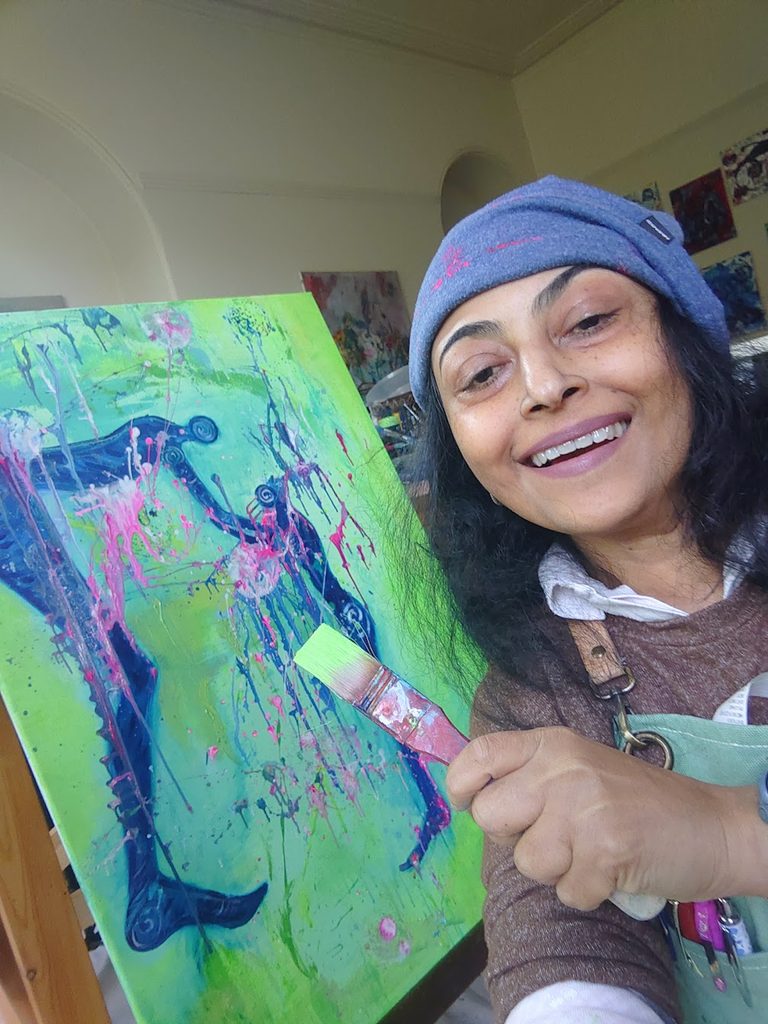
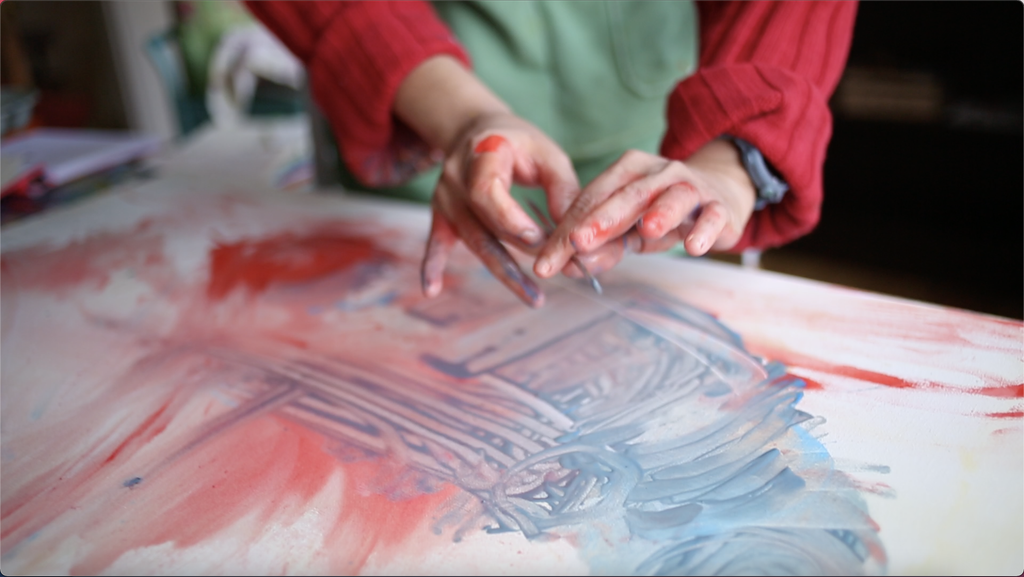
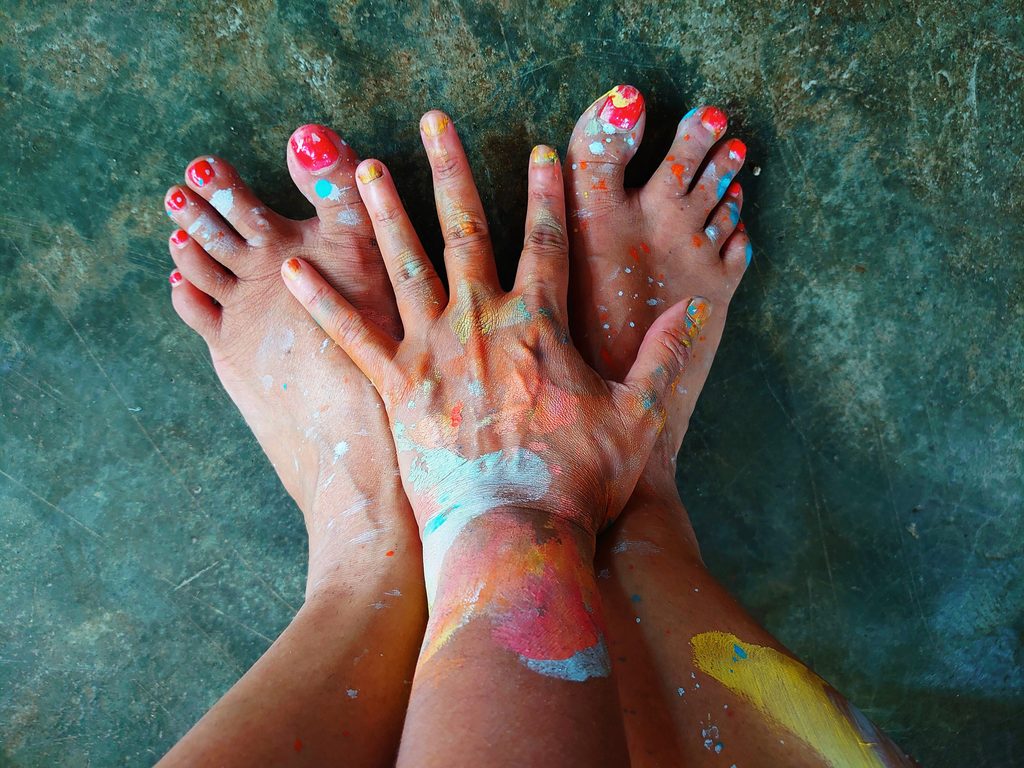
The canvases, be it digital, acrylic or mixed media, are my interpretation as an artist, clinician and a person living with illness, of these encounters helping to transform my lived experience into one filled with balance, purpose and meaning as I shifted roles from clinician to patient to becoming a person again. To find my way back, seeing beyond illness, becoming someone new, becoming the artist, making “I am not the illness – I am a person first’ my mantra now.
It wasn’t just living each day; it was transformation. The illness distorts my reality and I in turn distort the illness reality by channelling the pain I feel in my hands when I paint to what emotions I am feeling onto my canvas, thereby transforming pain into beauty. Art not only gave me back my voice and redefined my purpose, but it was also a way to connect with others navigating invisible struggles.
This November, those years of making come together in UN SEEN ME — The Journey from Clinician to Canvas, my solo exhibition at SEESAW in Manchester. The exhibition traces a journey through illness, identity, adaptation and creative reclamation, but I do not want it to function simply as an illustrated medical story. The work asks a wider question: what happens to a person when the identity through which they have been seen no longer fits?
The title UN SEEN ME deliberately holds a tension. Rare illness can make a person intensely visible through appointments, tests, symptoms and medical scrutiny while other parts of the self become strangely unseen. The patient can become the condition. The body can become evidence. Yet behind that clinical visibility is a person whose relationships, ambitions, sexuality, creativity, humour, fears and sense of self continue to exist. My work is interested in that space—in visualising what is present but not necessarily visible.
This is also why I resist the idea that the paintings are simply “about illness”. Illness is part of their origin, but the work has increasingly become about what lies beyond it: transformation, womanhood, identity, defiance, vulnerability and agency. Some paintings are turbulent and visceral; others carry a sense of movement or release. I think of them as dialogic canvases because I want the viewer to bring something of themselves to the encounter. You do not need to share my diagnosis, or even know anything about vasculitis, to recognise the experience of having a life interrupted or a familiar identity altered.
My previous life in medicine remains present in the work, but my relationship to it has changed.
I once looked at illness primarily through a clinical gaze. I now understand it through the body that lives it and through the artist who tries to translate it.
Neither perspective cancels the other. Instead, they sit alongside one another, sometimes comfortably and sometimes in tension. That intersection has become central to my practice and to my work within the medical humanities.
The opening of UN SEEN ME will include a panel conversation, Seeing Beyond the Visible, bringing different perspectives into dialogue around how contemporary art is made, interpreted, selected, valued and seen. The questions extend beyond my own story: Why does visualising the invisible matter? Can limitation alter creative language? Can making the visceral visual change how we see? Can challenging work thrive commercially? And, perhaps most importantly, who gets seen—and how?
For me, exhibiting this work is not a declaration that illness has been conquered or neatly resolved. Rare disease rarely offers such convenient endings. It is instead an assertion that a life changed by illness can continue to generate meaning, ambition and new forms of expression.
The clinician I was has not vanished, and the patient is not the entirety of who I became. Somewhere between those identities, the artist emerged.
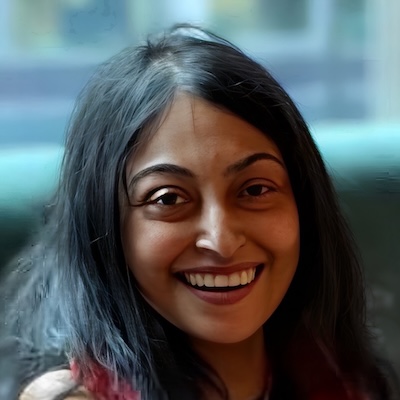
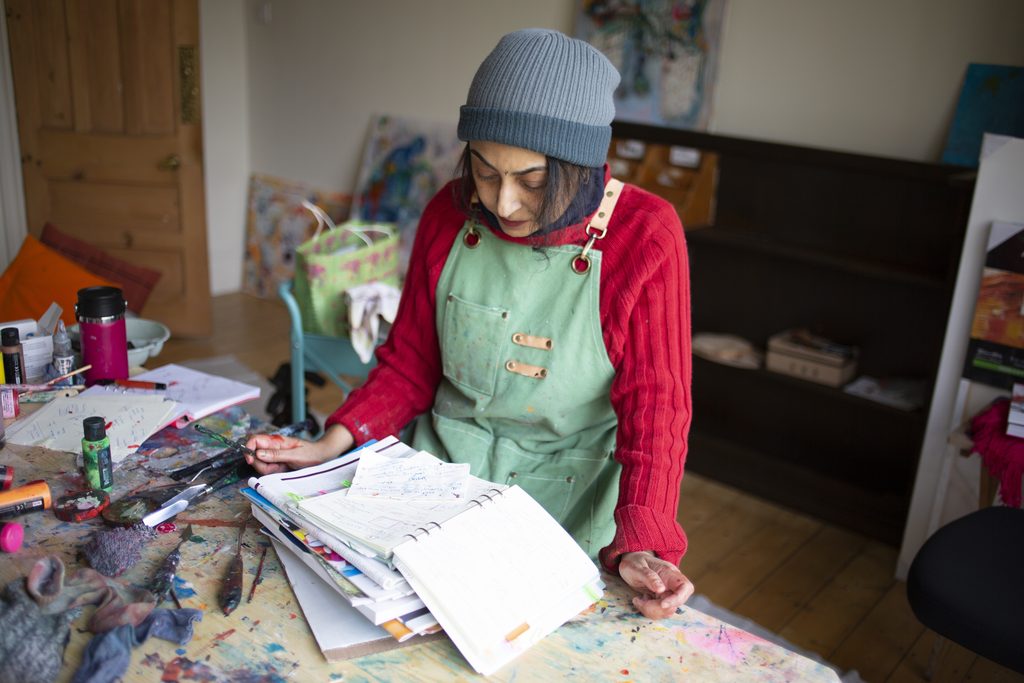
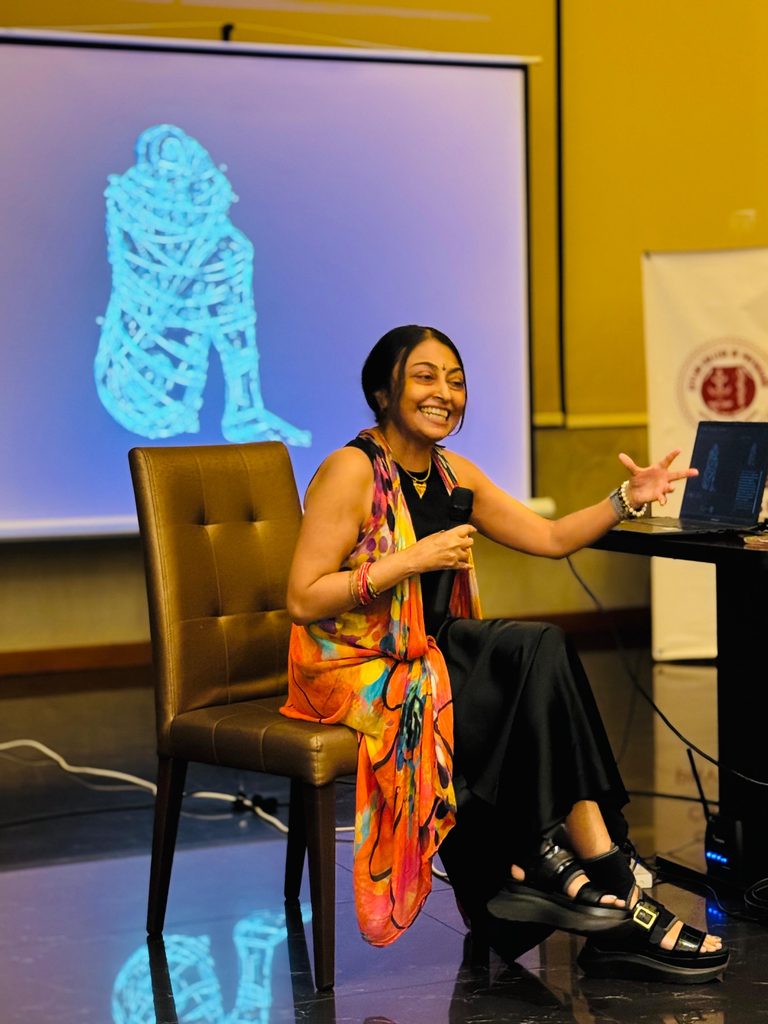
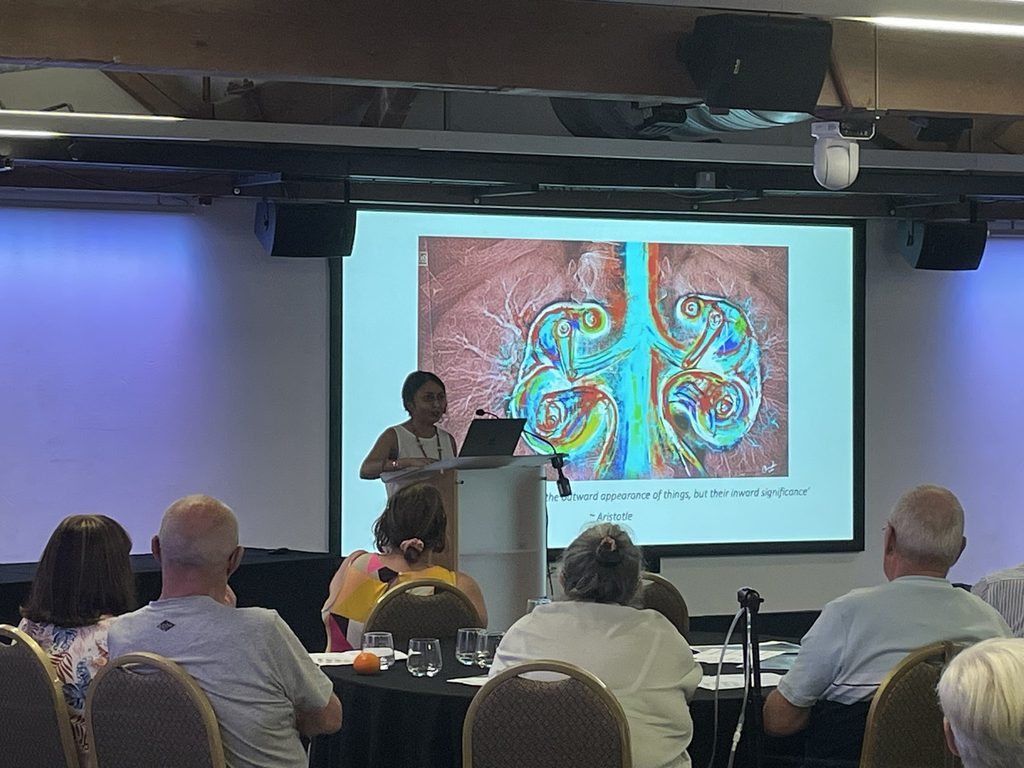
UN SEEN ME is an invitation to look again: beyond diagnosis, beyond professional identity and beyond the categories we use to make people legible. If there is one idea I hope visitors carry away, it is that being seen is not the same as being known. Sometimes we need another language—colour, gesture, material, image—to make visible what words cannot quite hold.
Exhibition information
UN SEEN ME — The Journey from Clinician to Canvas
19–24 November 2026
SEESAW, 86 Princess Street, Manchester M1 6NG
Opening night: Thursday 19 November 2026, 5–9 pm
Artist: Dr Shanali Perera
Website: www.unseenme.carrd.co
#unseenme2026 #drshanaliperera #cliniciantocanvas