When strength looks like rest
Written by James Kuhn
There’s a version of strength many of us were raised to admire—the kind that pushes through, shows up no matter what and refuses to slow down. For most of my life, I believed strength meant pushing through, no matter the cost.
I lived by that definition for years. It shaped how I worked, how I showed up for others and how I measured my own worth. If I could keep going, I was strong. If I needed rest, I was falling behind.
But life has a way of rewriting the definitions we cling to.
Living with a rare disease taught me something I never expected: sometimes the strongest thing you can do is stop—not collapse, not quit, but stop intentionally, early, and with care. It’s a quieter kind of strength and one I’m still learning to honour.
The moment strength shifted for me
Not long ago, I sat on the edge of the couch before a routine appointment. Nothing dramatic. Nothing urgent. Just a simple moment when my body whispered what it needed long before it shouted.
The old version of me would have pushed through. “I’m fine,” I would have told myself. “Just keep going.”
I used to wear exhaustion like a badge of honour.
But that morning, I paused. I listened. I chose rest—not because I had run out of strength, but because I wanted to protect the strength I still had. That choice didn’t feel weak. It felt wise.
Rest isn’t defeat—it’s discernment
Rest often requires more courage than pushing through ever did. It asks for honesty about your limits, the humility to say, “not today,” the willingness to disappoint someone else so you don’t abandon yourself, and the discipline to stop before you crash.
People often assume rest is passive. But anyone living with chronic illness, caregiving responsibilities or long-term uncertainty knows the truth:
Rest is active. Rest is intentional. Rest is work. It’s the quiet work of protecting your future self.
The invisible strength behind pausing
There’s an entire world of resilience that happens behind the scenes—the kind no one sees unless they’ve lived it. The emotional labour of pacing. The constant mental math of energy budgeting. The quiet recalibration of “Can I?” versus “Should I?”
And sometimes, the courage to choose the quieter path when the louder one gets the applause.
These aren’t signs of weakness. They are signs of someone who knows their body, honours their reality and refuses to burn themselves down to meet expectations that were never designed for them.
Letting go of old metrics of strength
One of the hardest parts of this journey has been letting go of the old measurements of strength I once lived by—endurance, productivity, performance. There’s grief in that. There’s identity work in that. There’s a quiet unravelling of who you once believed you had to be.
But there’s also freedom.
Because when you stop measuring strength by how much you can carry, you begin to notice how much wisdom it takes to set something down. You begin to see strength in boundaries, in pacing, in saying, “I need a moment,” in choosing sustainability over speed.
Rest as preparation, not retreat
Rest isn’t what you do when you’ve failed. Rest is what allows you to keep going. It’s a reset—a strategic pause that protects your energy, clarity and ability to show up with intention.
When I rest early—before I’m depleted—I’m more present, more grounded and more myself. Rest doesn’t pull me away from my purpose. It prepares me for it.
A gentle invitation
If you’re wrestling with your own relationship to rest, here’s what I want you to know:
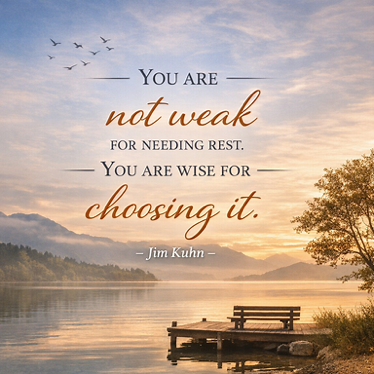
You are not weak for needing rest. You are wise for choosing it.
Strength isn’t always the push. Sometimes it’s the pause that keeps you whole.
For those of us living with illness, uncertainty or invisible battles, rest is not surrender. It’s stewardship—caring for the body and spirit we’ve been entrusted with.
And if today is a day when your body is asking you to slow down, I hope you listen. Because sometimes the bravest thing you can do…is close your eyes, take a breath and choose to begin again tomorrow.
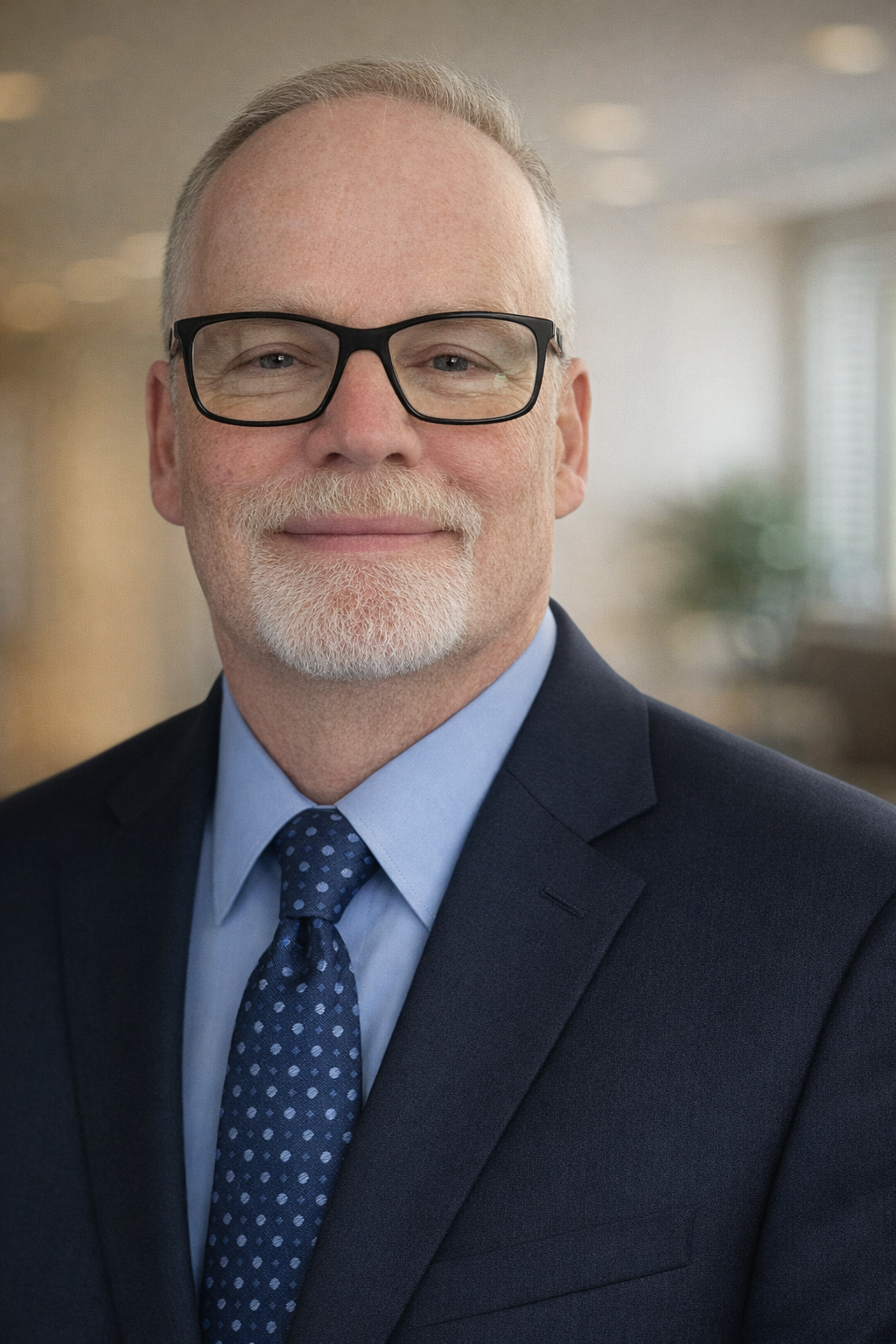
About James (Jim) Kuhn
Jim Kuhn is a rare disease patient, advocate, speaker and mentor. Diagnosed in 2014 with sarcoidosis-associated ILD, he also lives with several closely related rare conditions. His complex medical challenges have left him fully disabled since 2016.
Before his diagnosis, Jim spent more than 30 years as a successful global business leader, concluding his career with five years of full-time missionary work. Today, he is an accomplished speaker and a regular blog contributor, sharing insight into life as a rare disease warrior.
Jim and his wife of 38 years refuse to let disability diminish their joy. Living in the Greater Orlando area, he still finds ways to enjoy gardening, movies, travel and time with family. Together, they’ve learned to cherish each day and live fully in the moment.
Rare Patient Voice, A Konovo Company, are the proud sponsors of the Patient Voice section of RARE Revolution for February, March and April 2026. They provide patients and family caregivers an opportunity to participate in all types of research including market research, health economics outcomes and real-world evidence, user experience/human factors studies and clinical trials. The RPV community includes over 185,000 patients and family caregivers across more than 1,500 diseases, both rare and non-rare, in nine countries. Learn more here.