Every story counts: how understanding the diagnostic journey could help transform rare disease care
SPONSORED CONTENT
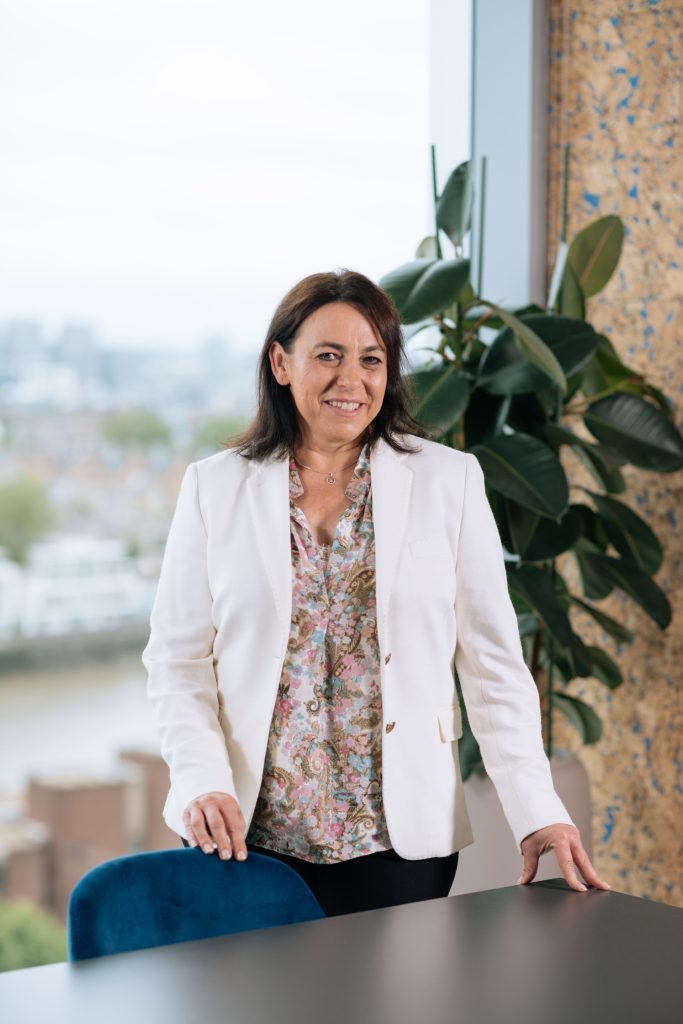
Sara Elgott is the founder of OpalMedica, a MedTech company dedicated to accelerating earlier detection of rare and underdiagnosed conditions. Drawing on 30 years of industry experience, and her mother’s own rare journey, Sara believes that every diagnosis leaves a trail of vital clues and by systematically capturing these personal stories, we can identify hidden patterns, empower primary care and shorten the path to answers for future generations
Written by Sara Elgott, founder of OpalMedica
The search for answers
If you’ve spent years searching for an explanation for your symptoms, you’re not alone.
For many people living with a rare disease, diagnosis is not a single moment of clarity. It is the end of a journey that may have taken years, often decades. Long before a diagnosis is reached, people can find themselves moving from one appointment to the next, trying to make sense of symptoms that don’t seem to fit together. Tests may come back normal. Referrals may lead to more questions than answers. All the while, life continues around them.
Within the rare disease community, this experience has become known as the diagnostic odyssey. It is a phrase that reflects not only the time it can take to reach a diagnosis, but also the uncertainty that accompanies it. Yet no two journeys are ever quite the same. Every person remembers different moments, different conversations and different turning points. Every story adds another piece to our understanding.
After more than 30 years working in the pharmaceutical industry, focused on rare diseases, I have come to believe that every diagnosis leaves behind a trail of clues.
Some are recorded in medical records. Others appear in referral letters, clinic notes and test results. Others exist only in the memories of the people who lived through it. They are the symptoms that seemed insignificant at the time, the appointment that almost led somewhere, the question that was never asked or the moment when everything finally made sense in hindsight.
If we want to help shorten the diagnostic journey for future generations, we first need to understand those clues.
Not because anyone has failed, but because recognising a rare disease is genuinely difficult.
There are over 7,000 recognised rare diseases, many of which share symptoms with far more common conditions. Fatigue, headaches, abdominal pain, high blood pressure, diabetes, anxiety or weight changes are familiar presentations in everyday clinical practice. Seen individually, they rarely point towards a rare disease. It is only over time, as different pieces gradually come together, that a clearer picture begins to emerge.
The challenge is not a lack of commitment. It is the nature of rare disease itself.
Too often, conversations about diagnostic delay focus on what should have happened differently. In reality, clinicians make decisions every day based on the information available at that moment. Rare diseases are uncommon by definition, and expecting any healthcare professional to immediately recognise one condition among thousands, often during a busy consultation, is unrealistic.
Looking forward
For me, this has never been an abstract issue.
Many years ago, my own mother began experiencing symptoms that no one could fully explain. Like so many people living with a rare disease, she spent years searching for answers while the people caring for her tried to understand an increasingly complex picture. She was eventually diagnosed with Cushing’s syndrome just one day before she died. She was only 52 years old.
For a long time, I found myself asking whether the diagnosis could have come sooner. Today, I ask a different question: what can we learn from journeys like hers that might help someone else?
That question has shaped every stage of my career.
Working in the pharmaceutical industry gave me the privilege of collaborating with clinicians, researchers and patient organisations across many different rare diseases. Although every condition was unique, one thing remained remarkably consistent—patients often remembered details that never appeared in a medical record. They remembered when something first changed, how symptoms evolved over time, which questions they wished had been asked sooner and the impact that years without answers had on every aspect of their lives.
Those experiences are deeply personal, but they are also incredibly valuable.
I often think about the diagnostic journey as a picture assembled over time. Patients hold some of the pieces. Families hold others. General practitioners bring a broad understanding of the individual, while specialists contribute knowledge of specific conditions. Medical records provide another perspective, but they rarely tell the whole story. No one person sees the complete picture from the beginning.
Seeing the whole picture
That is why primary care has such an important role to play.
General practitioners are uniquely placed to care for people over many years, recognising changes that unfold gradually and understanding the wider context of a person’s health in a way that few others can. Supporting earlier recognition in primary care is not about replacing clinical judgement or asking clinicians to think differently about every patient they see. It is about finding ways to bring together information that already exists, so patterns that might otherwise remain hidden can become easier to recognise.
That is also why listening matters.
For decades, people living with rare diseases have generously shared their experiences through support groups, patient organisations and conversations with researchers and healthcare professionals. Those individual stories have helped shape clinical understanding, influenced research priorities and driven improvements in care. Yet there is still so much we can learn by bringing those experiences together more systematically.
Every diagnostic journey adds to our understanding. The challenge is making sure that knowledge is never lost.
Call to action
If you’re living with a rare disease, I’d like to invite you to share your experience. The questionnaire takes just five to ten minutes to complete, but the experience you share could help us better understand the diagnostic journey, contribute to future research and help someone else reach answers a little sooner.
Your story belongs to you. We ask for your name when you create a My Rare Journey account, but your personal details are kept private and are never shared outside OpalMedica. The experiences shared through My Rare Journey are analysed alongside those of other participants so we can better understand the diagnostic journey while protecting individual privacy.
Every diagnostic journey adds to our understanding. If you’ve already travelled that journey, perhaps your story will help make someone else’s a little shorter.
To learn more, please visit, opalmedica.co.uk
To share your experience, please visit, myrarejourney.com/tell-your-story