Stronger
FESCA uniting scleroderma advocacy across Europe
Content sponsored by argenx
Working across borders, the Federation of European Scleroderma Associations (FESCA) is leveraging alliances, data and patient leadership to tackle entrenched disparities in care and access to treatments. FESCA, president, Sue Farrington and vice-president, Ilaria Galetti, share how a united European voice is reshaping scleroderma advocacy—from grassroots capacity-building to influencing high-level policy
Written by Nicola Miller, RARE Revolution
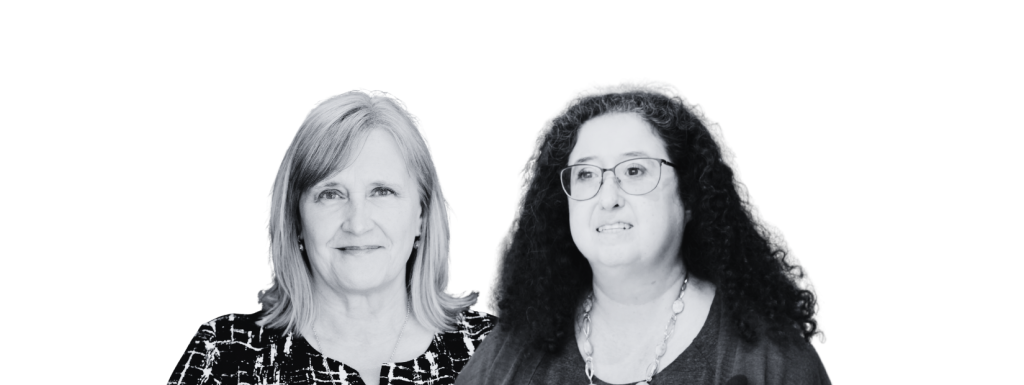
Interview with
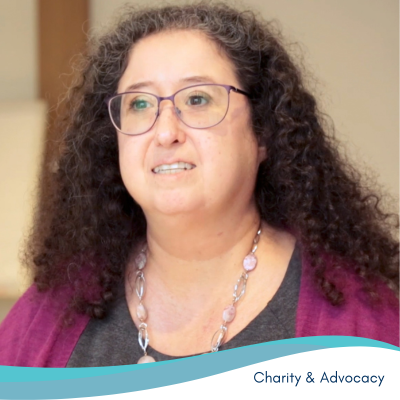
Sue Farrington, president FESCA, chief executive, Scleroderma and Raynaud’s UK (SRUK) and
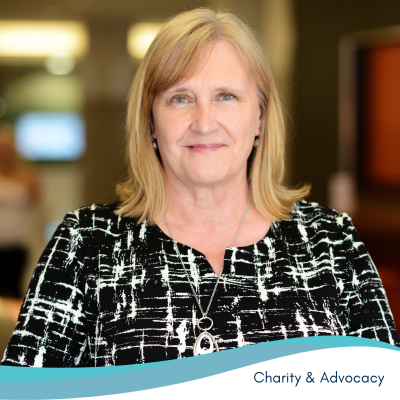
Ilaria Galetti, vice president, FESCA
Building a bigger voice: why alliances matter
For a rare disease like scleroderma (an umbrella term for conditions that cause the skin and connective tissue to tighten, which includes systemic sclerosis), numbers are everything—especially when it comes to advocacy. FESCA, president, Sue Farrington, sets the scene, “When you have a rare disease affecting a small population size, the importance of making connections not just within a country but across country borders is critical”.
FESCA’s strength lies in its role as an umbrella organisation, connecting national patient groups across Europe and helping them to grow in both confidence and impact. That cross-border network, Sue explains, allows FESCA to identify uneven levels in development evolution.
“What we’ve found at FESCA is that different countries are at different stages in developing the support for their community, and this is where FESCA can really help with capacity building and knowledge sharing.”
At the same time, FESCA is increasingly recognised at a European policy level, where a collective voice carries far more weight than fragmented national efforts. “We’ve got a role at a European level,” Sue notes, adding, “we are really able to be a collective voice for our community in terms of trying to drive change and influence policy”.
When FESCA engages with MEPs, the European Commission, or contributes to rare disease strategy work, it does so on behalf of multiple national alliances—transforming individual concerns into shared, data-backed, advocacy priorities.
Listening first: member-driven strategy “from the ground up”
FESCA’s vice-president, Ilaria Galetti, is clear that FESCA’s strategy does not impose a “top-down” agenda. Instead, “it is consciously built from the ground up”. “It’s primarily about listening,” adds Sue. “One of the first exercises we did was to sense check with the groups—where are your challenges as organisations, and where are the challenges for your community?”
This early work included structured tools to determine need and priorities, as Ilaria explains. “We started with PEST (political, economic, social and technological) and SWOT (strengths, weaknesses, opportunities and threats) analyses. In this way, we explored the threats, the challenges, the opportunities, and then we brought these national topics to the European level”.
This approach ensures that FESCA’s high-level advocacy is rooted in the realities of local communities, while still pursuing overarching goals such as equitable access to treatments and care. “Our strategy and our approach are built through understanding what’s happening at an individual national level so that we then structure a response that is appropriate,” Sue adds.
Best practices across borders
Avoiding duplication and “reinventing the wheel” is another core function of an umbrella alliance. FESCA has deliberately created space for member organisations to showcase what they do best. Ilaria shares, “We’ve been inviting the patient organisations to share what they’re proud of, what they think is working, so that we can take these examples of best practice and share them with other communities to adapt as appropriate”.
What’s striking is that this flow of learning is not simply from “established” to “less-established” organisations. Newer or less-established groups may bring fresh ideas, prompting more established groups to re-examine their own approaches. Sue describes having been “really blown away” by initiatives emerging from fledgling national members.
On a more formal level, beyond national patient groups, FESCA also works within the European Reference Network (ERN) for connective tissue diseases, where shared clinical expertise can directly influence clinical care. Sue highlights the Clinical Patient Management System (CPMS) as a powerful example: “A general rheumatologist in, say, Romania can enter into the system an issue that they may be having with a patient and across the European network, somebody will respond. This means that clinical knowledge can now cross borders”.
FESCA actively promotes and advocates for this model: “We are constantly bringing this to the attention of MEPs as a way of improving health outcomes. Without necessarily having to spend huge amounts of money on establishing specialist centres in every region where patient numbers are low, the CPMS means that this expert knowledge can now be accessible to all, fundamental in bridging existing knowledge gaps.”
Tackling disparities in access: the power of data
Disparities in access to specialist care remain a defining challenge for people living with scleroderma across Europe. Here, FESCA’s cross-border perspective is crucial, where they act as a vital conduit to useful data.
“We try to give meaningful data to our national members, and with that data, they can go and lobby in their own country,” explains Ilaria. Comparative data—such as differences between Italy and Sweden, for example—enable national organisations to demonstrate where their systems are falling behind. “When we talk to policy makers, we are always driven by data, which we believe is the most important thing and gives the most credibility,” she adds.
Alongside service-level data, FESCA is also elevating patient experience data as an advocacy tool. Sue points to a growing recognition of its value in influencing treatment access and regulatory decisions: “One of the areas that we are starting to really build on is an understanding across our community of the value of patient experience data and how that can be used to hopefully influence and inform access to treatments”.
This underpins initiatives like the Patient Academy, designed to strengthen patients as research partners, and a new survey on equity of access to treatments, led by Ilaria: “We are running this survey on the equity to access to treatments—pharmacological, non-pharmacological, and the holistic realm including financial—to show that the burden of the disease is not only the pain, the fatigue, but also the economic burden that impacts on all the family”.
Crucially, Ilaria links this to evolving Health Technology Assessment (HTA) processes, where patient voices are increasingly recognised: “With the new HTA regulation, patients are allowed to participate, and they have a voice in these procedures. And we have already appointed one of our members to the JCA (joint clinical assessment) consultations”. All positive steps to show the value of patient data in tackling existing disparities—first by shining a light on the gaps and secondly by moving that light to showcase improved outcomes in territories where progress has closed those gaps.
Joining forces beyond scleroderma and grassroots advocacy
While FESCA remains firmly rooted in scleroderma, both Sue and Ilaria emphasise the strategic importance of aligning with broader rare disease and autoimmune alliances.
“When we look at the challenges faced by our community—time to diagnosis, equitable access to treatment and care, and lack of coordination of care—these are issues that apply to many rare conditions,” Sue notes. That recognition is driving more cross-condition collaboration. “As scleroderma, we’re not going to affect those changes alone, but if we collect together with other autoimmune conditions or other rare diseases, we are going to be far more powerful,” she adds.
FESCA is, for example, an active member of EURORDIS and the European Patients’ Forum (EPF) and contributes to task forces working on a European-wide rare disease strategy.
Ilaria underlines how this networked approach operates in practice: “We are members, for instance, of EURORDIS and EPF. By sharing what we each know, together we can build with the other parties a strategy or an activity, or a project together”.
This culture of sharing—rather than competing—is, she points out, almost characteristic of the rare disease community: “It’s typical of rare disease organisations—sharing, which is not common in normal diseases, high prevalence diseases”.
Building partnerships that extend beyond patient and advocacy organisations to include industry and academia are also essential, because, as Ilaria puts it, “We can only solve complex rare disease challenges when scientific innovation, real-world evidence and lived experience sit at the same table.”
Technology, listening and the next phase of strategy
Although FESCA has achieved significant momentum, many of its original strategic aims remain works in progress—especially reducing time to diagnosis. “We still struggle to reduce the time to diagnosis,” Sue admits. “The strategy is now over five years old—we need to ask what’s been achieved, what still has to be achieved”.
Here, Sue and Ilaria see an opportunity to combine the basics—listening and communication—with newer tools like AI and data-driven decision support: “We’ve often pushed the necessity to have increased knowledge and education amongst primary care level physicians, but if it’s us and 7,000 other rare diseases all clamouring for their attention, it’s not realistic. So, how do we deploy technology and AI to help us more effectively?”
For systemic sclerosis, she notes, there are clear red flags (Raynaud’s, puffy fingers, reflux, breathlessness) that could be flagged through decision-support prompts in primary care systems—nudging GPs towards earlier testing or referral. Yet, at its heart, FESCA’s work keeps circling back to something deceptively simple. “It does all come back to fairly basic concepts—listening and communication”. Sue reflects. “It’s us listening to our community, primary care physicians listening to their patients and industry listening to the needs of all. It is that basic in many ways. Listening and communication”.
From coordinated European advocacy to local capacity-building, that principle—listening, then acting together—is what gives FESCA’s alliances their power and where they continue to work in harmony as one united voice.
Several FESCA-driven resources and initiatives emerged as particularly influential:
- Joint awareness campaigns for World Scleroderma Day, where all member organisations unite to reach healthcare professionals with consistent messaging.
- The Scleroderma Patient Academy, which grows and strengthens patients as research partners and feeds into regulatory and HTA processes.
- The forthcoming European survey on equity of access to treatments—capturing both clinical and economic burden across borders.
Together, these resources exemplify how alliances like FESCA are equipping patients, caregivers and advocates not only to share their lived experiences—but to convert those experiences into evidence, strategy and change.
To learn more about FESCA please visit: https://fesca-scleroderma.eu/
Connect with Sue Farrington via LinkedIn: https://www.linkedin.com/in/sue-farrington-9b76aa6bv/
Connect with Ilaria Galetti on LinkedIn: https://www.linkedin.com/in/ilaria-galetti/
Articles are for information only and do not form the basis of medical advice. Individuals should always seek the guidance of their medical team before making changes to their treatment.
This article was sponsored by argenx.
argenx have had no editorial control over the copy, and all opinions are those of the contributor.
RARE Revolution Publishing® retains all copyright.