A seat, a voice, a vote: reimagining the role of SMA patient advocates in research and care
In a world where inequity is commonplace, global collaboration is key to advancing standards of care and treatment for those with SMA and elevating the voices of the SMA community. SMA Europe has created initiatives to uplift advocates and give them the tools and knowledge needed to secure a seat at the table and to be seen as equal partners, driving positive and valuable change. Christian Pfeiffer and Eva Stumpe discuss these initiatives and their hopes for the future of SMA advocacy
Written by Emma Bishop
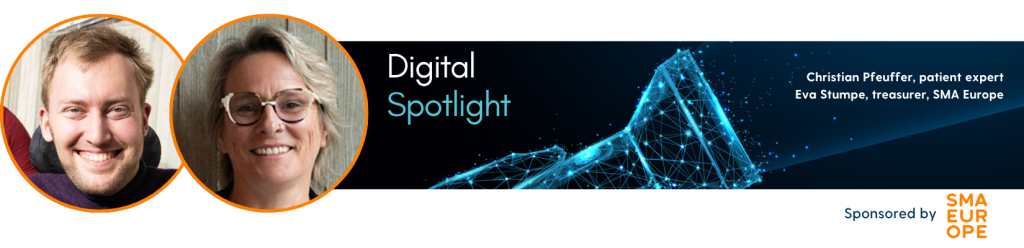
Interview with Christian Pfeuffer, patient expert, and Eva Stumpe, treasurer, SMA Europe and SMAcademy Advisory Board member.
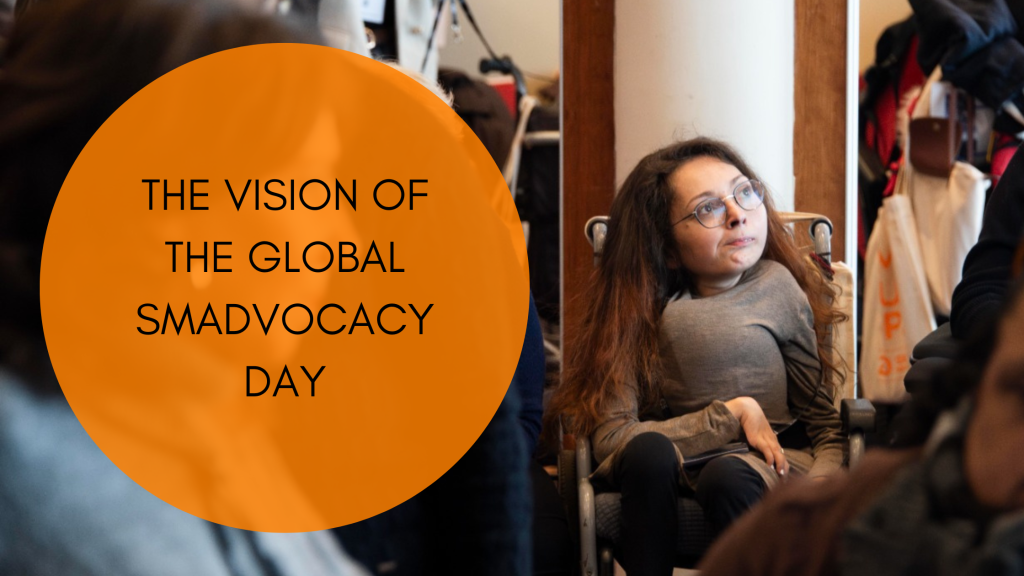
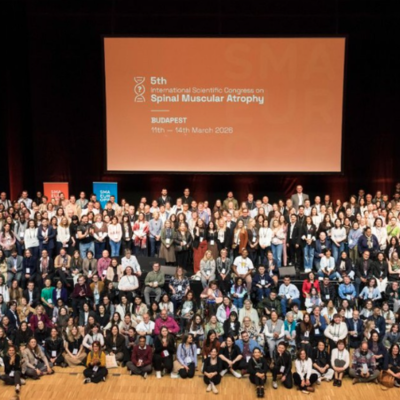
The Global SMAdvocacy Event is an initiative of SMA Europe, designed to strengthen the work of the global community of SMA advocates. It brings together representatives from across the world to connect, share experiences and best practices, to work towards shared goals in advocacy, access and care. After the inaugural Global SMAdvocacy Event in Ghent, Belgium, in 2024, the second edition held this year in Budapest saw 70 patient advocates from 45 organisations, representing 40 countries, come together for the good of the global SMA community.
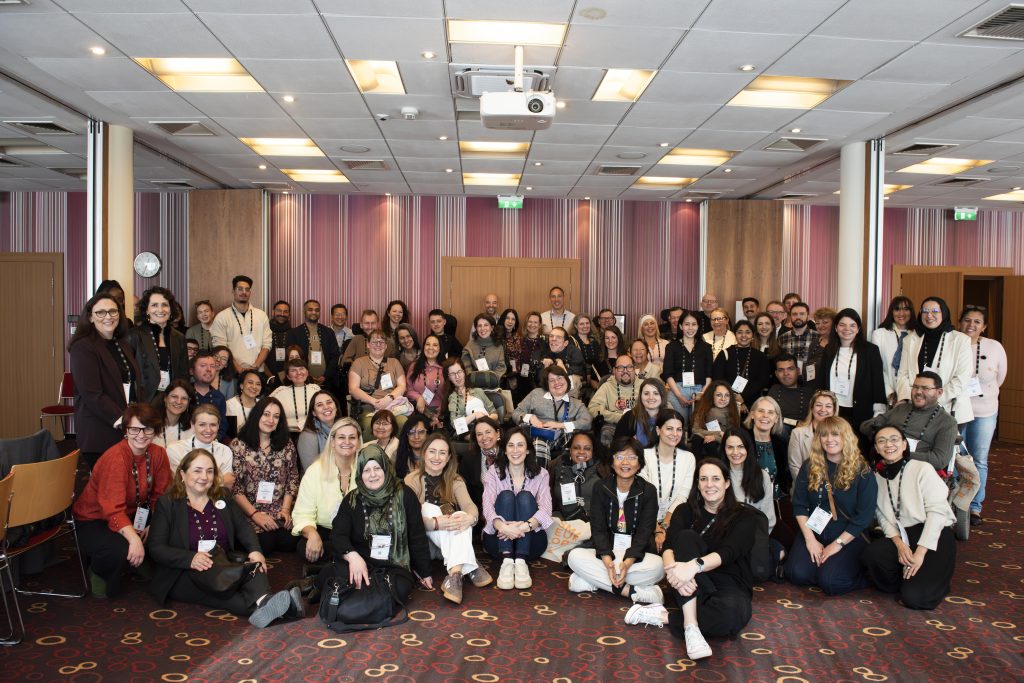
Eva Stumpe is treasurer for SMA Europe and SMAcademy Advisory Board and describes what a special experience it is to gather so many people with a common shared vision.
“SMA is a rare disease, which means there are not that many patients and not that many patient advocates and so to be in a room with 70 patient representatives from all over the world is unique. The opportunity to connect, exchange and network, raise your voice and the result is more impact.”
Eva believes the return on investment is a rise in more knowledgeable and educated patient advocates, something she witnessed at the second SMAdvocacy Event in Budapest, Hungary, in 2026, just two years after the first event in Ghent. “What we do, as SMA Europe, is invest a lot of work to prepare and moderate the event and what we hope to get back is that we create a strong network, which, in the end, brings us closer to our goals.”
Christian Pfeuffer, patient expert for a German SMA member organisation, agrees that the Global SMAdvocacy Event is a unique experience. He notes that the value for patients is the feeling of being heard, of having representation at the table and contributing to be part of bigger discussions. Tangible outcomes, such as those relating to treatment and care, filter through from these discussions further down the line, but knowing that global collaboration is happening is really key for those on the ground.
Christian says there’s a real benefit of learning from other organisations, especially when patient groups have limited money and resources.
“To see the best practices from other countries is quite stimulating because it shows you possibilities. The needs are the same and it’s very valuable to see just what’s possible with the resources we have.”
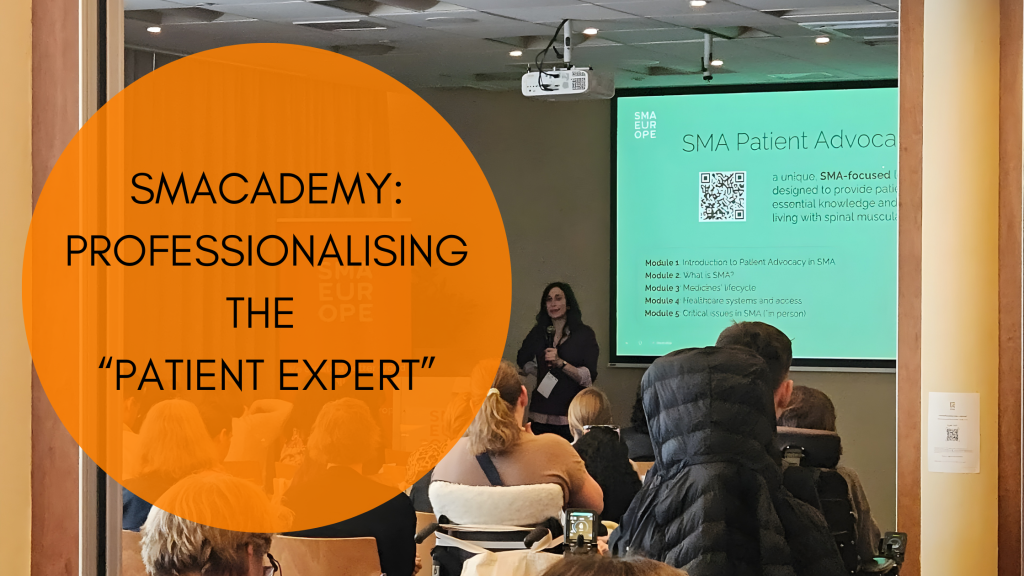
SMA Europe’s, SMAcademy, is an initiative aimed at building capacity among patient advocates by providing targeted training and learning resources. It equips patient advocates with the tools they need to navigate advocacy and patient engagement opportunities in many settings, such as research, clinical trials, treatment access and policy. The programmes are designed in partnership with the SMA community and nurture international collaboration.
Eva reflects that in the era of social media, it is no longer enough for patient advocates just to share their stories. Stakeholders, such as payers and regulators, can now access an abundance of human stories online, and the impact can become diluted. As she explains,
“You now have to come with something different to make them [industry representatives] understand your needs, for example, evidence-based data. But to present this you have to have a certain understanding and therefore you need training. We, as patients who are living with SMA ourselves or caring for someone who has this condition, have lived experience of this condition, which other stakeholders normally lack. But on top of this, you need to have another expertise; you need deep knowledge of SMA. You need to be educated on the development of medicine, on how regulatory processes work and how to better lobby for your organisation.”
Many patient advocates start out with no prior scientific background or knowledge of research, treatments and regulations. “That is why we have to build capacity, because it does not come from nothing,” explains Eva. “I am a lawyer and when I started to engage in patient advocacy, I had no idea about the life cycle of medicine. Why should I?”
SMA Europe’s SMA Patient Advocate Training is a 50-hour blended training programme that equips people with lived experience of SMA to become confident patient experts who can influence research, policy and access to care. The curriculum builds deep disease and systems knowledge, explains how medicines move from lab to patient and develops practical advocacy and data literacy skills so advocates can engage on equal footing with clinicians, regulators and industry and ensure that patient priorities shape real-world decisions.
Christian supports the value of training patient advocates to interact with multiple stakeholders on a level playing field to best represent the needs of the whole community.
“When you take the interests of the organisation and bring them to the table with industry or regulators, capacity building programmes sharpen the picture because they elevate the knowledge and create a shift from ‘I represent my interests’, to ‘I represent the community’s interests’, and that’s quite valuable. This leads to being a capable partner in the discussion.”
Christian stresses the importance of patient advocates being involved in the early stages of clinical trial design to ensure the true lived experience is front and centre. He explains, “When setting up a clinical trial, when defining endpoints, when deciding what is feasible, what is important in terms of efficacy, this is when real-world data is crucial, and that’s why we say, ‘nothing about us without us’.” He expands to say that manufacturing medication is a business and the consumer (the patient) should not be excluded. The end product will be better if patients are involved at the start and their needs considered early.
With a disparity so often seen between scientific research and the daily reality of living with SMA, the goal of SMAcademy is to bridge this gap and ensure better harmony between stakeholders. As Eva explains,
“As an SMA community, we must take the lead in defining research priorities, ensuring that only initiatives with meaningful value for patients are prioritised, rather than those lacking real patient benefit.”
By creating the SMAcademy, SMA Europe are arming patients with the tools needed to balance the power between patients and industry and push the needle towards what matters most for the community. Eva says this also translates to interactions with healthcare professionals.
“We still encounter doctor-patient relationships in which doctors claim to listen to their patients but ultimately disregard the principles of shared decision-making by making the final decisions themselves without even seriously taking the patient’s expressed preferences into account. However, when the patient/patient advocate is well prepared – backed by data, results from clinical trials or references to publications in renowned medical journals – doctors begin to see them in a different light. It is precisely this level of competence and self-confidence that our trainees should possess by the end of their training.”
For those starting out on their advocacy journey, or even just wanting to speak up, Christian’s advice is to be brave. Take small steps, talk to others in the community, attend conferences and make connections. His hopes for the future of SMA advocacy is a stronger community of advocates—more people pushing for change and improvement. He would also like to see better implementation of real-world data. “You cannot just retrieve data in a clinical setting, you need to do it outside of the hospital.”
Eva hopes that training, either through SMAcademy or by other means, formally qualifies patient advocates as experts and opens doors to congresses, industry symposia and decision-making forums that they are currently excluded from. “I wish that the certificate of any training really validates that the patient is a recognised expert that has a right to sit at the table.”
She would like to see patient experts as mandatory stakeholders, involved in any process that is about patients, and not just to give them a voice, but a vote in decision-making processes.
“A voice would be the first step, but in the end, we must be seen as equal stakeholders, equal experts, like clinicians, like industry, like regulators, and if they have a vote, then we should also have votes.”
She would also like to see advocates compensated fairly for their time and move away from expectations that patients should contribute their time and insights for free.
Through the SMAcademy initiative, SMA Europe is working toward a future where trained patient experts are recognised as equal stakeholders in every process that affects their lives. By combining different expertise and viewpoints, improved research, better clinical trials and progress in treatments can be the desired outcome, reflecting exactly what patients need. As Eva states,
“Everyone brings a unique form of expertise to the table, and we would be unwise not to listen to one another. By combining our different perspectives and strengths, we can achieve outcomes that benefit both patients and the pharmaceutical industry. That is my vision—coming together, listening to each other, and learning from one another for the benefit of patients.”