Always striving for better
CONTENT SPONSORED BY TRAVERE THERAPEUTICS

An HCP’s reflection on homocystinuria care
While classical homocystinuria (HCU) lacks a cure and novel therapeutic options, effective early intervention in the form of adherence to a strict dietary protocol and specialised formula helps prevent causes of avoidable disability and early death. Yet many patients are still missed, misdiagnosed or under-supported. Paediatric metabolic specialist Professor Sufin Yap, whose Dublin cohort helped define biochemical targets for long-term outcomes for HCU, reflects on possible clinical blind spots, newborn screening inequities, and the post-diagnostic care gaps that advocacy is helping close
Written by Nicola Miller, RARE Revolution
Interview with Emeritus Professor Sufin Yap, retired and honorary consultant paediatrician in metabolic diseases, Sheffield Children’s Hospital, UK and formerly of the National Centre for Inherited Metabolic Disorders, Temple Street Children’s Hospital, Dublin

Emeritus Professor Yap is a retired and honorary consultant paediatrician in metabolic medicine at Sheffield Children’s Hospital, with previous decades-long experience at the National Centre for Inherited Metabolic Disorders in Dublin.
Sufin’s career unfolded in what she describes as a “uniquely revealing crucible for inherited metabolic disease”: Ireland’s single national centre for inborn errors of metabolism in Dublin. Every metabolic patient in the country was seen under one roof, under one team, and under a unified protocol. That structure created a natural laboratory in which the full spectrum of homocystinuria could be observed and, crucially, followed across a lifetime.
In a small, relatively homogeneous gene pool, Ireland saw not just more HCU but, very often, its most severe forms, dominated by the p.G307S CBS mutation and largely B6-non-responsive. This intense exposure shaped Sufin’s clinical instincts and her academic trajectory. Her doctorate, anchored in this cohort, produced 10 published papers and helped define the biochemical control targets associated with good long-term outcomes. “We were first to define the possible biochemical control necessary for a good clinical outcome based on this cohort,” Sufin explains. The findings were quietly revolutionary. Children identified by newborn screening, treated early, and supported to adhere to their dietary regimen did not follow the previously “grim natural history” recorded in earlier literature. Instead, their intellectual outcomes matched those of their unaffected siblings, and in some cases exceeded them. “We described newborn screened patients [with optimum adherence]. All of them match the sibling IQ (intelligence quotient), and sometimes higher,” she says. Today, Sufin can point to former patients with PhDs in psychology and law, and even an Olympian swimmer.
Yet these success stories stand in sharp contrast to what happens when HCU is not recognised in a timely manner.

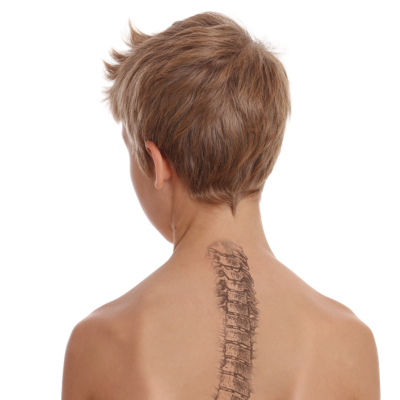
Classical HCU, left untreated, is a quietly destructive disorder. Without intervention, the natural history is characterised by progressive ocular, skeletal, vascular and neurological injury. By the age of 10, around 82% of patients will have developed lens dislocation; by age 15, 64% will show radiological evidence of osteoporosis, and around a third will have suffered a vascular event including a blood clot or stroke.1 “It is indeed a very morbid natural history without treatment,” says Sufin. One in three patients will not survive to their 30th birthday, and only a tiny minority of non‑responsive patients have an IQ above 90 [considered to be below average to low average cognitive function].1
Despite this, HCU still often remains off the radar for front-line clinicians and even some specialists. Children and young adults present to emergency departments and clinics with lens dislocation, deep vein thrombosis, stroke, premature osteoporosis or unexplained learning difficulties. The signs are there, but the unifying diagnosis is not.
Here, the red flags seem clear. Any child or adolescent with an unexplained thromboembolic event should prompt consideration of an inborn error of metabolism alongside more familiar risk factors. Lens dislocation, particularly in younger children, should trigger not only connective tissue but also metabolic differentials. High myopia in excess of five dioptres is extremely rare in children under five years and probably affects under 2% of adults. Hence, high myopia, particularly in conjunction with skeletal, vascular and central nervous system manifestations, should alert physicians to the possibility of HCU.2 A young person with a “Marfan-like* presentation”, recurrent vascular events and neurocognitive concerns should prompt further investigation. Yet HCU is still too often considered only after more common explanations have been exhausted—losing valuable time in early intervention.
Marfan syndrome is a genetic disorder that affects the body’s connective tissue, which supports and structures bones, muscles, organs and blood vessels. (source NHS). It bears some similarities to HCU, such as impacts on bone growth and structural development and eye and vascular involvement. The similar presentations may lead to an initial misdiagnosis of Marfan disease over HCU, or Marfan comparisons.
“It depends on the clinical awareness,” Sufin says. “As a differential diagnosis, at least they should do a total homocysteine, and then from there, if it is high, seek a referral.” In her view, total homocysteine (tHCY) ought to be a reflex test in any young patient with unexplained vascular events or suspicious ocular and skeletal features. When that simple blood test is omitted, families are pushed into a diagnostic odyssey that can leave their child facing preventable disability.

For the children in Dublin who were picked up through newborn screening, the story has been different. “For those who were diet compliant and newborn screened, they did not develop any complications,” Sufin notes. Yet even in well-resourced programmes, the system’s promise of early, equitable detection is not always fulfilled.
“Even in perfect newborn screening, about 20% are so‑called missed.3 These rates vary globally and can be as high as 50% in many countries like the US.4 The term “missed” is contentious in laboratory circles, she acknowledges, but the experience is very real for families. Several factors conspire to widen the gap between what screening could achieve and what it currently delivers.
Timing is crucial. In the UK and Ireland, heel-prick blood samples are usually taken around day five. In many parts of the United States, by contrast, the first (sometimes only) sample is taken at the 24-hour mark, before the baby is discharged from hospital. A baby who has had only a handful of feeds may not yet show the metabolic signature that will be obvious a few days later. In other states in the US (currently 13), a two-screen process is implemented, repeating this test a week later.5
This is compounded by the choice and calibration of biomarkers. Many programmes still rely primarily on elevated methionine (MET) as a first-line marker for HCU. But methionine is a late and somewhat blunt indicator. Its elevation depends on protein intake and time; at 24 hours, even a profoundly affected infant may sit below the cut-off. In B6-responsive HCU, partial enzyme activity can further blunt methionine rise. Breastfeeding, with its relatively low protein content, can delay or dampen the signal even more. “Breastfed babies also often get missed because breast milk has lower protein,” she points out.
Cut-offs are then tuned to fit the local reality. If sampling is done very early, thresholds must be lower to catch affected infants—but lowering them too far risks a flood of false positives, with all the anxiety and follow-up demands this brings. In the US, each state sets its own panel and parameters. The consequence is what many families describe as a postcode (or ZIP code) lottery: their child’s chance of early diagnosis depends not only on their biology, but on when their heel-prick card was taken, how their state configures its methionine thresholds, and whether second-tier tests are routinely available.
From Sufin’s vantage point, the barriers to a fairer system are less scientific than they are structural. Programmes need enough public health nurses to collect samples at the right time, laboratory capacity to perform more sensitive testing, and the resources to support families through recalls without causing unnecessary harm. They must also accept that in a condition with such a serious natural history, the pendulum should swing towards sensitivity, provided there is a clear, efficient pathway from recall to confirmatory testing and treatment.

It is in this space that patient advocates have taken a leading role. Organisations such as HCU Network America are advocating to lower the primary methionine cut-off and add a second-tier tHCY test. The logic is straightforward: methionine can still serve as a first filter, but any baby above a more conservative threshold—often calibrated around 39–50 µM, adjusted for population and sampling age—triggers an automatic tHCY measurement. Total homocysteine, a far more direct reflection of CBS deficiency, becomes the deciding signal.
For clinicians steeped in the biochemistry and natural history of HCU, models like this make intuitive sense. They align with what is already known about the limitations of methionine, and they focus the more resource-intensive second tier testing on a clearly defined subgroup. Rather than flooding clinics with false positives, they refine the net in a more intelligent way.
Whether such a model is scalable globally depends, again, on context. A programme that relies on early sampling and has robust logistics for second tests may need a different configuration from one where samples are taken around day five, and returns are slower. They also require greater access to genetic counsellors, who are woefully short in supply globally. But the principles—use biochemically meaningful markers, calibrate them to local practice, and invest in the follow-up infrastructure that makes a “screen positive” meaningful—are widely applicable. In this sense, advocacy-led pilots function not just as local experiments, but as proof-of-concept for public health systems everywhere.

If the world of newborn screening is full of technical nuance, the terrain beyond diagnosis is more human. Even when HCU is identified early, sustaining metabolic control over a lifetime is demanding—for patients, for families, and for the teams supporting them.
Here, Sufin is unequivocal: arming people with the practical tools for life is paramount. “It’s how to implement the diet that is crucial,” she stresses. “It’s not going away. Saying ‘have eight exchanges’ alone is inadequate for sustained adherence”. For her, the work of the clinic is practical and granular. For someone diagnosed later in life and struggling with adherence, it may mean quietly swapping in alternatives. It means teaching children from an early age how to read labels, plan meals, and manage social situations, rather than suddenly asking a 16-year-old to become metabolically literate overnight.
“You empower them,” she says simply. “It’s got to be a lifelong education”. That education extends to parents as well, who can initially feel overwhelmed by a condition “they can’t even pronounce” and a diet that touches every meal of every day.
Clinic design matters. Many adult services default to annual reviews. For adolescents with HCU, that is not enough. In Sufin’s practice, quarterly reviews during the teenage years create a rhythm that acknowledges rebellion as a normal developmental phase, not a moral failing. She urges her patients towards “good days more than bad days” rather than impossible perfection, even teaching them how to “binge carefully” by redistributing their limited exchanges around a special night out. When patients aren’t supported fully, adherence wanes, and this wasn’t something Sufin was willing to chance with her patients.
The transition to adult services exposes another fault line. Sufin shares how in many systems, “adult physicians with only limited experience in metabolic disease inherit these complex patients”. She adds, “The adult physicians are not typically metabolically trained, and the diet may just be managed by ‘dietitian referral ’ rather than being central to care,” she says. What was once a tightly integrated, physician-led, dietitian-enabled model fragments into disconnected roles. Patients, especially those who have known excellent paediatric care, can feel abandoned. Some drift away altogether.
Overlaying all of this is the advent of guidelines. For acute teams and non-specialists, guidelines are essential minimum standards. However, Sufin expands, “Guidelines are bare basics. It’s for the A&E department in an acute situation; however, when it comes to the specialist, we need to be bringing more to the table for our patients,” she says.
Over her career, she has both written and had to deviate from guidelines. This has left her with a simple conclusion: In rare disease, it is the combination of guidelines, clinical judgement, and lived experience—from patients and from predecessors—that saves lives.

New therapies are beginning to shift the horizon for HCU. Enzyme replacement approaches are moving steadily through early development, and there is cautious exploration of how such interventions might reduce dietary burden.
But for now, Sufin returns again and again to the power of the tools already in our hands. “At least for the moment, the diet is incredibly helpful for most,” she says. “The diet is a burden, but it works when adherence is strong.” Her hope lies not only in molecules, but in systems and cultures: in screening programmes that are willing to refine their algorithms; in clinics that see adherence as a shared challenge rather than a test of character; in a global community of clinicians and advocates ready to learn from each other.
“Ultimately at this stage in my career, my aim is to hand over whatever knowledge I have accrued to whoever wants to hear,” Sufin reflects. She now dedicates significant time to travelling the world, giving talks, and mentoring physicians of today and the future to be passionate about metabolic medicine.
For HCU, there remain significant gaps. Existing dietary protocols are not without considerable personal cost and by no means curative. While, in some, and with early intervention, it can mean children whose IQs match their siblings, the adults with doctorates and careers, and families of their own, this is far from the reality felt by all. The task now is to make those stories the rule rather than the exception—by recognising HCU sooner, screening for it more effectively, better clinical support and a future with greater therapeutic options.
References
[1] Mudd SH et al 1985. The natural history of homocystinuria due to cystathionine B-synthase deficiency. Am J human Genet 37, 1-31
[2] Cruysberg JRM et al. 1996. BMJ; 313: 1037-1040
[3] Naughten ER, Yap S, Mayne PD. Newborn screening for homocystinuria: Irish and world experience. Eur J Pediatr 1998; 157: S84-7
[4] https://onlinelibrary.wiley.com/doi/full/10.1007/s10545-016-9979-0.
[5] https://newbornscreening.hrsa.gov/newborn-screening-process
Articles within this digital spotlight are for information only and do not form the basis of medical advice. Individuals should always seek the guidance of their medical team before making changes to their treatment.
This digital spotlight has been made possible with financial support from Travere Therapeutics.
They have had no editorial control over the copy, and all opinions are those of the contributor.
RARE Revolution Publishing® retains all copyright.