Empowering young voices: the need for improved transition for those with NF1
SPONSORED CONTENT
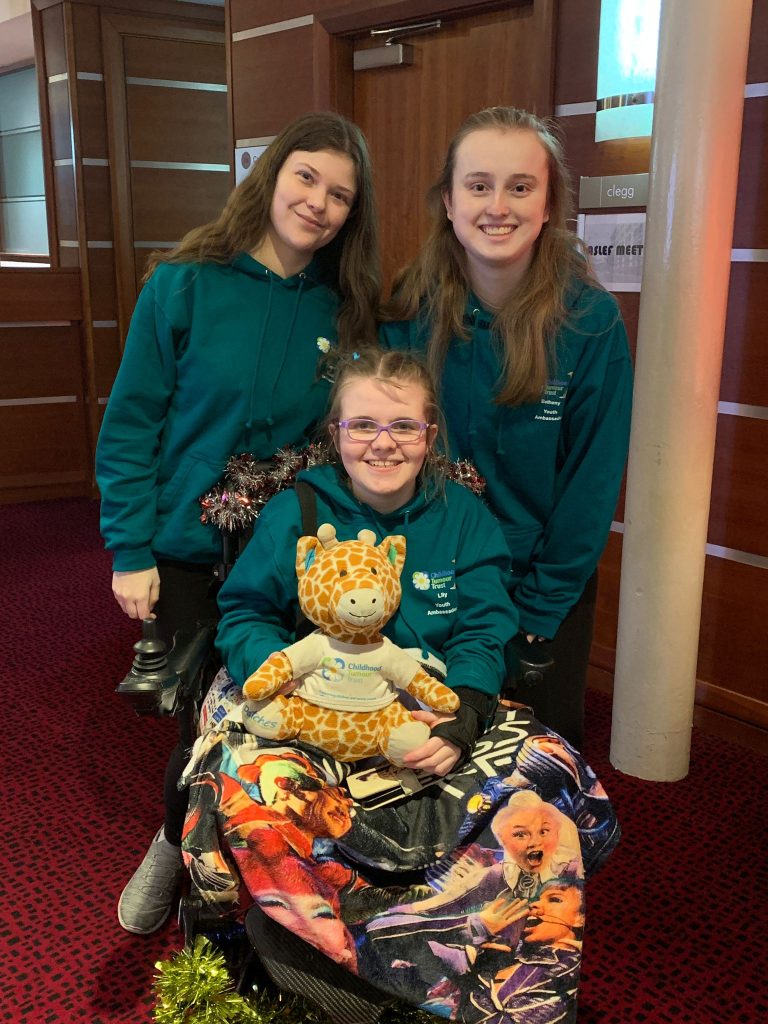
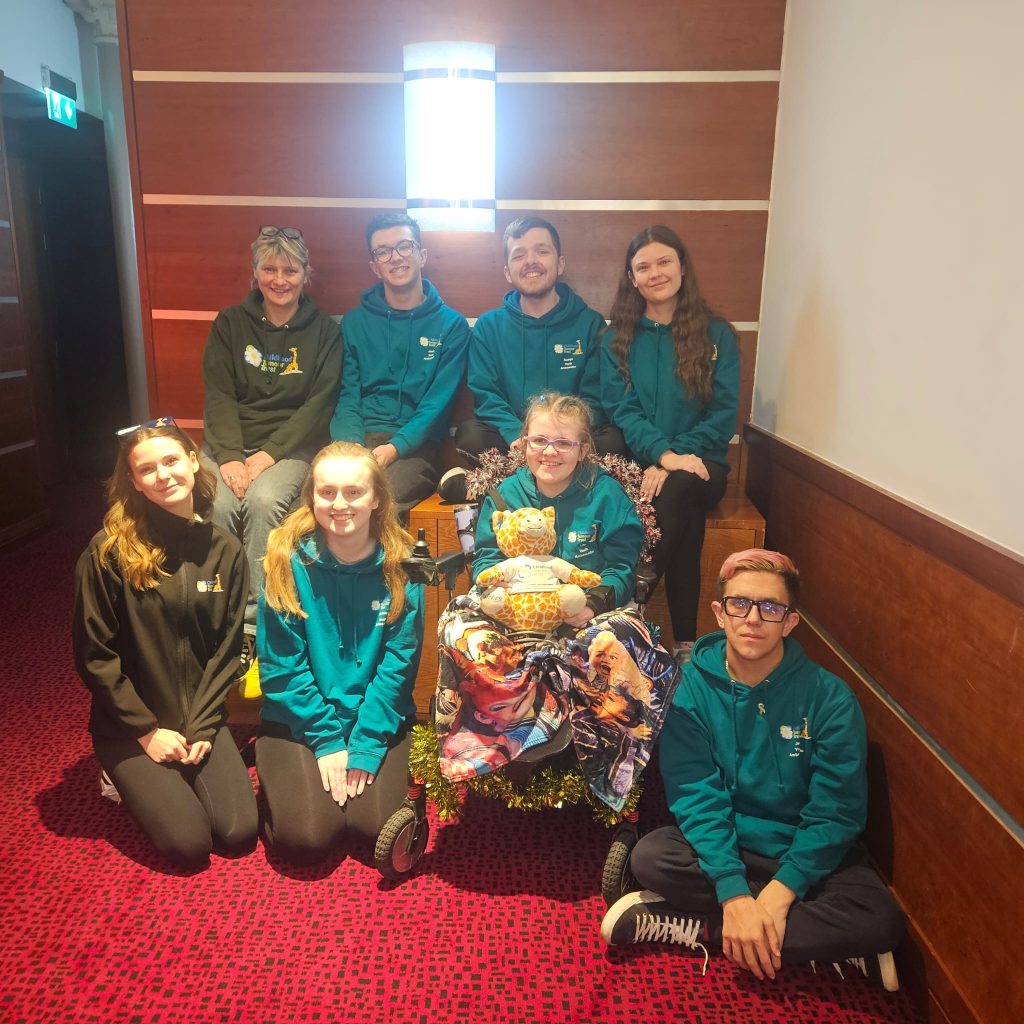
In January 2026, RARE Revolution, in partnership with Childhood Tumour Trust (CTT), gathered seven CTT youth ambassadors for a two-day workshop to discuss all things transition. Exploring healthcare, education and life-preparedness, we gained valuable insights into their personal lived experiences and their hopes for change
Written by Emma Bishop, RARE Revolution
Insights from the CTT Youth Ambassadors, Becky Hargreaves, Bethany Tully, Francesca Hargreaves,
George Pollington, Jacob Tomkinson, Joel Jennings and Lily Sandell
With 75% of rare diseases affecting children and 70% having an onset in childhood1, hospital visits and admissions can be a mainstay of a child’s formative years when diagnosed with a rare disease. Many children grow up alongside their medical team and strong bonds and relationships can be formed.
It is commonplace for parents, from day one of a child’s diagnosis, to become the experts—a human medical journal—containing an often-complex knowledge of core medical history and timelines. It becomes second nature to them to manage the healthcare of their child and advocate for their needs. However, once a child reaches the age of 18, they will typically be transferred to adult healthcare services—faced with taking newfound ownership of their own medical journey.
In the UK, the NHS advises that the planning of this process should begin when the child is 13 or 14, and the actual transition phase should be between 16 to 18. It states that transition shouldn’t be a single event but an ongoing process that is tailored to suit the needs of the child.2 But does the reality match this stated guidance?
Sadly, the experiences of the CTT Youth Ambassadors, all young people with neurofibromatosis type 1 (NF1) or their siblings, speak to a process that falls somewhat short of this ideal. Many report receiving little to no preparation for moving on to adult services. One young person recalls, “I was in a normal genetics appointment and they said, ‘by the way, you turn 18 next time we see you’’ And that was it, I was just dropped. There was no guidance on how or where to move on to.”
They shared how they didn’t realise how poorly managed the process was until they began speaking about it.
“I thought it was the same for everyone. I didn’t even know I was going to be transitioning. I thought these people would be looking after me forever. Turns out no.”
When continuity of care is disrupted, so too is trust in the system.
An unstructured, or absent, transition programme elicits feelings of uncertainty, abandonment and not quite belonging anywhere. One young person relays being admitted to hospital and encountering confusion on arrival. “I had an emergency appointment and was kept in overnight. I’m still under paediatrics but I’m 20, so they had the problem with which ward to put me on. They weren’t sure how to admit me on the system.” An already frightening hospital admission was compounded by indecision and hesitancy.
During this key transition period, many young people describe feeling like they are in limbo and liken it to being “bounced around the system”. One young person describes how, at their last paediatric appointment at age 17, they were told that their diagnosis was actually in question as they had not had a confirmatory genetic test. This revelation, however, has never been followed up. A year has now passed, and they are yet to see anyone in adult healthcare services or have that confirmatory test.
Support and signposting can prove essential in making the transition into medical independence as smooth as possible. However, many report not receiving this crucial part of the puzzle with reluctance amongst healthcare providers to signpost to valuable support services. As one young person describes, “I’ve always asked about support groups—‘Is there help out there? Is there anyone I can talk to?’ And I was always told, ‘No, essentially ‘you’re on your own’.”
With support groups, such as Childhood Tumour Trust, in existence, signposting can prove invaluable for young people, providing advice and community.

Educational transition points were also flagged as challenging to navigate, with varied experiences. In England an EHCP (Education, Health and Care Plan), is a legal document created for children and young people up to the age of 25 with complex and special educational needs (SEN). Some of our young people report the safety net of that EHCP being taken away when they moved into higher education, and some were unaware of its existence. As one young person explains, “I moved from having SEN support at secondary school, to college—where I told them on my first day what support I would need in exams—but after three months nothing had happened. It took an email and letter from my GP detailing my needs for my college to finally provide this, despite the legal framework in place.”
Starting college or university can generate mixed feeling of both excitement and anxiety. For those with complex needs, the worry can overtake the joy of moving on when support is withdrawn and any previous access arrangements have to be fought for.
With a lack of understanding about NF1, and very little advice available on next steps in further education, there is a concern that some young people will have their abilities underestimated and won’t be supported in achieving their full potential. One young person recalls their experience of this:
“In year 11 at secondary school I wanted advice on my further education options, and I mentioned I wanted to do childcare in college. They responded with surprise, saying, ‘Seriously, we don’t recommend you going to college.’ They tried instead to get me to take up learning education courses, such as life skills.”
Such limiting beliefs by external parties was something that all of the ambassadors experienced in one guise or another, again really reinforcing the importance of having the support of external advocates to help empower them to look beyond these limiting beliefs and seek opportunities to pursue their dreams.
Self-advocacy can be a difficult skill to master, especially at a young age, and particularly in medical and educational settings where the hierarchical structure can make it hard for a young person to challenge people in authority, such as doctors and teachers. As one young person highlights: “Everything I’ve brought up, the doctors say, ‘It’s nothing, you’re fine’. Until I started showing evidence and actual proof, like videoing myself walking, did they take me seriously.”
Another young person describes the daunting prospect of navigating further education alone. “I’m 20 now, but I don’t think I could have done it on my own when I was younger, because it’s hard stating your needs, reading all the documents and signing off yourself.”
Without training and guidance, or the safety net of parental direction, managing medical and educational appointments, reading and signing documents and articulating needs can be over-whelming for a young person to start doing alone. This new expectation can weigh heavily.
Adolescence into young adulthood is an exciting time which involves a natural stretch for independence, but that means navigating a new world of systems, like travel, financial, employment and maintaining healthy friendships and, in time, sexual relationships. The young people note that there is little preparation when it comes to understanding and managing mortgages, bills, tax codes, Universal Credit and savings accounts. Having relied on parents and school for support for so long, branching out on their own can be an unnerving prospect.
“Since I lived in a rural area, I always got school transport and when I went to college I had to go on the service bus. I’d never done it by myself before, and no help was ever offered. I wish there was more preparation at school for when you go to college.”
For young people there can be a juxtaposition between yearning for independence as they enter young adulthood, and a real and justified fear of losing support and guidance. As one young person perfectly sums up,
“I don’t think anyone ever thought I’d get this far. I didn’t think I’d get this far. I didn’t know what the plan was or what the alternatives were. I didn’t know if I’d be in supported living or living with my parents my entire life. All I know is I wanted independence, but I was also scared of losing support.”
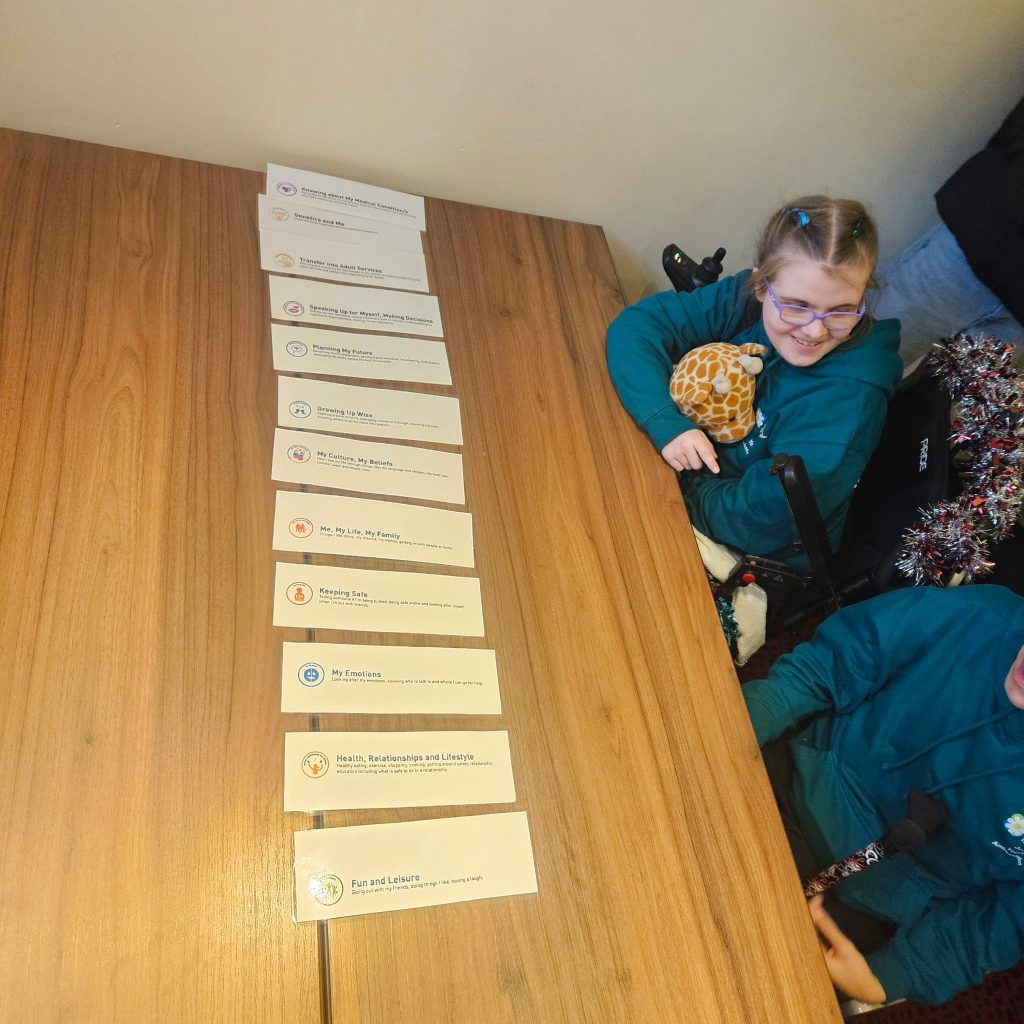
The transition from child to adult services can be a high-risk time where information, responsibility and emotional load is shifted to the young person, often abruptly with little preparation or support. To aid transition the NF community would like a structured and evolving resource holding key information that can be shared with others. This should come alongside early, staged education on NF1, surveillance, red flags and genetics so they are well-informed and have the tools to advocate for themselves. In partnership with RARE Revolution, the CTT Youth Ambassadors are helping to co-design tools to help young people with NF1 transition through life, in the form of a self-populated living document relating to healthcare, education, employment and lifestyle.
Signposting to support groups and help with practical everyday skills will ensure the young people are equipped to face this next step with confidence. For those under specialist centres, a passport document is being created by the national centre, which will be a complementary tool.
The safety net does not need, and should not be, pulled out from under young people as they grow into young adulthood. Rather it should transition into a different kind of support that comes from pre-planned, joined up and respectful processes. No young person should face this next chapter having to fight for basic support. Instead, they should feel empowered in their choices and goals—so they can strive for more and achieve their optimal quality of life. Isn’t that the least any young person deserves?
To find out more about the CTT transition project, please contact Vanessa Martin: info@childhoodtumourtrust.org.uk
To learn more about the work of CTT please visit:childhoodtumourtrust.org.uk
RARE Revolution and Childhood Tumour Trust would like to thank the youth ambassadors who shared their time and insights with such honesty and candour. The workshop is part of a project to co-design tools to help young adults with NF1 transition through life effecting positive change and shaping the future for others.
This article has been supported by funding from
Springworks Therapeutics and Alexion, AstraZeneca Rare Disease. The sponsors have had no editorial control or influence over the copy and the opinions are those of the contributors alone.

References
[1] https://www.eurordis.org/information-support/what-is-a-rare-disease/
[2] https://www.nhs.uk/social-care-and-support/caring-for-children-and-young-people/moving-from-childrens-social-care-to-adults-social-care/