The journey of care in NF1: referral, review, and ‘gold’ standards of care
SPONSORED CONTENT
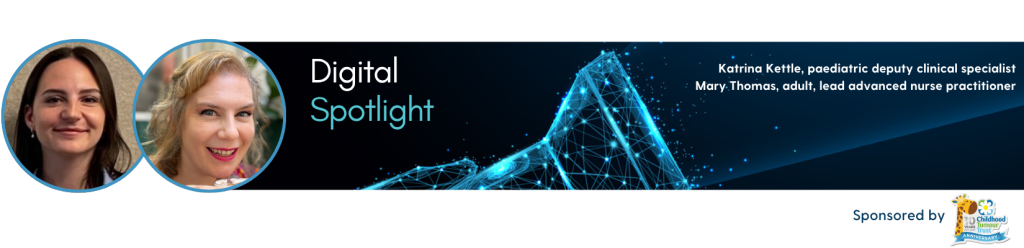
This article outlines the gold standard of care currently being pursued within the two nationally commissioned centres for managing complex NF1 in the UK and considers how these approaches can support more equitable care across the NHS. Neurofibromatosis type 1 (NF1) sits in a curious space: common enough to be regularly encountered but complex enough that many clinicians feel out of their depth. At the Neurofibromatosis Centre in London, one of two nationally commissioned centres* for managing complex NF1 in the UK, Mary Thomas, lead advanced nurse practitioner (adults), and Katrina Kettle, paediatric deputy clinical nurse specialist, are working to shape what “gold standard” NF1 care should look like—across a lifetime. From first referral to complex tumour management, their vision centres on three pillars: timely recognition, structured surveillance and empowered individuals
Written by Nicola Miller, RARE Revolution
Interview with Katrina Kettle, paediatric deputy clinical nurse specialist and Mary Thomas, NF lead advanced nurse practitioner
For many families, the most frightening part of the journey is the space between suspicion and certainty. A GP has noticed café‑au‑lait marks, or a health visitor has queried freckling in the armpits or groin—but what happens next can vary dramatically by postcode and professional confidence.
In paediatrics, Katrina is clear about what should happen:
“No one expects a GP to be an expert in NF1. What you want is a GP who recognises the clinical features and makes a prompt referral to a paediatrician. The paediatrician can then either make a clinical diagnosis, or, if there are only one or two features or any uncertainty, refer to genetics.”
After a timely referral a gold standard initial assessment brings together a careful clinical examination (skin, eyes, bones, neurology, blood pressure), a detailed family history, including subtle features in parents and older relatives and early linkage to genetics, where needed, to confirm the diagnosis and document the NF1 variant for future reproductive planning.
For adults, it’s a little more complex, as Mary explains, “Often I meet people much later in the journey—frequently after an alarming brush with the cancer pathway or after a protracted period where they may have experienced repeated dismissal of symptoms from primary care”. Sometimes an adult is only presenting at the centre because their child received a diagnosis which prompted further investigation leading to their own diagnosis.
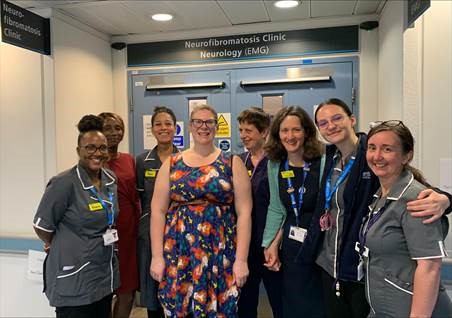
In order to assess the individual (within the NF centre) and arrive as a confirmed NF1 diagnosis a gold standard adult “first review” includes:
- clinical examination
- baseline imaging, usually including brain and spine to understand internal tumour burden
- offer of genetic testing (even when clinical diagnosis is clear) to support family testing and future reproductive choices
- a structured discussion of cancer risks, emphasising that many NF1‑associated tumours behave far more benignly than they do in the general population
Part of the initial assessments is often genetics. Genetics in NF1 is never just about a blood test. It has emotional, ethical and practical implications, especially around family planning. Mary recommends introducing genetic counselling early—but not all at once: “We encourage couples to see genetics before they’re actively trying for a baby. Not when they’re 38 and already pregnant. Have that chat when it’s still on the cards ‘one day’.”
Key points where genetic counselling adds most value:
- shortly after confirmed diagnosis in an affected parent (or older teenager), to explain inheritance and options
- for young adults, as part of transition, with gentle, repeated conversations that “plant the seed” without overwhelming them
- when a couple is actively considering pregnancy, to explore options such as:
- natural conception with acceptance of the 50:50 risk
- prenatal testing (CVS/amniocentesis, or non‑invasive testing in some
paternal cases) - pre‑implantation genetic testing (PGT) via IVF, which in the UK can be
funded on the NHS for one successful pregnancy where criteria are met
“An NF1 diagnosis doesn’t take away options for starting a family—it gives you more of them,” says Mary. “Genetic counselling gives the time and space to process those options safely.”
Once diagnosed, NF1 care in childhood is built around annual review, with specific checkpoints tailored to age. The aim is not to scan or treat pre‑emptively, but to monitor predictable risk windows so that problems are picked up early—without over‑medicalising the child.
Katrina describes the core components of a paediatric annual review:
blood pressure – checked regularly from early years onwards, to screen for NF1‑associated hypertension or renal artery issues.
growth and puberty – tracking height and weight centiles and pubertal timing to spot faltering growth or delayed growth spurts that may warrant endocrine input.
spinal checks – monitoring posture and spine alignment to detect scoliosis, particularly in the teenage growth spurt, when risk peaks.
bony abnormalities – looking for long bone bowing, limb length discrepancy or early fractures that might signal underlying structural issues.
neurological and developmental review – asking about headaches, motor skills, behaviour, concentration and school progress, with a strong focus on the neurodevelopmental profile of NF1.
skin examination – documenting café‑au‑lait marks, freckling and cutaneous/subcutaneous neurofibromas as the child grows.
In the first eight years of life, paediatric ophthalmology is a cornerstone of NF1 surveillance. The risk of optic pathway glioma (OPG) is highest in the early childhood years; most will either declare themselves in this period or never cause problems at all. The challenge is that vision testing in young children is subjective and developmentally limited. Katrina expands, “You’re relying on a child being able to verbalise what they’re seeing.”
Regular review by a paediatric ophthalmologist (or an optometrist/ophthalmology team experienced in children and in NF1) allows for detection of visual changes before a child can reliably describe them, specialist interpretation of subtle signs that might flag an emerging OPG and reassurance when exams are stable over time, allowing risk to be confidently “ticked off” as the child ages.

“Transition” is a vulnerable time in any chronic condition; in NF1, it can make the difference between a supported adult, and someone lost to follow‑up. At the NF centre, the team works deliberately to avoid the classic cliff edge at 16 or 18. Transition isn’t a handover meeting—it’s a multi‑year process.
Good transition includes a gradual shift from parent‑led to young‑person‑led consultations, with space for age‑appropriate discussions around disease variability, education and employment, relationships, sexuality and future fertility. Clear explanations of how adult services work, including patient‑initiated follow‑up (PIFU) pathways, so that young adults know how and when to re‑engage if concerns arise, are critical.
As patients move into adulthood, or for those diagnosed in adulthood, the focus of surveillance changes. A high‑quality adult review weaves in:
- breast cancer risk – in NF1, women have an increased risk at younger ages, so enhanced screening (such as annual mammography between 40–50) is recommended, alongside robust breast awareness.
- cardiovascular monitoring – ongoing blood pressure checks and vigilance for vascular complications.
- internal tumour burden – surveillance through brain and spine imaging to understand spinal and paraspinal neurofibromas, and to identify any lesions needing follow‑up.
- pain assessment – nerve pain from spinal or plexiform neurofibromas can be life‑limiting; early referral to specialist pain services is part of best practice.
Mary also underscores an important myth‑busting role around synthetic hormones. Many women with NF1 are told, sometimes by well‑meaning clinicians, that they “can’t” use hormonal contraception or HRT because of tumour and breast cancer risks. Mary is clear: “There’s currently no evidence that synthetic hormones affect tumour growth in NF1. We see women who’ve been denied HRT, feeling dreadful. One lady started HRT and came back like a transformed woman.”
Ensuring adult women receive evidence‑based advice on hormones and menopause, in conjunction with their personal breast cancer risk, is now firmly part of gold‑standard NF1 care.

The majority of NF1 related symptoms are able to be managed alongside the general population so most people with NF1 will never need care from a national centre. However, there are presentations of the condition where specific NF1 expertise is needed. These make up the criteria for the complex NF1 services. NF1 has the potential to become complex, which is why open referral pathways and clear criteria matter.
The criteria for complex NF1 includes presentations such as*:
- symptomatic or high‑burden plexiform neurofibromas (particularly internal or disfiguring lesions)
- risk or suspicion of malignant peripheral nerve sheath tumour (MPNST)
- significant spinal involvement (multiple neurofibromas with cord compression risk)
- severe skeletal abnormalities (e.g. progressive scoliosis, tibial dysplasia)
- major neurological complications
- complex oncology intersections (e.g. OPG, gliomas, GIST tumours)
Multidisciplinary team (MDT) input typically spans neurology, genetics, neurosurgery, plastic surgery, orthopaedics, oncology, pain medicine, psychology and specialist nursing. Mary emphasises that in NF1, clinicians must treat the person, not the scan: “We do not treat someone based solely on scans in NF1. Scans can look very dramatic, but the individual may be walking around totally fine.” This principle is particularly critical in avoiding unnecessary or harmful surgery. Mary has seen the consequences when medical teams operate without understanding NF1, making her a passionate advocate for improved early referral rates. The message is simple: if the imaging looks alarming but the person is functioning well, get specialist advice before intervening.
The advent of MEK inhibitors has changed the landscape for some children with inoperable plexiform neurofibromas. These drugs, repurposed from oncology, can help stabilise tumour growth, in some cases, shrink plexiform neurofibromas and delay or reduce the need for major surgery, particularly for craniofacial or airway‑threatening tumours.
However, Mary cautions against viewing them as a magic bullet: “For some children, the tumour stabilises or shrinks, which is amazing. But for others, despite all the side effects and monitoring, the tumour still grows. It’s not the golden ticket we hoped for, but it’s a significant step forward.”
In adults, trial data have been more modest, and access in the UK remains out of reach, though newer agents and NICE processes may change that over time. For now, the gold standard is careful surveillance, counselling and close MDT oversight when targeted therapies are used.
Between annual reviews, individuals and families are the front line of NF1 care. A key part of the nursing role is to teach them what to watch for and how to speak up. There are a number of red flags that should trigger urgent review, and all patients are informed of these during their initial assessment. Mary and Katrina emphasise several symptoms that should prompt rapid contact with a GP or NF1 team:
- any lump or neurofibroma that is:
- growing rapidly
- changing texture (becoming hard, irregular, or fixed)
- becoming increasingly painful
- associated with new weakness, numbness or pins and needles in nearby limbs
- new, persistent or severe headaches, especially with visual change or neurological symptoms
- sudden change in mobility, balance or continence
- markedly raised or difficult‑to‑control blood pressure
The centre use patient initiated follow up (PIFU) instead of routine yearly recalls for adults with stable condition. This means that once someone has been assessed and stabilised, they’re discharged from routine review. But they retain direct re-entry routes back to the service if red flags appear—no need to fight for a fresh referral every time. “What matters more is that people know when to get hold of us,” says Mary. “If they do, we’ll see them. We don’t discharge and disappear.”
For adults, especially, living well with NF1 involves navigating a healthcare system where most clinicians will not be NF specialists. Therefore, Mary and Katrina try to equip patients with clear written information, including red flag symptom cards they can show to non specialists, letters to GPs outlining recommended surveillance (e.g. blood pressure, breast screening) and which issues can be managed locally, and which should trigger referral back to the complex centre. They also aim to empower individuals to signpost health professionals to the NF1 guidelines available or contact the national centres for advice.
“I want our adults to be able to walk into any appointment and feel empowered and equipped to advocate for themselves,” says Mary.
While not every individual with NF1 will meet the criteria for care within a specialist centre, they should still be entitled to the same gold standard of care for the non-complex aspects of the condition—care that those within specialist centres receive alongside management of more complex symptoms.
This should include not only clinical care, but also access to appropriate advice and support, such as genetic counselling, transition, cancer awareness and guidance to help individuals and families understand and manage their condition. The aim is not for every patient to be treated within a national specialist service, but to ensure that the principles of high-quality care—timely recognition, structured surveillance and access to appropriate expertise—are consistently applied to all. These standards should be embedded within clear, national guidance, such as NICE, so that everyone with NF1 can access the same level of care, advice and support.
For patients to benefit from these pathways and guidance, NF knowledge in both primary and secondary care is needed. The London centre and its Manchester counterpart have responded in several ways. The first, development of national surveillance guidelines for NF1 in children and adults. These are already available on some GP platforms; however accessibility remains a barrier, and the team have a clear ambition that they become NICE‑endorsed and therefore more easily discoverable and trusted.
Providing advice and guidance to local teams and encouraging referral is also paramount, especially before major interventions such as spinal or tumour surgery occur, and their clinical lead has recently finalised a new referral pathway.
Katrina is also ambitious and sees a strong need to advocate for named secondary‑care clinicians with an NF1 interest in local areas, who can act as a bridge between community care and the complex centres. Katrina is realistic about the system’s limitations, but hopeful about its direction:
“It’s a pipe dream to think there’ll be an NF specialist paediatrician in every area. But we can make sure there are good guidelines, accessible education and at least one clinician locally who has that special interest. That’s how you stop families getting stuck in that loop of ‘too specialist for me, not complex enough for the centre.’”
Socioeconomic and geographic factors still matter, but a clear, nationally recognised pathway, backed by NICE‑level guidance and strong charity partnerships, could help democratise access to specialist NF care across the UK.
Ultimately, the “gold standard” in NF1 is not a fixed protocol, it’s a partnership. It’s a pathway where GPs recognise red flags; paediatricians feel supported, not out of their depth; genetics and psychology are built in, not bolted on; and patients and families are trusted as experts in their own lived experience.
In that system, NF1 may remain unpredictable, but it is no longer unmanaged, and no one has to navigate their journey alone.
To learn more about the National NF Complex services, please visit:Neurofibromatosis – Overview | Guy’s and St Thomas’ NHS Foundation TrustandNeurofibromatosis Type 1 | Manchester Centre for Genomic Medicine
To learn more about the work of CTT please visit:childhoodtumourtrust.org.uk
*Full list of the complex criteria is on the referral form for the complex servicesNeurofibromatosis – referrals | Guy’s and St Thomas’ NHS Foundation Trust
This article has been supported by funding from
Springworks Therapeutics and Alexion, AstraZeneca Rare Disease. The sponsors have had no editorial control or influence over the copy and the opinions are those of the contributors alone.