Raising the profile of NF1 and advocating for medical curiosity
Three time BAFTA award winning actress and producer, Rakie Ayola, became patron of the Childhood Tumour Trust, when her eldest daughter was diagnosed with neurofibromatosis type 1 (NF1). Using her public profile and mother’s insight, she is dedicated to raising much needed awareness and understanding of this complex rare condition, and highlights the power and importance of community
Written by Emma Bishop, RARE Revolution
Interview with Rakie Ayola, patron, Childhood Tumour Trust

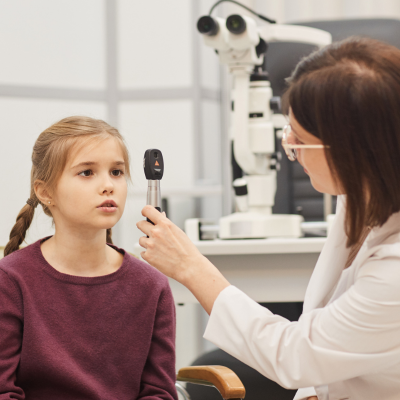
Rakie Ayola’s daughter, Tansy, was eight years old when she was diagnosed with neurofibromatosis type 1 (NF1). Admitted to A&E in 2012 with an unrelated cough, that turned out to be pneumonia, a doctor noted multiple café-au-lait macules (coffee-coloured patches) on Tansy’s skin and asked if she had NF1. Not meaning much to the family at that time, Tansy was referred to a paediatric consultant, who also noted the macules, but wondered if Tansy’s condition might be melanin-related due to her mixed heritage. She was referred to the NF1 clinic at Guy’s and St Thomas’ Hospital, London, where NF1 was likewise suspected but further confirmation was required via ophthalmology. Characteristic patterns on Tansy’s iris, led to a diagnosis of NF1, some nine months after her initial A&E admission, which Rakie says “is when it became real”.
Immediately Googling NF1, Rakie describes her frustration at the lack of available information. “I would follow a thread and then it would disappear.” Eventually she found a post from Vanessa Martin, who would go on to found Childhood Tumour Trust (CTT), talking about an NF1 camp her daughter went to on in the US which had prompted her to create a UK version. “I emailed Vanessa to ask about the camp and she immediately rang back and we chatted for about two hours,” recalls Rakie. Rakie offered to provide any support she could, using her platform as a professional actress, and became patron of CTT when it gained charity status in 2016.
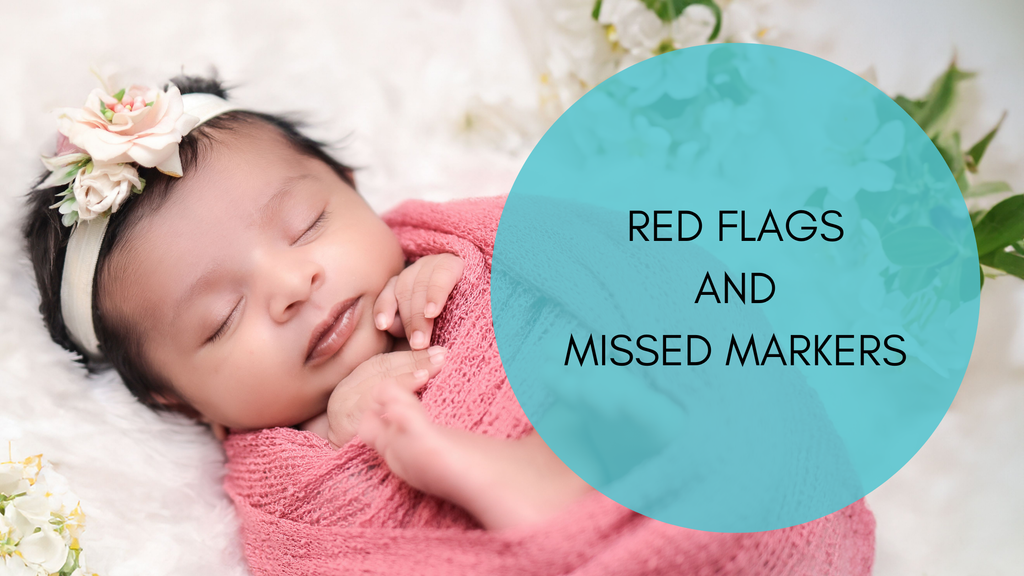
Rakie believes raising awareness among healthcare professionals (HCPs) is critical to increasing timely diagnoses and improving health outcomes for those with NF1. She notes that even if a child is born with one café-au-lait macule, like Tansy, it should be noted and monitored.
“When we think about the number of medical professionals that must have seen our daughter at her basic checkups, and the missed opportunities. It doesn’t take much to tell all the people that interact with newborns to note down if a baby has one café-au-lait, then if they suddenly spot two, bells should be ringing, and then a third, fourth, fifth is almost certainly the body screaming there’s something here you might want to take notice of.”
Rakie believes early red flags are often dismissed by HCPs, particularly if the child is hitting key developmental milestones, to avoid worrying families, but that this “wait and see approach” is harmful. Significant life adjustments may need to be made and withholding suspicion only delays any preparation the family might need to make for the future and fosters greater isolation.
Rakie expands: “If there are tumours forming on a child’s optic nerves, that family need to know because that could lead to the whole family needing to learn braille. They may need to think about moving somewhere that is wheelchair accessible. The sooner they know and understand this, the better. I understand not wanting to burst someone’s bubble, but honestly, the bubble just gets bigger and bigger, and more challenging to deal with in reality.”
The multi-systemic nature of NF1 can, Rakie feels, mean the condition is compartmentalised. She says patients can be in hospital for months dealing with an NF1 tumour, but no one mentions NF1 because each department focuses solely on their own part of the puzzle rather than the underlying cause. This can create further isolation and mean families don’t receive appropriate support and signposting.
Rakie considers medical curiosity and basic NF1 literacy as essential for HCPs.
“I know that not everyone can have the information about every rare condition in their head, but it would be great if people understood the very basic markers that they might see.”
Repeatedly encountering medical professionals who have never heard of NF1, Rakie has a simple ask: “I’d like them to remain curious, to ask what it is or note it down to look it up later.”
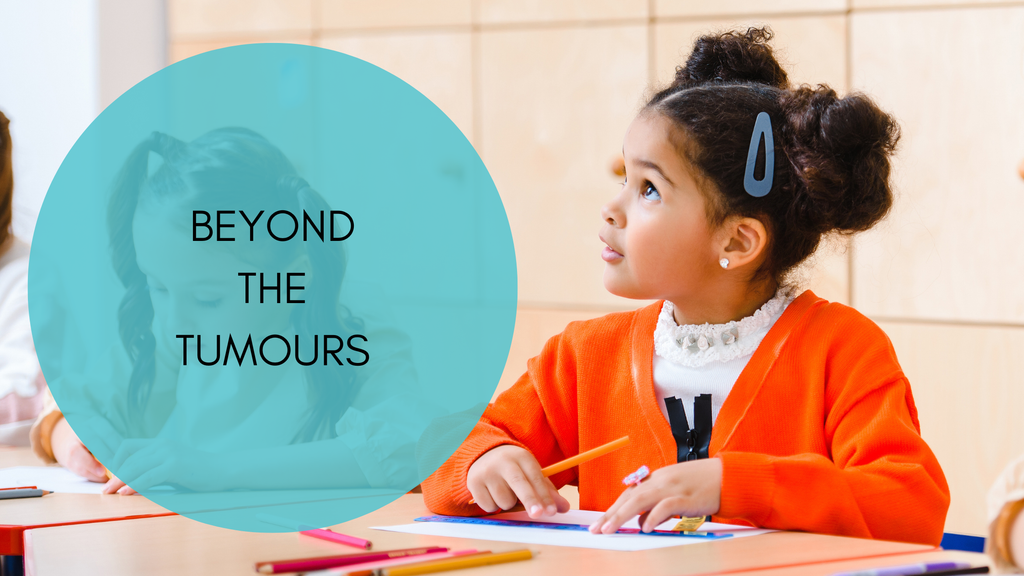
The lack of awareness and understanding of NF1 can affect all aspects of the condition, including the “hidden symptoms”, such as learning, developmental and social difficulties and mental health. Rakie says that schools often struggle because they are aware of the challenges but don’t necessarily understand them, which can result in children missing out on vital support and timely adjustments. Without a more recognised condition, like autism, it’s difficult for staff to know whether the challenges are medical, educational or behavioural, and how to begin leading on supporting the child. She recalls how Tansy could read fluently but not always comprehend the content which left teachers “scratching their heads”. They knew she didn’t have dyslexia but weren’t quite sure what was going on.
Rakie believes that Tansy only secured an EHCP (Education, Health and Care Plan) because when she was nine, her condition became very obviously medical, with multiple neurosurgeries and a prolonged stay in hospital. “Because her condition became a very obvious medical situation she could have an EHCP, with a huge capital H. Had she not gone into hospital the educational challenges she had would have been difficult to support because she didn’t have an official diagnosis of anything anybody understood.”
As children grow up, unrecognised traits of NF1, such as attention differences, social communication difficulties and impulsivity shift from being seen as cute and quirky to disruptive or too different, explains Rakie.
“Any condition you have that affects you socially, I believe, goes from a really interesting and cute watercolour painting when you’re a child, to a bewildering oil painting when you’re an adult,”
This illustrates how differences become more complex and bolder in adulthood. “It all becomes more obvious, except at that point we don’t mention it.” Because people generally don’t know what NF1 is, saying ‘I have NF1’ to explain behaviour or differences doesn’t unlock understanding or accommodations in the way a more familiar label, such as autism or ADHD, can.
“I think a lot of our young, and older, people face the same difficulties that the world doesn’t know their condition and doesn’t know where to meet them.”
This lack of understanding feeds isolation and impacts mental health, especially for young people trying to navigate education, friendships, relationships and work. As a condition routinely associated solely with tumours, behavioural, cognitive and self-esteem challenges are often not recognised or linked to NF1, meaning accommodations are rarely made.
Rakie shares how, as a parent, she feels a responsibility to raise awareness for NF1, and readily uses her public profile. She will mention NF1 and CTT in media interviews and puts the names of charities she supports on theatre production programmes. As an actress, Rakie has regular medical check-ups and uses these encounters as ‘teachable moments’, to ask HCPs what they know about NF1 and encourage them to think beyond the tumours.
Rakie has also approached the producers of television shows she has worked on to suggest NF1-related story-lines. She also routinely shows make-up artists she works with on set, images of NF1 to introduce them to what someone with NF1 might look like should they encounter a character with the condition.
“I feel a responsibility to talk about NF1 and to raise awareness. I like being able to do that, and I will do it any chance I get. I think of it as a win when I have introduced anyone to NF1, whether they be a health professional or not.”
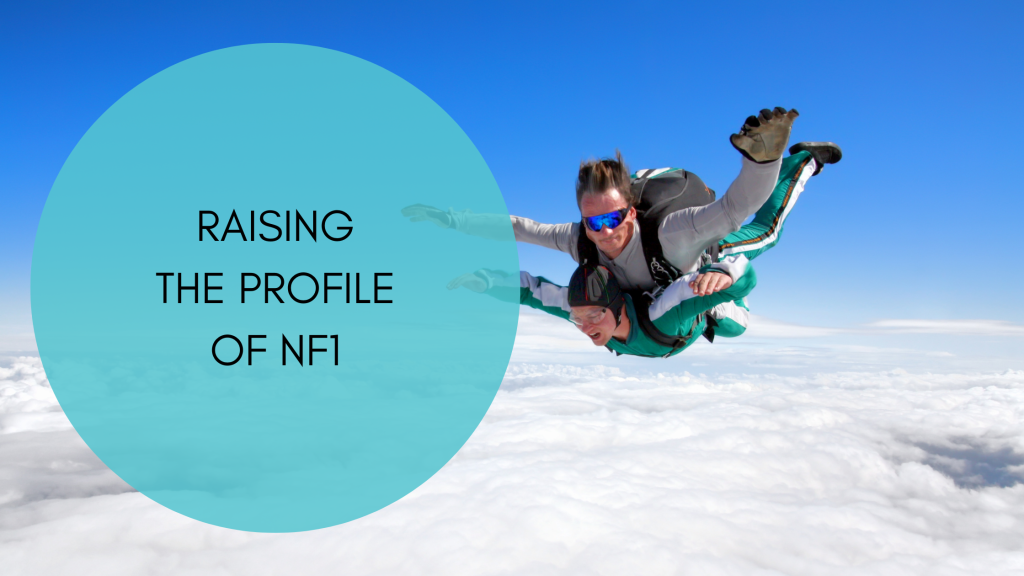
Rakie is regularly involved in CTT’s social media campaigns and even took on the challenge of a sponsored skydive, in 2024, with fellow patron Lorraine Stanley, which Rakie describes as “instant therapy”. “In that moment the world is a really beautiful place. You are only seeing the beauty of it, nothing else, it was so gorgeous.”
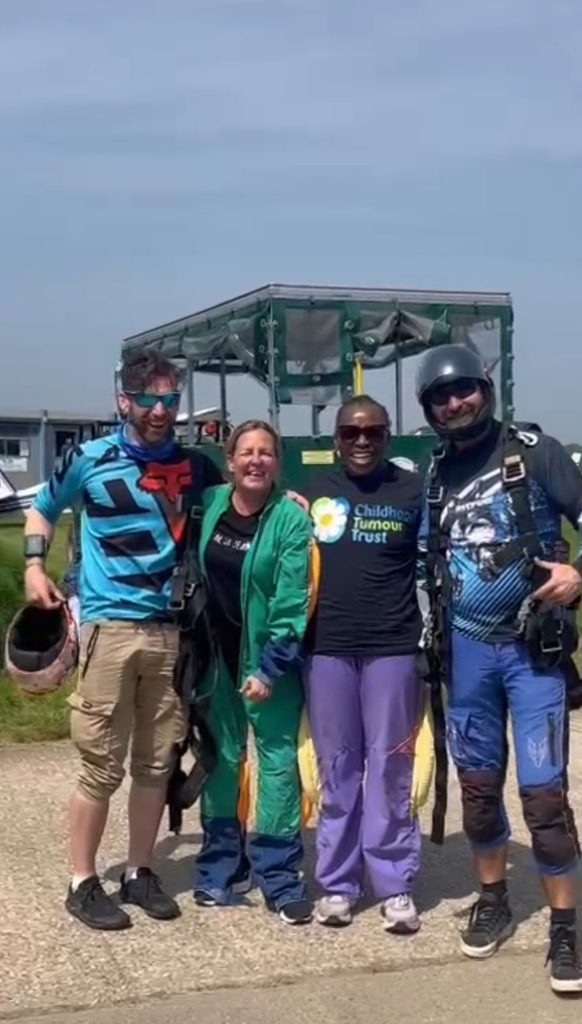
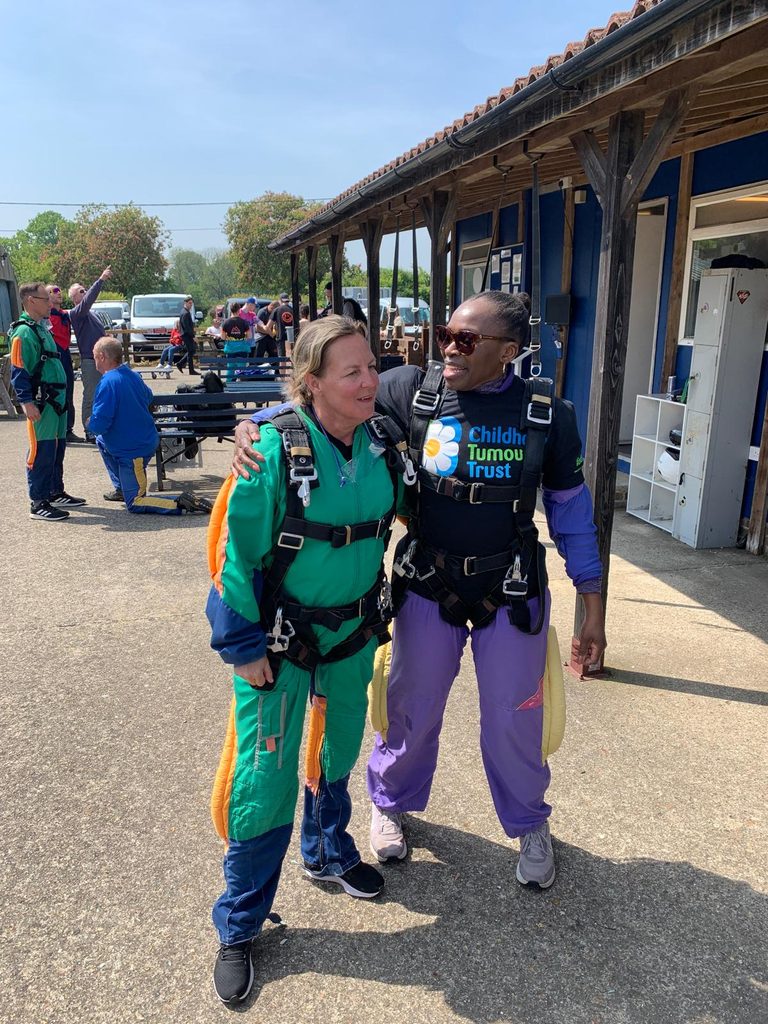
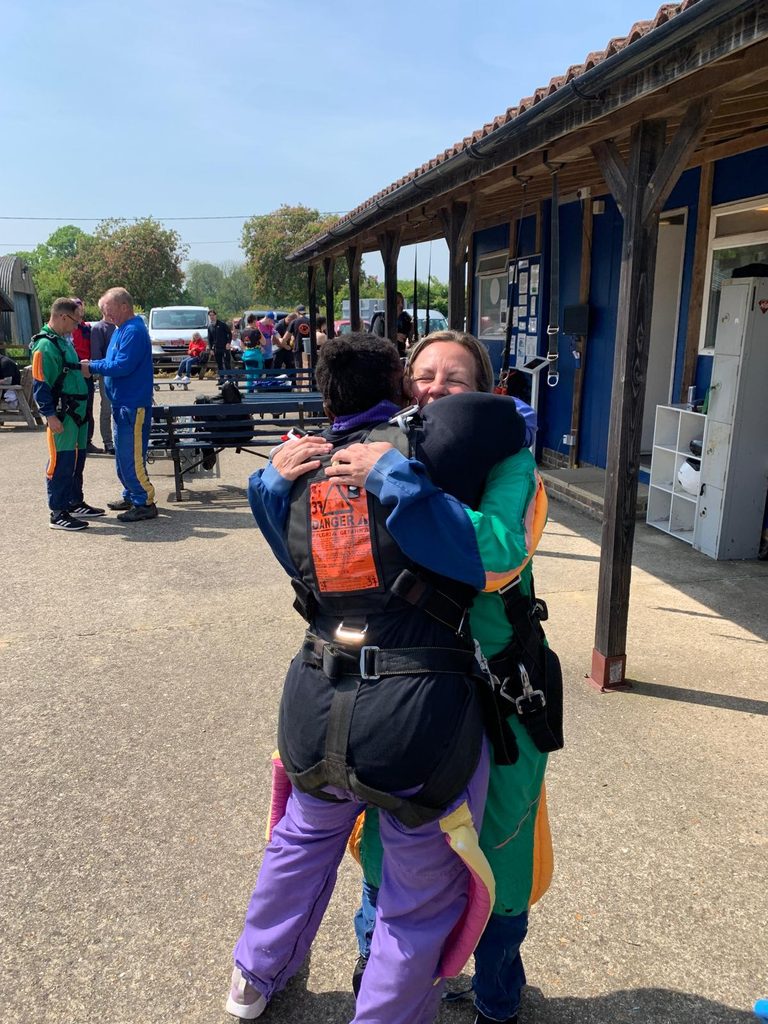
Patrons, Rakie and Lorraine taking part in a skydive in 2024
Being a patron of CTT is deeply personal for Rakie and being involved with the charity and finding community, has been life-affirming for her and her family. She describes the empowering effect Tansy’s first CTT camp had.
“It emboldened her and it made her feel accepted, it was extraordinary to see. She just understood that these are my folk, and however I meet them, whether I meet them as someone who can’t see me or someone who is a wheelchair user or someone with skin that looks very different to mine, these are my people.”
For Rakie, finding community has also been incredibly sustaining. “It was wonderful for us to realise that these are our people too, they all understand. We have everything and nothing in common, and it’s wonderful. On any regular day we would pass each other in the street, but right now we have a lot to talk about, and a need to talk about it, and that’s really special and nourishing.”
As CTT celebrates its 10-year anniversary, for Rakie, the most significant shift she has seen has been the research and connection to the medical world that Vanessa and the team have made. “Vanessa’s been wonderful at making CTT’s voice heard from a stage where people really wouldn’t engage. There’s no locking Vanessa Martin out of a room she feels she should be in, and she’s been brilliant at getting in those rooms and to those conferences around the world—both her and the team of young advocates—and signing up the health professionals to work in tandem with CTT, and really advocating for change at the highest level.”
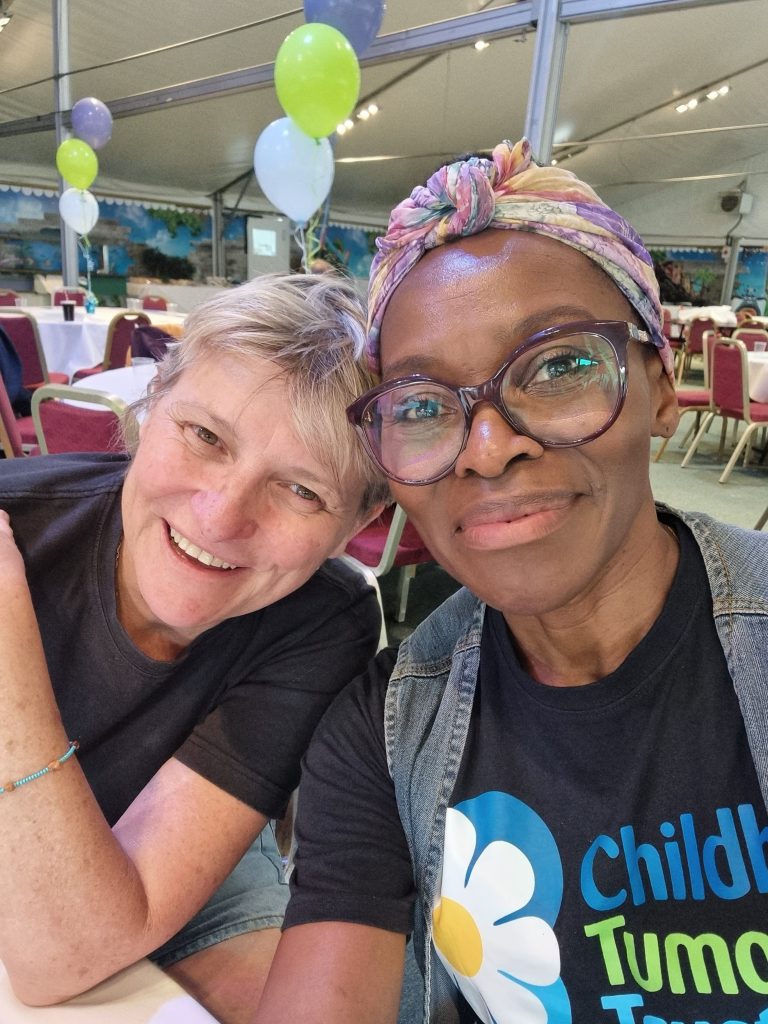
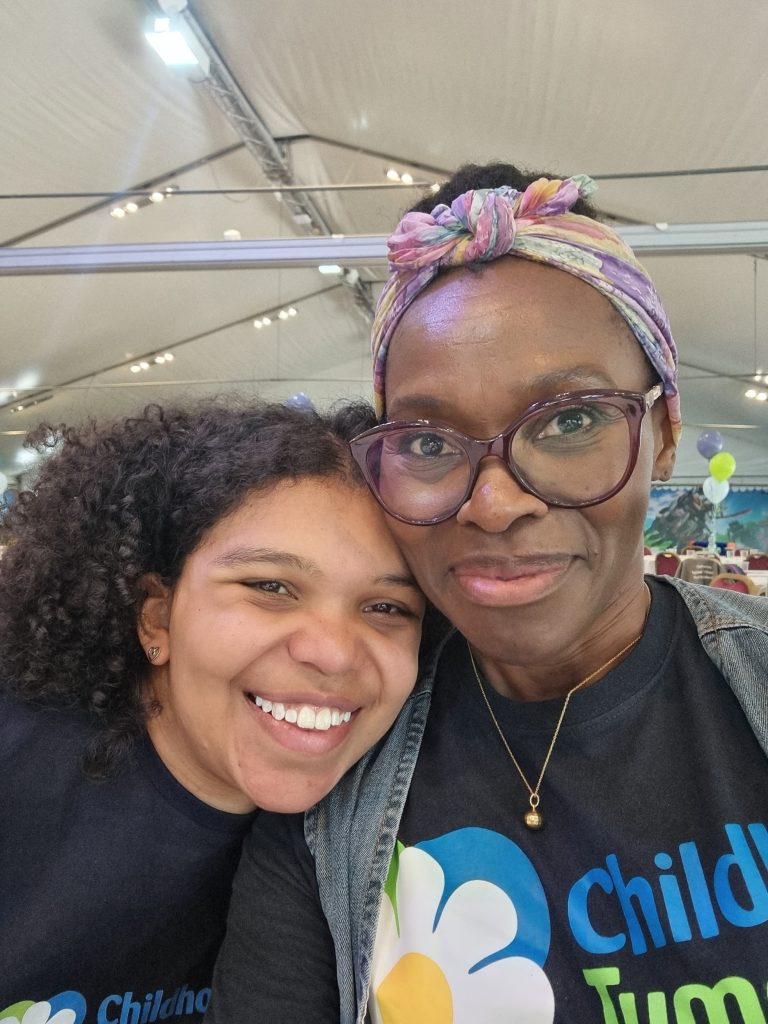
As an enterprise that began as a social support network for people with NF1, which Rakie describes as more than enough, the advocacy and policy work Vanessa has initiated is extraordinary.
Rakie’s advice to any new parents receiving a diagnosis of NF1 for their child is clear: find your people. She stresses that needing support isn’t a failure, but the exact opposite. “Find your community—you will need them and your child will need to know they’re not alone. Finding a community is not a failure. Don’t decide that if you can’t do NF1 by yourself, you’re not doing it well, the opposite is true. You’re doing NF1 well if you’re doing it with others because it means that you’ve owned it. You can’t run from it, it will always be there, be ready to share it.
“And finally know that your child will achieve extraordinary things. They’ll be challenged by this condition but they will achieve extraordinary things in spite of, and alongside, it.”
This article has been supported by funding from
Springworks Therapeutics and Alexion, AstraZeneca Rare Disease. The sponsors have had no editorial control or influence over the copy and the opinions are those of the contributors alone.