Building better NF1 pathways together
Consultant paediatrician and rare disease parent, Dr Ellie Day, reflects on why collaboration with patient charities, such as Childhood Tumour Trust (CTT), are pivotal to advocating for better care. For a condition with stark variations in healthcare services across the UK, CTT works hard to provide valuable resources to aid earlier diagnosis, understanding and management of this complex condition and improve national standards of care
Written by Emma Bishop, RARE Revolution
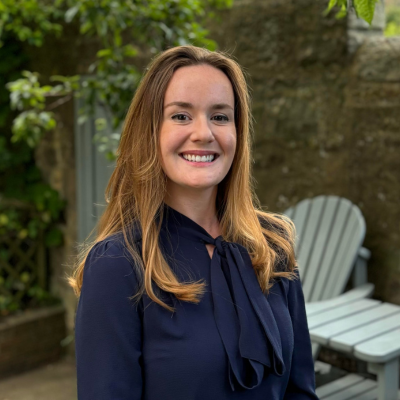
Interview with Dr Ellie Day, consultant paediatrician, Royal Free Hospital, London

Dr Ellie Day is a consultant paediatrician, at the Royal Free Hospital in London, specialising in developmental and neurological differences, including neurocutaneous disorders, such as neurofibromatosis type 1 (NF1). Ellie has a daughter with NF1, so brings a dual perspective to her clinical and advocacy work, both as a healthcare professional working in the space and as a parent living with the condition. “I was already a paediatrician when my daughter was diagnosed with NF1 but since then I have developed more of an interest and it has certainly shaped my professional career,” she notes.
In 2025, Childhood Tumour Trust (CTT) initiated a patient-led research project to understand existing care pathways for those with NF1 and identify factors influencing patient satisfaction. The study was coproduced by patient charities; CTT and Tumour Support Scotland, clinicians and supported by the Patient Led Research Hub (PLRH). Founded in 2015, the PLRH works with rare disease patient groups across the UK to support patient driven research to help improve understanding and care for those living with rare disease and their families.
As one of the clinicians working on the project, Ellie Day explains the genesis of the research:
“It all started because those of us who are aware of families living with this condition understood that there’s huge variation in the care that children are receiving. Some children are receiving excellent care, and some fall through the cracks to some extent, and so it’s harder for their parents to advocate for them and harder for them to receive the support they need. We are all aware of that, but it’s difficult to advocate for change if you don’t have evidence. That’s why this study is so important.”
Online surveys for patients, families, carers (PFC) and healthcare professionals (HCPs) were created and distributed through charity and healthcare networks. A total of 1083 PFC and 94 HCP responses were received from across the UK. Overall, 54% of PFCs expressed dissatisfaction with NF1 care. Influencing factors included poor care coordination, long specialist wait times and insufficient signposting to charities. Regarding diagnosis and management, a lack of clear pathways and care standardisation was identified. Free-text data revealed additional challenges, including limited education and information for families, low NF1 awareness among professionals, inequitable access to specialists and a desire for holistic care. 1 The findings have been presented at conferences and were published in the ‘BMJ Open Quality’.
For Ellie, and for those working in NF1 care, many of the findings came as no surprise. Recognition of diagnosis is key and can hugely influence a child’s course. As Ellie expands, “NF1 is a highly variable condition. Some children may just present with birthmarks, and I think it’s often quite difficult for parents to be taken seriously, or for HCPs to realise the significance of that. But a delay in diagnosis or delay in surveillance can have significant health implications.”
Access to care and the quality of care children receive are further themes the study highlighted. “Care in the UK for children and adults with complex NF1 is delivered by two specially commissioned national centres,” outlines Ellie. “Colleagues who work there are highly experienced specialists and I think universally feedback from patients is that they get an excellent quality of care. What’s more highly variable is the quality of care for patients being looked after in primary and secondary care because clinicians in those services will have varied levels of experience and knowledge about the condition. That was one of the main findings, and wasn’t a surprise to me, but it was quite hard to read some of the qualitative information and some of the comments from patients and families.”
While the study confirmed many insights those in the NF1 space were aware of, Ellie describes the importance of the patient-led research paper.
“The work was done with various teams and colleagues and spearheaded by some amazing medical students and it adds real gravitas to the conversation. If you have published data in a peer-reviewed journal, it’s quite hard to dismiss that when you’re trying to advocate for reduction of variation and improvement of quality and care, so I think it’s been really pivotal to that conversation.”
Ellie acknowledges that improving NF1 services and care is challenging due to fragmented and nonhomogeneous NHS health services across the UK and a shortage of resources. However, she believes there are opportunities to improve services without a major cost implication. Firstly, there is a need for increased education and awareness for HCPs. “This is where CTT has been working tirelessly in terms of their advocacy and raising awareness amongst health visiting colleagues and also in primary care. They are working to develop more comprehensive education packages for paediatricians, which I think ultimately will be really helpful.”
The second key ask for Ellie is having national standards of care or guidelines around the management of NF1, outside the specialist centres, that professionals can easily refer to. “I think that would be extremely helpful to not only improve care for individual patients and families, but also to think about how we design services and reduce that variation in care. Having published guidelines is a good way of being able to advocate for resource or a change in clinical structure.”
For Ellie, working alongside charities, such as CTT, is invaluable for HCPs and for driving tangible change. “For a start, the publication [‘Alone on our NF1 island’] never would have happened if it hadn’t been for the passion and perseverance of Vanessa Martin (founder and CEO of CTT) and the team. There’s something about the enthusiasm and persistence that you develop when you’re the parent or when somebody you love is involved that’s highly motivating and means you don’t give up easily.”
Ellie believes that any health research or health service redesign should have patients and families firmly established at the centre of it. “Charities like CTT are a great way of ensuring this. They have a resource of hundreds of people who are willing to contribute, with great ideas. There’s not one way to do it, and so we really need lots of input.” Ellie suggests that traditionally patients weren’t always involved in medical research, but that this is something that needs to change and that charities are the natural bridge and catalyst to making this happen.
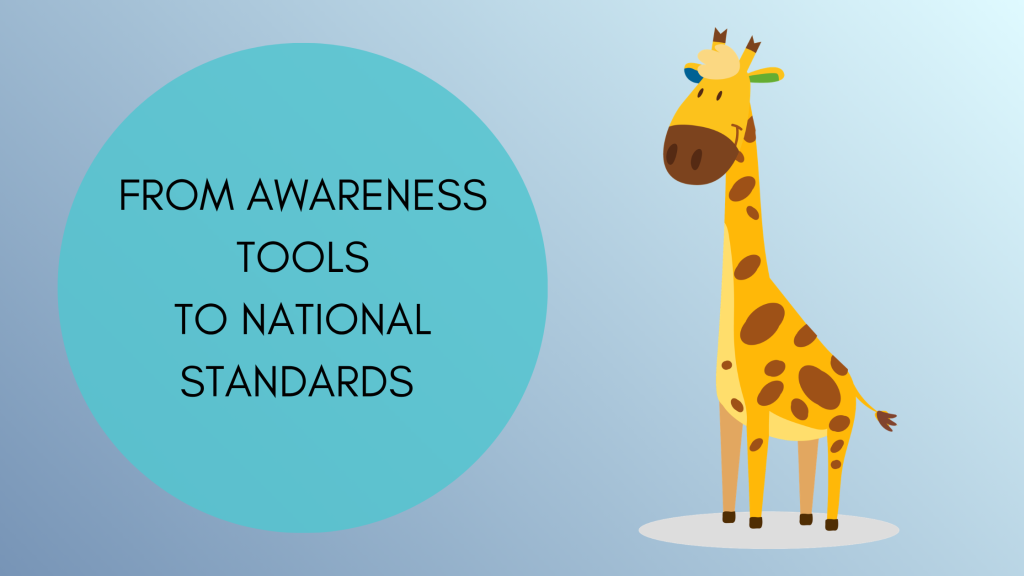
The resources that CTT offers are, Ellie feels, crucial and can serve as the foundation for improved care. The charity serves as a trusted host for pathways and tools, so clinicians can easily access reliable information at the point of care.
CTT advocates for the inclusion of a body map into the Personal Child Health Record (also known as the Red Book) that can be downloaded from the website, along with an insert providing vital information for families and HCPs tracking developmental milestones for children with NF1. “It’s a very simple but effective intervention so it would be amazing if it was rolled out nationally. Birthmarks are often perceived as relatively benign, so not only is it a good way of recording birthmarks, but also of raising awareness of when to check them. NF1 is not the only condition associated with birthmarks so it’s important for other children with other conditions as well,” notes Ellie.
CTT has also produced CPD (Continuing Professional Development) modules for NF1, reviewed by Dr Judith Hayward and Dr Will Evans. Developed to aid HCPs across multiple disciplines understand the disease and recognise the early signs to make prompt referrals, Ellie sees this training as a well-developed resource and something she would like to see integrated into day-to-day clinical care.
At every consultation, Ellie signposts patients and families to CTT and other charities that support children and adults with NF1. She sees great value in the age-appropriate videos, resources and downloads available. “First of all, we might be seeing young children where the parents might need support, but then of course children become teenagers, and they need a different source of support and often that is more effectively delivered by peers than by adults like doctors and parents.”
For young children, CTT have developed the character of Patches the giraffe, the charity mascot, who features in three books designed to help guide children through important topics regarding their condition. As Ellie explains,
“It’s an amazing way of talking to young children who won’t understand long words. In my personal and professional experience, I think it’s vital, as adults, that we are honest with children. I don’t mean they have to be told everything all at once, but be given age-appropriate, developmentally appropriate explanation about what’s happening, so that they feel that they’re being brought along with us as parents and professionals. It absolutely underpins positive self-esteem and attachment.”
For Ellie, Patches serves as the perfect ambassador to start those all-important conversations, not only with the child diagnosed with NF1, but with siblings as well.
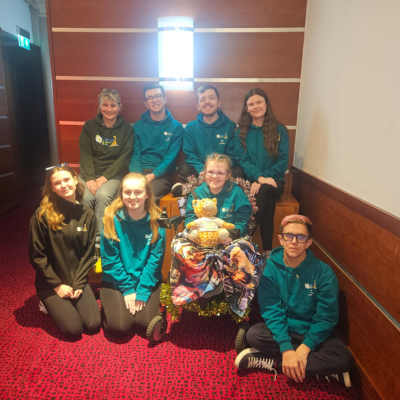
For those entering adolescence, Ellie sees the CTT Youth Ambassadors as crucial role models. “If you can’t see it, you can’t believe that you can be it. So, if you’re a young person with a chronic condition, actually seeing other young people taking advantage of opportunities and achieving their potential, that’s hugely powerful.”
Transitioning from childhood to adult services can prove to be a challenging time for young people and, as with care pathways, the experiences differ across the UK, and across different Trusts. Ellie believes the roadblocks that can hinder positive transition experiences are the heterogeneity of the condition, meaning children are not just transitioning from one paediatrician to an adult specialist but are often seen by different specialties.
Another challenge is the prevalence of neurodiversity and developmental difference in young people with NF1, making it harder, in certain situations, for them to advocate for themselves. She notes that children and parents aren’t always fully prepared for adult services, where “things work quite differently to child services, and there isn’t the same level of resource.” CTT are currently working with the Youth Ambassadors on a project to improve the transition experience, which Ellie believes will be beneficial for both young people and HCPs.
“Empowering young people and young adults to be able to understand what good care looks like, how to advocate for themselves and what to ask for is vital because it’s hard to ignore those voices. And if you know how to ask for things, then you’re more likely to receive what you need.”
Ellie believes NF1 care should be consistent, compassionate and truly co-designed. By working in tandem with charities, like CTT, scattered resources can become clearer pathways and families can feel more empowered, leading to fairer outcomes for everyone living with NF1.
References
[1] https://pmc.ncbi.nlm.nih.gov/articles/PMC12410633/
This article has been supported by funding from
Springworks Therapeutics and Alexion, AstraZeneca Rare Disease. The sponsors have had no editorial control or influence over the copy and the opinions are those of the contributors alone.